



The Rise of Hybrid Financial Products: Crypto Platforms Embrace Traditional Finance
In recent years, the landscape of finance has undergone a seismic shift, predominantly driven by the emergence of cryptocurrency platforms aiming to attract traditional finance (TradFi) investors. This integration of digital assets and conventional markets has catalyzed the development of hybrid financial products, fundamentally altering market structure. Among these innovations, crypto exchange-traded funds (ETFs) have played a pivotal role by providing institutional and retail investors with regulated exposure to digital assets like Bitcoin. With approximately $54.4 billion in Assets Under Management (AUM), the success of crypto ETFs has underscored consistent demand for structured crypto-linked products, prompting exchanges to broaden their offerings to enhance investor engagement.
Bridging the Gap Between Digital Assets and Traditional Markets
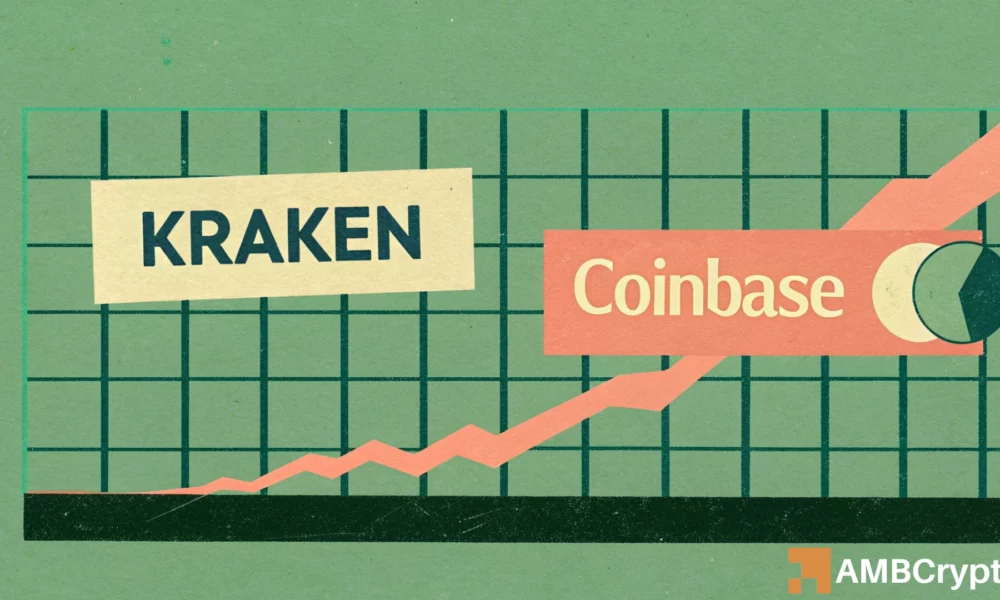
The introduction of ETFs has created meaningful bridges between the digital asset market and traditional investment realms. This strategic shift has encouraged crypto exchanges to evolve into comprehensive financial platforms that can cater to a wider array of investor needs. Leading exchanges like Kraken and Coinbase are turning their focus on traditional finance participants, leveraging the popularity of digital currencies to cultivate new revenue streams and enhance market liquidity. Kraken’s February 2023 announcement of xStock perpetual futures contracts, which enable 24/7 trading of tokenized equities, exemplifies this trend. Available in over 110 countries, these contracts allow investors to directly track and invest in major benchmarks like the S&P 500 and Nasdaq 100, all while enjoying the leverage that can amplify potential returns.
Kraken Versus Coinbase: Strategic Differentiation
While both Kraken and Coinbase aim to capture the attention of traditional investors, their strategies differ significantly. Kraken’s perpetual stock contracts allow for leverage of up to 20 times, offering a drastically different risk and reward profile compared to traditional stock trading. Conversely, Coinbase has partnered with Yahoo Finance to launch spot equity trading directly within its app. Unlike Kraken’s continuous trading, Coinbase operates on a five-day workweek, aligning its services more closely with traditional equity markets. This differentiation targets various investor preferences, catering to both high-risk and conservative investors seeking to explore new avenues in finance.
Market Dynamics: Expanding Amid Contraction
Interestingly, the expansion of these crypto platforms comes at a time when liquidity in the cryptocurrency market has diminished significantly. With approximately $2.03 trillion leaving the crypto space, total market capitalization has dropped to around $2.24 trillion. Since the crash on October 6, 2025, the crypto market has experienced a staggering 47.5% decline, contrasting sharply with the S&P 500, which has gained 17% during the same period. This market environment not only highlights the growing appeal of equities but also necessitates that crypto exchanges reposition themselves to capture capital rotation—allowing them to diversify revenue streams amid a challenging market framework.
Bridging Opportunities in User Engagement
The recent shifts towards integrating equity trading features offer a means to enhance user engagement across platforms such as Kraken and Coinbase. As traditional assets outpace the performance of cryptocurrencies, exchanges are well-positioned to capitalize on the growing interest in stocks, thereby mitigating risks associated with declining crypto valuations. Coinbase, facing a reported 22% drop in fourth-quarter revenue, aims to leverage this strategic move to enhance financial stability and attract new users who may be reconsidering their asset allocation amidst current financial volatility.
Conclusion: A New Frontier for Capital Markets
The ongoing convergence between cryptocurrency platforms and traditional finance marks the dawn of a new era in capital markets. With Kraken and Coinbase taking significant steps to diversify their offerings through stock trading, they stand ready to capture institutional and retail interest alike. As equities continue to outperform digital assets, these platforms are not only adapting to market conditions but also innovating to keep investor engagement alive. In doing so, they highlight the importance of integrated financial products that offer flexibility, risk management, and efficiency in a rapidly changing financial landscape. As the hybrid financial ecosystem evolves, the success of these initiatives will be crucial in determining the future interfaces of traditional and digital asset investing.