



The U.S.-Iran Tensions and the Role of Cryptocurrency: An Analysis
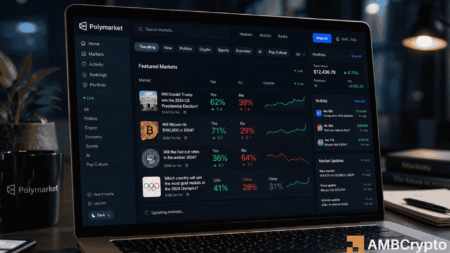
As the U.S.-Iran conflict escalates, recent statements from U.S. President Donald Trump have added fuel to the fire. This uncertainty leads to speculation regarding a ceasefire, with platforms like Polymarket reflecting high stakes on year-end predictions. Amidst these geopolitical tensions, Iran has taken a significant step by accepting cryptocurrency payments for tolls on ships traversing the Strait of Hormuz. This move underscores cryptocurrencies’ emerging role as a financial hedge amid global turmoil and inflation.
Crypto as a Hedge in Turbulent Times
As the political landscape becomes precarious, cryptocurrencies are emerging as a viable hedge against traditional market instability. Reports indicate that while the crypto market has shown resilience, conventional assets such as gold, silver, and the S&P 500 have weakened since the onset of military conflict. For example, Bitcoin recently traded at $69,753.50, reflecting a 4.06% increase in a volatile environment. This signals a growing acceptance of crypto during crises, as individuals and governments alike seek alternative means of transaction that are less tied to the global economic system.
Bitcoin’s Performance Compared to Gold
Though Bitcoin shows signs of resilience, a comparison with gold reveals a different narrative. The BTCXAU chart illustrates that Bitcoin has consistently underperformed against gold over recent months. Despite ongoing efforts to regain lost ground, Bitcoin’s attempts at recovery are met with challenges that hinder its momentum. In the broader context, the Bitcoin-Gold ratio indicates we are currently in a phase of market cooling, suggesting that while Bitcoin isn’t plummeting, it also isn’t poised for significant breakthroughs in the near term.
Stability Against the U.S. Dollar
When observing Bitcoin’s performance against the U.S. dollar through the BTCUSD chart, it becomes evident that the digital currency is neither aggressively falling nor exhibiting signs of a breakout. This stagnation reflects the cryptocurrency’s current phase of stabilization, revealing the complexities that come with its value fluctuation amid geopolitical tensions. While the crypto market garners interest and adoption, its relative strength remains weak compared to more traditional assets, with gold still holding the top position in terms of market capitalization and Bitcoin lingering in 12th place.
Signs of Hope for Bitcoin
Despite the current challenges, there remains a glimmer of hope for Bitcoin investors. The cryptocurrency’s dominance stands at 59.02%, suggesting a potential for recovery if global conditions stabilize. In this context, notable figures like Michael Saylor express confidence in Bitcoin’s future, asserting its role as a form of digital capital. His stance emphasizes that traditional cycles of volatility may no longer apply, igniting optimism among crypto enthusiasts that the market may soon return to normalcy.
Geopolitical Risk Premium in Crypto Markets
Insight from industry experts, such as David Duong, Coinbase’s global head of investment research, underscores the prevailing sentiment in the crypto market. Duong suggests that investors should expect a continued geopolitical risk premium to influence cryptocurrency valuations until a clearer resolution to the U.S.-Iran conflict emerges. This perspective introduces an important factor that crypto investors must consider: geopolitical events not only shape market sentiment but also directly impact asset values.
Conclusion: The Evolving Landscape of Cryptocurrency
Iran’s acceptance of cryptocurrency for toll payments highlights its dual role as a transactional medium and a hedge against instability in times of conflict. While Bitcoin has demonstrated resilience, its current inability to surpass gold and the U.S. dollar indicates a broader stabilization phase rather than a solid recovery. However, the market’s dynamics and sentiments remain fluid, fueled by optimism from influential advocates who believe in the potential for Bitcoin to regain strength as global tensions subside. Cryptocurrencies continue to evolve, reflecting both the challenges and opportunities that come with navigating a tumultuous geopolitical landscape.