



Tether’s Bold Leap Beyond Stablecoins: A New Era of Investment and Innovation
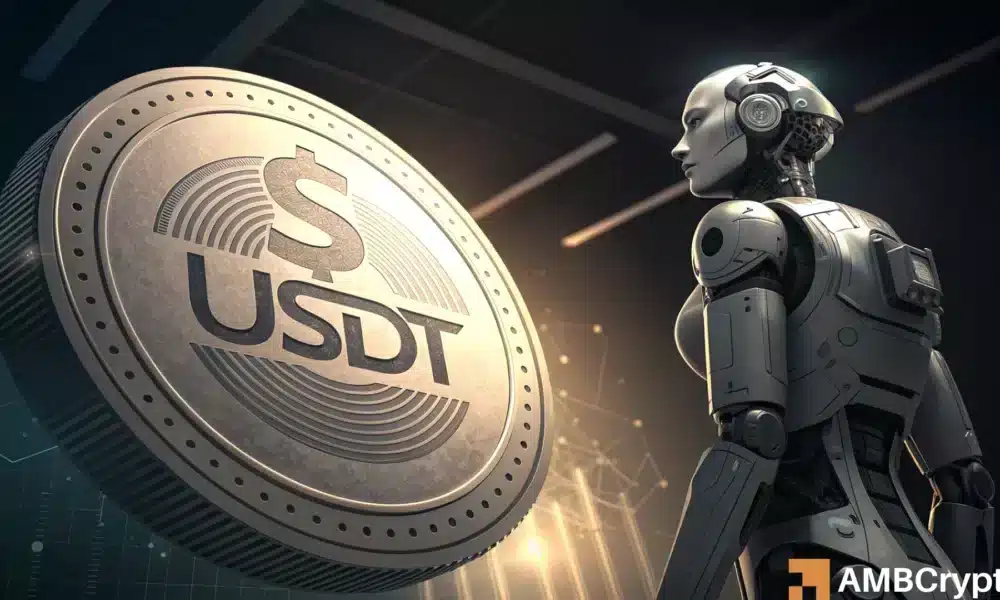
In recent months, Tether, the world’s largest issuer of stablecoins, has begun a transformative journey that goes well beyond its traditional business model. With significant negotiations underway for a €1 billion investment in Germany’s Neura Robotics, Tether is signaling a desire to penetrate the realms of technology and robotics. This strategic move does not come in isolation; it is part of Tether’s broader commitment to diversifying its portfolio and expanding its influence across various industries. More notably, the company’s liquidity, primarily from its USDT business, is facilitating these ambitious ventures, showcasing its capacity to innovate and grow amidst a rapidly changing economic landscape.
The potential collaboration with Neura Robotics marks a pivotal shift for Tether, indicating its readiness to invest heavily in advanced technology sectors. Neura Robotics specializes in cognitive robotics, focusing on developing humanoid systems for industrial applications—a perfect match for Tether’s expansion strategy. As the demand for automation and AI continues to surge, Tether’s involvement could solidify its status as a key player in shaping the future of robotics. Additionally, Tether has significantly bolstered its operational capacity by securing access to a 20,000-GPU compute network, further enhancing its capabilities in pushing the boundaries of technology development.
Further solidifying its diversification efforts, Tether has established "Hadron by Tether," a unit dedicated to tokenized securities. Through strategic partnerships with financial entities such as KraneShares and Bitfinex Securities, Hadron aims to drive innovation in the burgeoning market of tokenized assets. This initiative demonstrates Tether’s ambition to not only participate but to also lead in the digital asset revolution, bridging traditional finance and the cryptocurrency frontier. Insisting on real-world applications of blockchain technology, Tether is committed to reshaping how securities and financial assets are viewed and transacted.
Tether’s proactive foray into commodity lending also emphasizes its evolving strategy. With around $1.5 billion allocated for credit to traders, predominantly in agriculture and oil, the company is positioning itself as a significant financier in commodities. The financing options, offered in both cash and USDT, reflect Tether’s intent to sustain its growth trajectory while serving various sectors that are often underserved by traditional lending institutions. This adaptability showcases Tether’s commitment to leveraging its strong balance sheet and liquidity to seize opportunities in unique financial landscapes, fostering growth in economically crucial sectors.
As Tether ventures into these uncharted territories, the financial and regulatory implications cannot be overlooked. The company’s sweeping expansion efforts invite scrutiny from regulatory bodies, particularly as they extend beyond the realm of cryptocurrency into more traditional markets. This evolving dynamic highlights the balance Tether must maintain between aggressive growth and compliance with financial regulations. The road ahead will require Tether to navigate complexities and foster trust, ensuring that innovation is not accompanied by regulatory backlash or reputational risks.
In conclusion, Tether’s strategic pivot towards investments in robotics, commodities, and tokenized securities symbolizes a notable shift in its operational philosophy. Fueled by the robust liquidity of its USDT business, the company is poised to carve its niche in a variety of sectors, fundamentally altering its market position. As Tether continues to expand and innovate, stakeholders, investors, and regulators alike will be keenly observing the company’s journey, eager to determine the balance between pioneering advancements and maintaining regulatory harmony. This unfolding story is not only pivotal for Tether but for the broader implications on the convergence of cryptocurrency and traditional finance.