



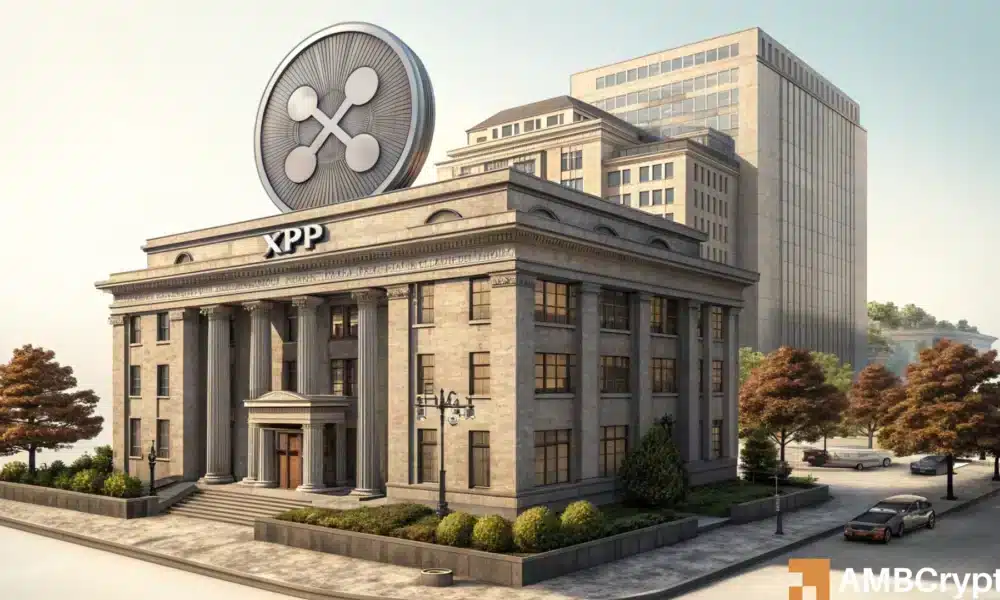

The Rise of Institutional Partnerships in Digital Finance: Ripple and BNY Mellon
In recent years, the landscape of digital finance has transformed dramatically, witnessing a notable shift from direct capital inflows to strategic partnerships among financial institutions. This evolution is largely spurred by the adoption of blockchain technology, which is facilitating practical applications like cross-border payments and everyday transactions. One significant development in this trend is BNY Mellon’s launch of tokenized deposits—digital representations of cash aimed at institutional clients. By selecting Ripple Prime as an early adopter, BNY Mellon is signaling a pivotal move toward a more digital-first financial framework.
The Implications of Tokenized Deposits
BNY Mellon, a global banking institution with an impressive $50 trillion in assets under management (AUM), has taken a proactive approach towards integrating digital currencies. Tokenized deposits represent a critical advancement in how institutional funds can operate, moving beyond traditional fiat and stablecoins to a new form of "digital cash." This shift aims to enhance flexibility and responsiveness in a 24/7 market, positioning Ripple as a key player in this unfolding narrative. The question arises: how will this partnership influence Ripple’s institutional growth amid these changes?
Ripple’s Central Role in Digital Finance
The partnership with BNY Mellon is part of a broader trend that signals a new era in global finance, where initial interest in Central Bank Digital Currencies (CBDCs) evolves into concrete action. As banks begin to adopt tokenized deposits, Ripple stands to gain substantial traction as an early adopter in the digital finance sector. Furthermore, with XRP exchange-traded funds (ETFs) reaching $1 billion in AUM, there is a clear indication of rising institutional interest in Ripple, legitimizing its position in the market.
XRP’s Performance and Institutional Confidence
From a market perspective, the performance of XRP has been noteworthy. Despite a 12% decline in value at the close of 2025 and current market pullbacks, XRP ETFs have managed to attract $1 billion in assets since their inception in November. This statistic is crucial as it illustrates that institutional investors are not solely fixated on XRP’s price trajectory. Instead, they are demonstrating a burgeoning confidence in Ripple as a company, which is further validated by BNY Mellon’s partnership.
Foundations of Institutional Investment
A closer evaluation of these trends reveals that institutional capital flowing into Ripple is based on tangible fundamentals rather than speculative trends. The successful launch of tokenized deposits positions Ripple as a vital player in the emerging tokenized cash ecosystem. As institutional demand for Ripple continues to grow, it reinforces the notion that the traditional financial landscape is making room for digital innovations in a significant way.
Future Outlook: The Digital Dollar Era
As BNY Mellon’s tokenized deposits make Ripple a centerpiece of the budding "digital dollar" movement, the confidence shown by institutions reinforces Ripple’s integral role in the future of digital finance. The continued evolution of partnerships and institutional interest signals a promising pathway forward, suggesting that the traditional models of financial exchange are on the brink of transformation. With Ripple at the helm, the journey towards a more adaptable, innovative financial landscape has only just begun.
As digital finance expands, Ripple is well-positioned to capture and sustain institutional interest, ultimately elevating its status as a cornerstone in the transition to a digitized economy.