


Rising Geopolitical Tensions and the Future of Oil Trading
In late February, geopolitical tensions escalated sharply following strikes near Iran, intensifying conflict around the crucial Strait of Hormuz. This strategic chokepoint is vital as it facilitates over 20% of global oil flows, leading to widespread fears of supply disruptions. Consequently, Brent crude oil prices reacted dramatically—surging from around $70 per barrel before the conflict to intraday highs near $120. Although prices later settled around $103.29, the market still recorded an 11% gain within that week, underscoring ongoing concerns about oil supply security.
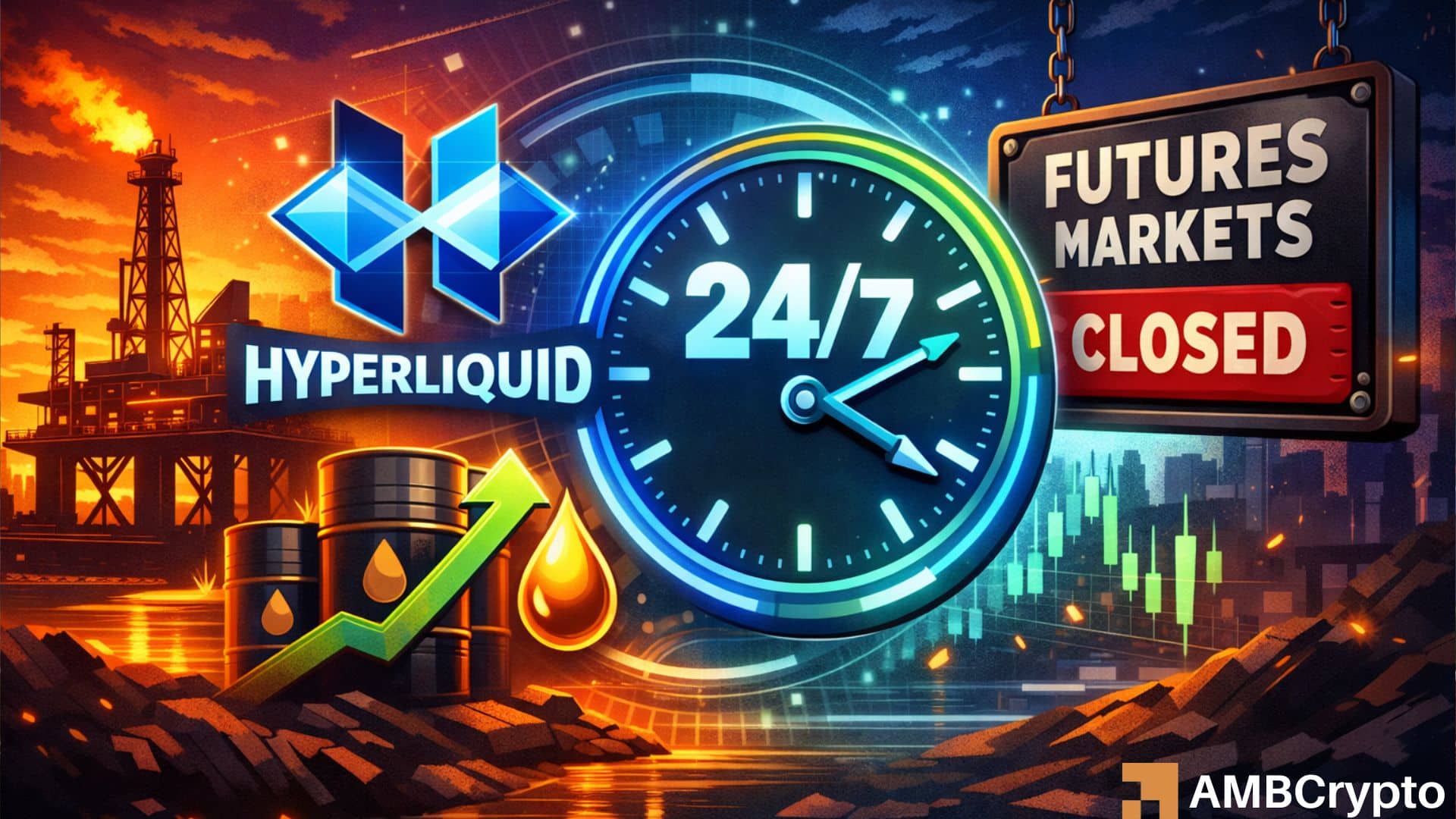
On the other hand, West Texas Intermediate (WTI) Futures demonstrated similar volatility, closing at $99.31 on the CME, representing a 3.74% daily increase. However, traditional trading mechanisms significantly limit continuous price discovery. Markets typically remain inactive during weekends, leaving potential gaps in pricing that could emerge from sudden geopolitical developments. In the wake of the escalation on March 8-9, NYMEX WTI prices closed on March 13 at $89.04, but decentralized platforms like Hyperliquid managed to provide an alternative for traders, allowing WTI perpetual contracts to trade continuously, even surging towards $115.
The evolution of decentralized perpetual markets is now reshaping how macro risk signals manifest amid geopolitical crises. Since its inception in 2026, platforms such as Hyperliquid have emerged as 24/7 price discovery venues. This operational flexibility enables them to react swiftly to global events, unlike traditional exchanges that are constrained to set trading hours. During the U.S.-Iran escalation, for instance, oil and gold perpetuals on Hyperliquid reflected market changes almost instantaneously, while COMEX and NYMEX remained closed for the weekend. This continual trading activity positions on-chain markets as early indicators of risk, although liquidity disparities still persist between these innovative platforms and more traditional benchmarks.
Despite the growth in trading activity, liquidity gaps remain a significant hurdle for decentralized perpetual markets. A CoinGecko report indicated that Hyperliquid processed $1.59 trillion in just six months, marking its place among the leading derivatives venues globally. Surprisingly, automation is proving integral to this success, with approximately 60% of volume flowing through programmatic strategies. This automation has resulted in tighter spreads across major assets, like Bitcoin (BTC), where spreads have narrowed to around $1.00, occasionally outperforming centralized exchanges.
However, notable differences in liquidity depth continue to challenge the expansion of decentralized markets. While some commodity contracts, like CL-USDC oil perpetuals, suffer from higher slippage due to thinner order books compared to legacy futures venues, the potential for decentralized perpetuals remains significant. The continual trading of these instruments allows them to act as a 24/7 macro risk pulse, increasingly paralleling established financial benchmarks despite current limitations.
In summary, the escalating geopolitical conflicts, particularly around the pivotal Strait of Hormuz, significantly affect oil markets and pricing. Hyperliquid’s ability to offer continuous oil perpetuals during critical times reflects a growing demand for uninterrupted trading and hedging solutions. As the geopolitical landscape evolves, the innovative nature of decentralized trading platforms may prove pivotal in filling the price discovery gaps left by traditional markets, thereby redefining how traders respond to geopolitical shocks in real time.