



How Biden Administration Policies Impacted the Crypto Industry: A Deep Dive
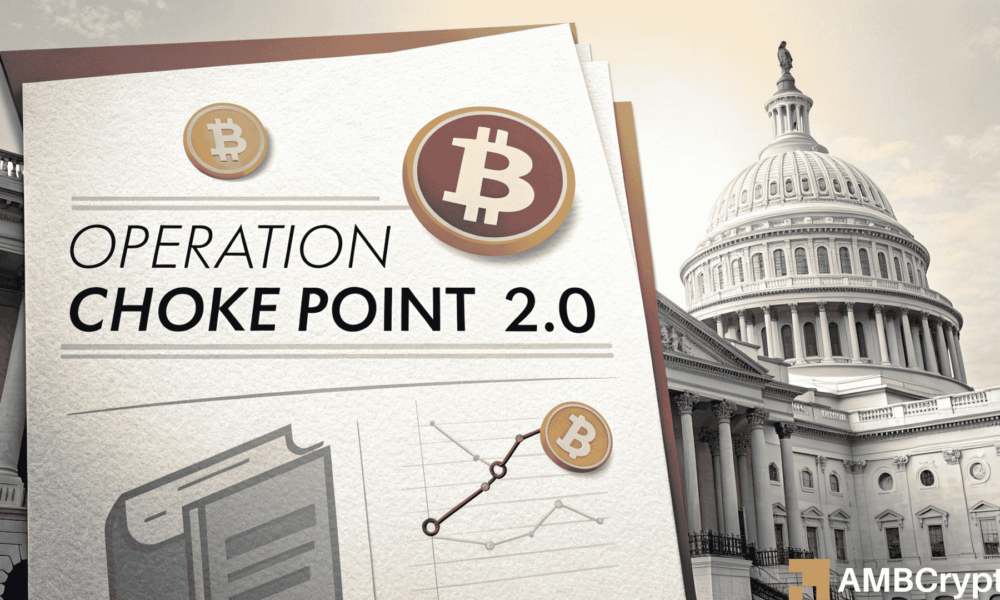
On December 1, 2025, House Republicans unveiled a comprehensive 51-page report that sheds light on the Biden Administration’s regulatory strategies that allegedly marginalized cryptocurrency firms from the banking system, coining the term “Operation Choke Point 2.0.” Citing internal documents and “pause letters,” the report details the challenges these companies faced in accessing banking services, dramatically affecting the digital asset landscape.
The Mechanics of Operation Choke Point 2.0
The House Financial Services Committee’s report provides compelling evidence that from 2022 to 2024, at least 30 digital asset entities and individuals experienced significant banking access restrictions. The dissemination of FDIC letters to roughly 24 banks requested them to delay engaging in crypto services, and Federal Reserve guidance necessitated non-objection letters before any digital asset activities could commence. The "pause letters" released publicly in February 2025 highlight regulators’ strategies to stall cryptocurrency-related operations. Markedly, these actions rendered it nearly impossible for financial institutions to engage in the burgeoning crypto sector.
Industry-Wide Consequences
The impact of this regulatory pressure was felt across the crypto ecosystem, with significant players such as Coinbase, Marathon Digital Holdings, and founders from Uniswap, Ripple, and Gemini losing vital banking access. For instance, Anchorage Digital, an institutional crypto platform, had to lay off 20% of its workforce in 2023 due to the loss of banking relations. The report also outlines how regulators employed non-rulemaking tactics, positioning supervisory letters and interpretative guidance as critical strategies under “Operation Choke Point 2.0.” These measures effectively used informal regulatory techniques to create barriers for financial activities related to digital assets without going through conventional Congressional rulemaking processes.
Regulator-Induced Turmoil
Industry executives recounted alarming experiences of sudden account closures, often with as little as 24 to 72 hours of notice. Banks abruptly terminating relationships without satisfactory explanations compounded the crises for many firms. This unanticipated upheaval forced companies to scramble to meet payroll and manage basic operational costs, substantially destabilizing the crypto business landscape. The consequences of such regulatory strategies led to a ripple effect across the industry, discouraging innovation and investment in digital assets.
A Shift in Policy Direction: The Trump Administration’s Reversal
Since the inauguration of the Trump Administration in January 2025, a stark reversal of Biden-era crypto policies has commenced. Key actions undertaken include rescinding the contentious Staff Accounting Bulletin 121 (SAB 121), retracting Federal Reserve supervisory letters that demanded advanced approvals for crypto undertakings, and removing “reputational risk” as a basis for supervisory evaluations across banking agencies. In a significant move, the administration ratified the GENIUS Act in July 2025, laying down the first federal regulatory framework for payment stablecoins. Additionally, the establishment of a Presidential Working Group on Digital Asset Markets under the leadership of White House AI and Crypto Czar David Sacks marked a notable pivot in regulatory oversight.
Legislative Recommendations for Future Progress
In light of the documented challenges faced by the crypto industry, the report advocates for Congressional action, recommending the passage of the CLARITY Act (H.R. 3633), which successfully passed the House with a vote of 294-136 and is currently pending in the Senate. Moreover, additional proposed legislation seeks to prohibit the incorporation of reputational risk in bank supervision and aims to revamp the CAMELS rating system. Although the report embodies a partisan Republican viewpoint, it compiles substantial documentation from various agencies that illustrate how regulatory tools have been wielded against the crypto sector.
Final Thoughts: The Future of Crypto Regulation
The findings of House Republicans highlight that a minimum of 30 crypto entities and individuals experienced debanking during the Biden Administration due to FDIC “pause letters” and supervisory pressure tactics. With the Trump Administration’s reversal of significant policies such as rescinding SAB 121 and eliminating “reputational risk” from supervisory criteria, the landscape for the crypto industry is on the brink of transformation. As we look ahead, the intersection of regulatory frameworks and digital asset innovation will be pivotal in shaping a balanced environment that fosters growth while mitigating risks in this rapidly evolving sector.
With ongoing legislative proposals, the future regulatory landscape will likely shape the recovery and expansion trajectory of the cryptocurrency market in the United States. Effective cooperation between the government, regulators, and industry stakeholders will be essential in forging a robust framework for the continued evolution of digital assets.