



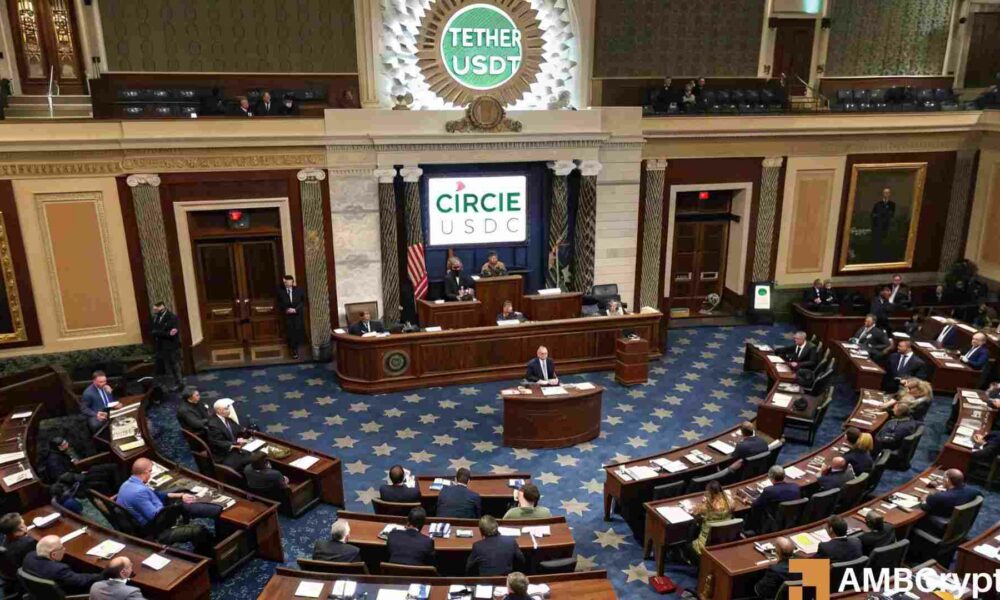

The GENIUS Act: A Landmark Step in U.S. Stablecoin Regulation
The GENIUS Act, or the Guiding and Establishing National Innovation for U.S. Stablecoins Act, is poised for crucial deliberation in the U.S. Senate, with a final vote slated for June 17. This pivotal legislation aims to clarify the regulatory landscape surrounding payment stablecoins, essentially digital dollars, balancing innovation and consumer protection. If passed, the bill will progress to the House of Representatives and ultimately await presidential approval, setting the stage for significant changes in the U.S. digital finance ecosystem.
Enhancing the U.S. Payment System
Spearheaded by Senator Bill Hagerty, the GENIUS Act seeks to propel America’s payment system into the digital age. "The GENIUS Act is going to propel America’s payment system into the 21st century. Let’s make history,” remarked Hagerty while garnering support from fellow senators. The act incorporates essential amendments focusing on consumer protection, bankruptcy regulations, and ethical considerations, critically establishing a safe environment for digital currencies. This regulatory clarity is expected to catalyze innovation while ensuring robust safeguards for consumers.
The Competitive Landscape for Stablecoins
While the GENIUS Act’s imminent passage is creating a buzz in the cryptocurrency space, traditional financial institutions like JP Morgan are also making waves. Recently, JPMorgan Chase filed for a trademark for its stablecoin, dubbed ‘JPMD’, signaling intensified competition in the U.S. stablecoin sector. With the current market brimming with significant players like Tether’s USDT, which has a market capitalization of around $155 billion, and Circle’s USDC, valued at around $61 billion, the stakes are higher than ever. This emergence of traditional banking giants into the stablecoin realm underlines the growing significance of digital currencies in modern finance.
Ethereum’s Strategic Position
As all eyes turn to the stablecoin market, Ethereum’s potential as a significant player is gaining attention. Industry veteran Nate Geraci pointed out that, with the US Senate poised to pass the stablecoin legislation, many remain unaware of Ethereum’s role in this burgeoning market. Ethereum currently commands 50% of the $250 billion stablecoin supply, placing it in a favorable position against competitors like TRON, which holds 31%. Experts anticipate that Ethereum could serve as an indirect investment in the expanding stablecoin sector, allowing traders and investors to benefit from this digital currency’s dynamic growth.
Market Movements and Investor Sentiment
Market sentiment surrounding Ethereum remains largely bullish, although recent data indicated a slight reduction in long positions from 76% to 74%. This adjustment may relate more to external geopolitical tensions, specifically the Israel-Iran situation, rather than the advancements linked to the GENIUS Act. However, the stablecoin market remains vibrant, with Circle’s stock, CRCL, reflecting impressive growth. Starting at around $31, CRCL has soared to $165 in its debut, yielding over 400% returns to shareholders—illustrating the current market frenzy.
Future Prospects and Market Dynamics
As companies like JP Morgan venture into the stablecoin sector, experts caution that the growth of stablecoins may face hurdles ahead. BitMEX founder Arthur Hayes expressed concerns about Circle’s overvaluation while emphasizing that the IPO marks the beginning, rather than the conclusion, of this cycle’s “stablecoin mania.” Hayes suspects that once traditional finance players start launching their stablecoin offerings, the current enthusiasm may dissipate, potentially leading to a market correction.
Conclusion: A Transformative Era for Digital Currency
The ongoing developments surrounding the GENIUS Act and the increasing entry of established financial institutions such as JP Morgan into the stablecoin landscape are reshaping the future of digital finance in the U.S. As regulatory clarity emerges from the GENIUS Act, consumers and businesses alike can expect both innovation and protection within this evolving sector. With competition heating up and traditional entities embracing stablecoins, we are merely at the forefront of a transformative era in digital currency that could redefine our financial interactions for years to come.