



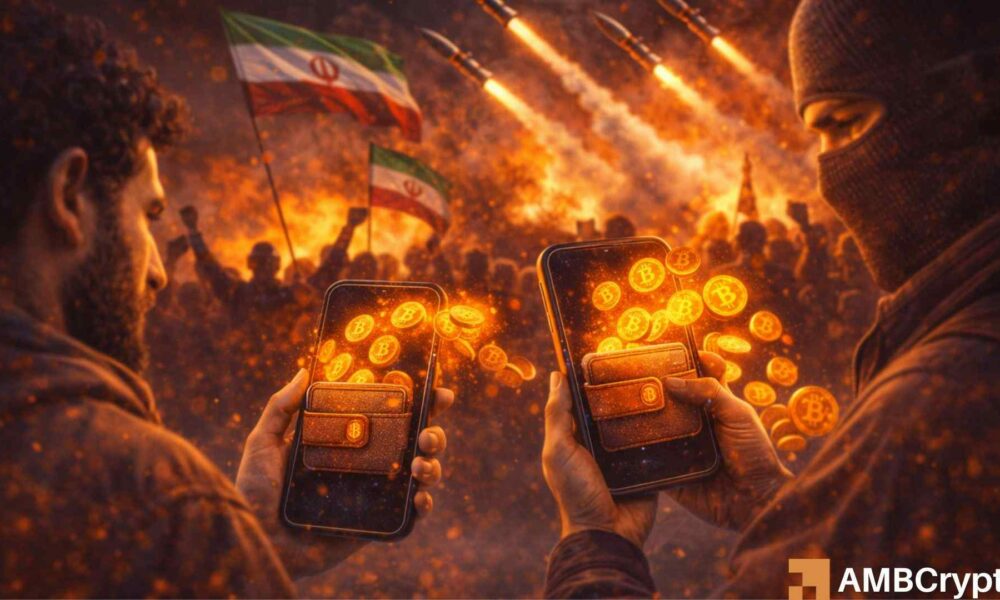
Bitcoin as a Financial Lifeline Amid Geopolitical Turmoil
In the face of escalating geopolitical tensions, citizens in countries like Iran and Venezuela are increasingly turning to Bitcoin and cryptocurrency as a refuge and means of protecting their wealth. With traditional financial systems under strain and local currencies experiencing significant devaluation, cryptocurrencies have emerged as an effective hedge against these economic challenges. According to blockchain analytics firm Chainalysis, Iran’s crypto activity soared to $7.78 billion in 2025, with most spikes aligning with episodes of political unrest and conflict, including a recent military conflict with Israel.
The Impact of Currency Devaluation
The Iranian Rial has lost substantial value against the U.S. dollar, creating a dire situation for locals relying on this currency for their daily lives. As the rial continues to depreciate, residents find that their savings effectively hold no value. This vulnerability has pushed many Iranians to seek refuge in Bitcoin (BTC) and other cryptocurrencies, which offer a more stable store of value. In such economies, where inflation is rampant, digital currencies provide a critical buffer against financial loss and give people an avenue to preserve their wealth outside the confines of their destabilized local economy.
Increased Adoption of Bitcoin
Amid heightened civil unrest in Iran, Chainalysis reports a marked increase in the transfer of Bitcoin to personal wallets. This trend is particularly notable during protests that erupted in early December, demonstrating a significant shift in how Iranians view cryptocurrency. For instance, withdrawals from Iranian exchanges surged, with transfers below $10,000 spiking by 236% before protests and by 262% during the unrest. Additionally, smaller withdrawals and transfers saw impressive growth rates of 123% and 78%, respectively. These statistics highlight the growing sentiment among Iranians that Bitcoin serves as a crucial tool for wealth preservation during uncertain times.
The Role of Cryptocurrencies in Conflict
Bitcoin’s decentralized nature allows it to bypass traditional financial controls, making it an appealing choice during periods of upheaval and regional tensions. In Iran, the ability to transfer wealth without government interference has solidified Bitcoin’s value proposition as a neutral and censorship-resistant asset. As individuals look to protect their hard-earned resources, the upward trend in Bitcoin transfers to self-custody wallets signals growing confidence in the cryptocurrency as an alternative means of holding wealth in the face of economic adversity.
The Regime’s Crypto Involvement
Interestingly, the Iranian regime has also recognized the potential of cryptocurrencies. Amid increasing sanctions, the Islamic Revolutionary Guard Corps (IRGC) has sought to leverage crypto to fund its operations and evade restrictions. Notably, the IRGC is reported to account for over 50% of the crypto value received, making local exchanges, such as Nobitex, targets for external cyber attacks. This duality—in which citizens and state actors engage with cryptocurrencies—underscores the complex landscape in which digital assets are both a tool for empowerment and a means for maintaining control.
Conclusion: Bitcoin as a Tool for Empowerment
As the Iranian Rial continues its descent, Bitcoin serves as both a relief and a protest tool for citizens seeking to preserve their wealth amidst chaos. The dramatic increase in BTC transfers to personal wallets underscores the cryptocurrency’s growing acceptance as a safeguard against economic instability. With Iranian crypto activity reaching significant heights in 2025, the situation reflects not only the financial pressures faced by individuals but also a larger movement towards using decentralized currencies in response to both local and geopolitical challenges.