



Ethereum’s Future: Vitalik Buterin’s Vision and Current Market Trends
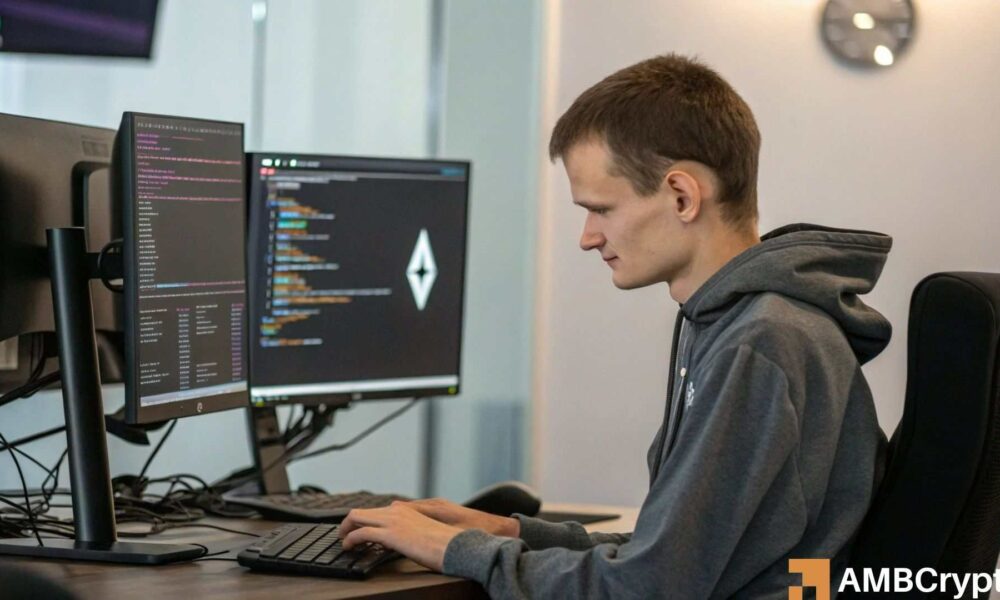
Ethereum’s Co-founder, Vitalik Buterin, recently outlined his key priorities for the blockchain platform leading up to 2025. Central to his vision is the enhancement of Layer 1 (L1) scaling capabilities, aiming at improving both speed and efficiency on the network. As Ethereum continues to adapt and grow, Buterin emphasized not only technical scalability but also the importance of decentralization and resilience in security. These objectives resonate with the broader goals set by the newly restructured Ethereum Foundation leadership, highlighting a unified front in steering Ethereum towards its future.
In addition to L1 scaling, Buterin has made privacy a top priority. He stressed the need for robust privacy measures in various front-end user applications, including wallets and decentralized apps (DApps). This commitment to enhancing privacy aligns with the increasing demand for secure and private transactions in the digital landscape. Buterin’s advocacy for open-source technology further reflects Ethereum’s foundational ethos, which seeks to promote transparency and community-driven innovation. His diverse interests extend beyond Ethereum, touching on areas like governance, open-source funding, and bio-defense, emphasizing a holistic approach to addressing contemporary challenges.
The forthcoming Ethereum Pectra upgrade is one of the most anticipated changes, scheduled to go live on May 7. This upgrade aims to enhance staking and wallet functionalities, among other improvements. However, the launch has faced delays due to identified bugs. Following Pectra, the next significant upgrade, Fusaka, is poised to address scaling limitations, allowing Ethereum and Layer 2 (L2) applications to manage and process more data effectively. These ongoing upgrades are crucial in making Ethereum more competitive in the burgeoning Layer 1 blockchain space.
Moreover, there is a growing emphasis on interoperability between Layer 2 solutions to tackle liquidity fragmentation within the Ethereum ecosystem. This push for interconnectedness among various protocols is expected to streamline transactions and bolster overall efficiency. Each of these updates not only signifies technological advancements but also highlights the Ethereum community’s resilience and adaptability in the face of evolving market demands.
As for market sentiment, current indicators suggest that speculators appear bullish and somewhat ‘greedy’ regarding Ethereum. According to the Fear and Greed Index (FGI) reading on May 1, confidence among investors seems to be growing. The altcoin has experienced a favorable 20% increase in value since April 22, surging from $1,500 to approximately $1,800. The technical analysis points to an ongoing bullish trend, with the Super Trend indicator flashing ‘buy’ signals, indicating potential for further price growth in the near term.
Looking ahead, the $1,900 mark has emerged as a short-term target for ETH’s price. Market analysts speculate that this level may be achievable unless conflicting signals arise to signal a price reversal. The combination of Ethereum’s technological upgrades, including the Pectra and Fusaka upgrades, along with positive market sentiment, could create an environment conducive to sustained growth. As Ethereum continues to evolve, its trajectory will not only impact investors but also shape the broader landscape of blockchain technology and decentralized finance.
In conclusion, Vitalik Buterin’s vision for Ethereum underscores a commitment to innovation, privacy, and decentralization. As the platform gears up for significant upgrades designed to enhance functionality and scalability, the speculative enthusiasm in the market indicates a positive sentiment among investors. Ethereum’s path forward is poised to redefine its role in the blockchain ecosystem, making it more competitive and resilient in a rapidly changing digital economy.