



Understanding Capital Movement Across Layer 1s: Ethereum’s Health Signal
In the ever-evolving world of blockchain and cryptocurrencies, the movement of capital across Layer 1 (L1) networks serves as a vital indicator of market health. When capital flows robustly among various sectors, even in a risk-off environment, it reflects that the fundamental aspects of the underlying network remain intact. An active user base and functional smart contracts contribute to liquidity, conveying a positive market sentiment. This pattern is adeptly exemplified through the lens of stablecoins, which provide clear signals regarding investor intent. Currently, Ethereum (ETH) stands out, demonstrating this dynamic in real time.
The Case of Ethereum’s Stablecoin Flows
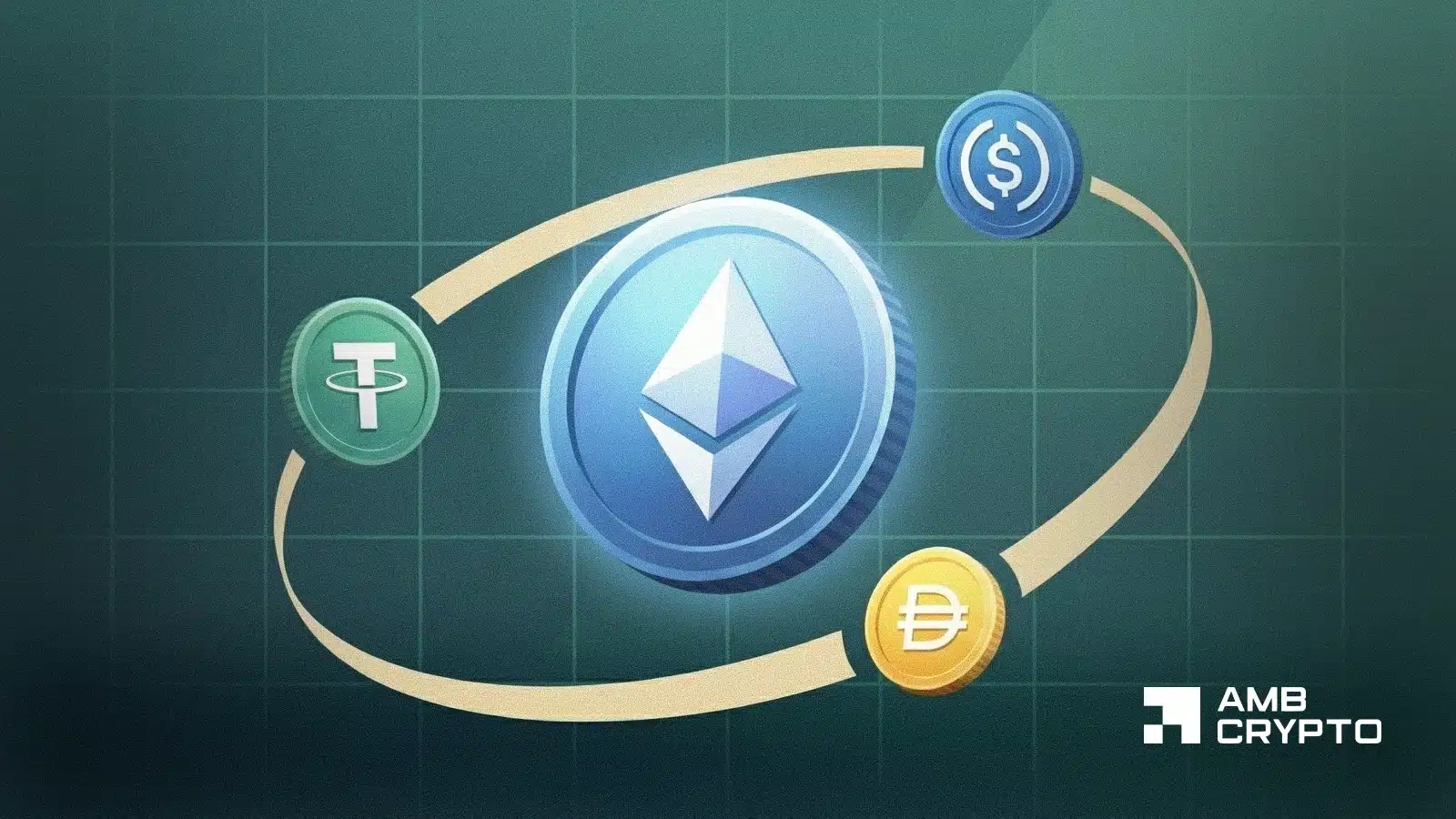
Recent data highlights a distinct pattern in Ethereum’s trading ecosystem. Observations show that as Ethereum’s reserves have decreased, stablecoin inflows have surged. For example, Ethereum reserves on Binance have dropped to 3.3 million ETH, falling below previous lows noted in February and August 2024. A declining reserve indicates that more ETH is being taken off exchanges, resulting in a real-time supply squeeze. In stark contrast, stablecoin balances have been on the rise. USDT reserves increased from $35 billion in March to $38 billion in April, and USDC similarly escalated from $4.6 billion to $6.6 billion in the same period. This juxtaposition of declining ETH reserves and growing stablecoin balances paints a compelling narrative that investors are accumulating ETH while holding onto stablecoins, suggesting a growing appetite for risk.
Investor Sentiment and Risk Appetite
The correlation between stablecoin flows and investor behavior provides deeper insights into market dynamics, especially for Ethereum. A sustained increase in stablecoin reserves indicates that liquidity is readily accessible for trading and investments, fostering a conducive environment for potential growth. The continuous presence of liquidity is crucial for sustaining healthy on-chain activity and reflects positively on Ethereum’s market structure. As Ethereum’s stablecoin dominance remains at about 65%, this liquidity can be efficiently utilized for various purposes, from trading to decentralized finance (DeFi) applications.
The Significance of On-Chain Activities
Beyond the financial metrics, the current state of Ethereum signifies a rich tapestry of on-chain activities, notably AI adoption, which is illustrating the movement of capital and its real usage within the ecosystem. Such technological advancements not only bolster investor confidence but also manifest a growing interest in harnessing blockchain capabilities for innovative applications. This growing interaction within the ecosystem showcases Ethereum’s technical superiority as a Layer 1 solution, solidifying its position as a leader in the blockchain space.
Counteracting Market Volatility
Despite the prevalent volatility in the market, the psychological advantage stemming from stablecoin flows cannot be understated. When stablecoin reserves rise alongside declining ETH reserves, it signifies a market where investors are actively seeking opportunities rather than retreating to safety. This psychological resilience is apparent in the recent $1 billion in derivative sell volume for Ethereum. Although this led to a temporary dip of about 4-5%, the fact that ETH maintained its ground around the $2,000 support level suggests that these fluctuations represent a healthy market correction rather than a catastrophic downturn.
Anticipating Ethereum’s Next Moves
Given these observations, Ethereum is poised for a promising outlook as the market gears up for Q2. With the technical advantages brought by strong stablecoin flows and corroborated by decreasing ETH reserves, Ethereum appears to be well-positioned for further growth. The combination of on-chain activities, bolstered by increasing investor risk appetite, lays the foundation for a potentially bullish trajectory. As market participants continue to show confidence in Ethereum, the anticipated Q2 rally becomes increasingly plausible.
Conclusion: The Road Ahead for Ethereum
In summary, the current economic landscape demonstrates that falling ETH reserves coupled with increasing stablecoin inflows depict a scenario where investors are actively acquiring ETH while keeping stablecoin liquidity on standby. This behavior reflects a growing risk appetite among investors, laying fertile ground for Ethereum’s Q2 outlook. The interplay of strong stablecoin flows, innovative on-chain activities, and resilient market sentiment converges to signify that Ethereum’s forthcoming journey may well lead to an upward rally in the still-evolving cryptocurrency landscape.