



Ethereum ETFs Facing Unprecedented Outflows This December
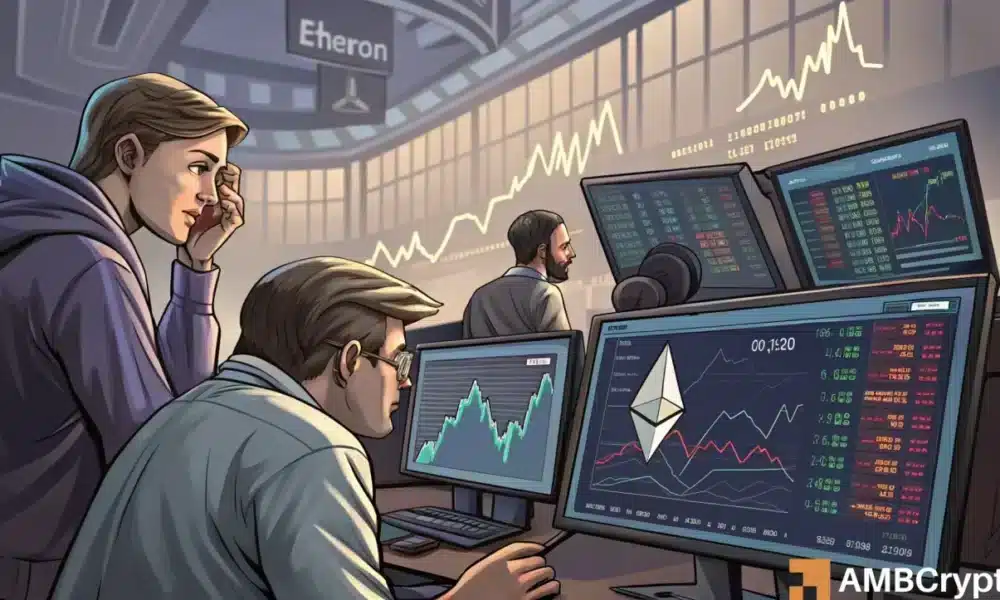
While many investors anticipate a traditional "Santa Claus Rally," December has not been kind to Ethereum Exchange-Traded Funds (ETFs). Following sustained inflows throughout much of the year, Ethereum ETFs have experienced a significant outflow cycle since December 11, 2023, losing a staggering $853.9 million in just two weeks, as reported by Farside Investors. This trend suggests a cautious approach among institutional investors as they prepare for the year-end, compounded by the holiday season. It wasn’t until December 22 that Ethereum ETFs recorded their first positive inflow of $84.6 million, highlighting the overall bearish sentiment around Ethereum during this month.
The Impact on Ethereum’s Price Action
The price of Ethereum (ETH) has held steady, trading around $2,964 at the time of writing. However, the continuous outflows from ETFs appear to be creating uncertainty among traders, leading many institutions to either de-risk their positions or lock in potential tax losses before the year’s end. Crucially, the $2,500 support level is becoming significant; if the outflows persist at their current pace, this level could be tested in the near future. Interestingly, despite the significant ETF outflows, Ethereum has managed to maintain above the $2,900 mark, suggesting that retail traders or large on-chain players could be absorbing the selling pressure from institutional investors.
Bitcoin’s ETF Challenges
While Ethereum has been facing its challenges, Bitcoin (BTC) ETFs have endured an even tougher month. Since December 11, Bitcoin ETFs have experienced a staggering $1.538 billion in outflows, reflecting a widespread retreat from institutional investors. There were only two instances of positive inflows—on December 12, capturing $49.1 million, and again on December 17, which saw inflows of $457.3 million—yet these were mere blips in an overall bearish trend. Bitcoin’s price has suffered due to this mass selling and various other factors, with the cryptocurrency trading at approximately $88,514.79 at present.
Technical Analysis and Market Sentiment
From a technical standpoint, both Bitcoin and Ethereum have shown minimal price gains, with their Relative Strength Index (RSI) remaining below 50 as of late December. This data suggests that bearish momentum is still impactful in the short term. However, a rising RSI could hint at a potential bullish divergence, indicating that a trend reversal might be on the horizon. Investors often look for such indicators to gauge future price movements, making this a crucial period for monitoring developments in both markets.
Outlook for 2026 and Market Divergence
Looking ahead to 2026, Bitcoin and Ethereum seem to be charting distinct paths amidst the changing landscape of cryptocurrency investments. Ripple (XRP), in particular, has distinguished itself as a consistent performer within the ETF space, recording regular inflows and pushing its net assets above $1.16 billion. This success underlines a strong institutional confidence in XRP’s regulatory standing and long-term prospects. Currently, both Ethereum and Bitcoin lack the same level of market confidence, which could affect their ability to recover and sustain growth.
Final Thoughts: Institutional Pressure and Retail Resilience
Despite outflows totaling $853 million, Ethereum’s resilience in maintaining prices above $2,900 suggests that retail investors or on-chain whales are stepping in to absorb the selling from ETFs. On the other hand, Bitcoin’s significant $1.5 billion exodus is raising alarms about institutional pressures affecting the cryptocurrency market on various levels. As both Ethereum and Bitcoin navigate these challenges, the market’s overall health will depend on whether retail investors can maintain momentum in the face of institutional withdrawal.
In summary, the current ETF landscape presents a mixed bag of challenges and opportunities for Ethereum and Bitcoin, reminding us that investment strategies must adapt to a rapidly evolving market dynamic. As we move closer to 2026, stakeholders will be keenly observing how these developments unfold in order to position themselves effectively for future growth.