




The Resilience of Dogecoin: Analyzing Current Trends and Future Outlook
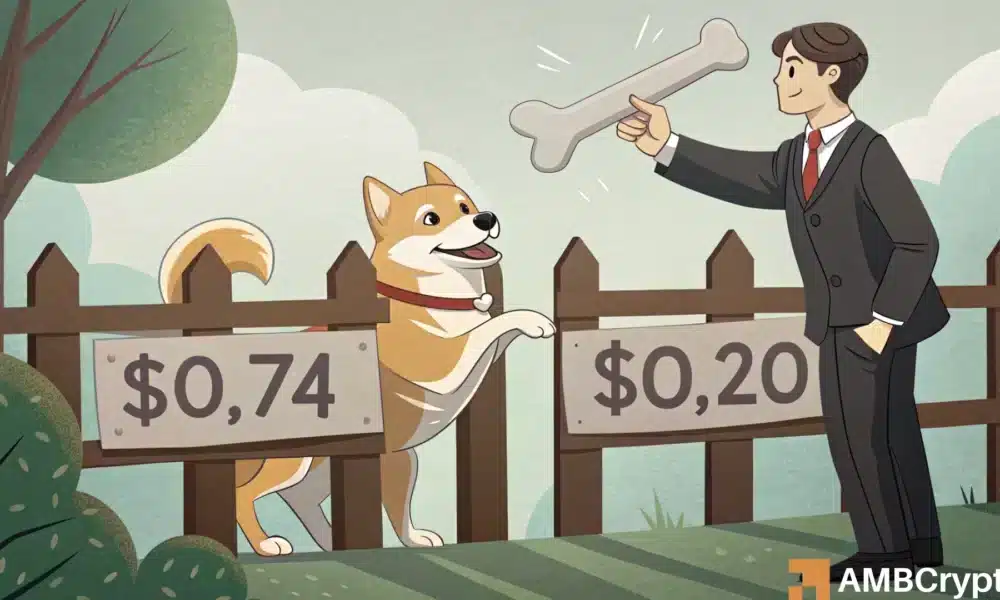
Dogecoin (DOGE) has shown remarkable resilience, recently marking a 10.25% weekly rally that brought its price to $0.193. This performance has outpaced several high-cap cryptocurrency competitors and sparked interest among traders and investors. However, Dogecoin remains trapped below the critical resistance level of $0.20, a barrier that, if surpassed, could allow bulls to take control and push for more significant gains. The current market dynamics suggest that although FOMO (fear of missing out) often accompanies such rallies, Dogecoin is yet to experience the buying frenzy that could propel it to higher thresholds.
The Challenge of Overhead Resistance
The journey for Dogecoin is fraught with challenges, particularly due to a plethora of overhead supply zones that obstruct its path. Breaking the $0.20 threshold is essential for any bullish momentum, yet this seems daunting at present. Predictions suggesting that Dogecoin could soar to $0.74 appear overly ambitious in the current climatic conditions. Such targets seem distant and are indicative of unrealistic market expectations. Without a convincing break above the current resistance, Dogecoin’s path to recovery could remain blocked, leaving many investors feeling anxious.
Market Capitalization vs. Usage
Dogecoin’s market traction is undeniable, boasting a substantial market cap of approximately $26 billion, firmly securing its place among the top 10 cryptocurrencies. However, this figure is more reflective of its massive supply of 150 billion tokens rather than any groundbreaking use cases. A significant aspect of the current landscape is the increase in Dogecoin’s Network Value to Transaction (NVT) ratio, which has reached a three-month high. This metric suggests that while Dogecoin’s market capitalization has been on the rise, actual on-chain transactions have stagnated, indicating a lack of network activity.
Diminishing User Engagement
To put this starkly, new and active addresses engaged with Dogecoin have dropped significantly below their pre-election levels. For instance, during a prominent breakout in November, new addresses surpassed 100,000 as the price soared above $0.40. Presently, that number has dwindled to just 12,629. This decline raises concerns about the sustainability of Dogecoin’s recent price rally, casting it more as a temporary speculative trend rather than a strong, fundamentally backed movement. Investors looking for real momentum may find this troubling, particularly given the diminished engagement from both new and existing users.
Uncertainty Among Large Holders
Currently, Dogecoin is flashing red on various valuation indicators, prompting warnings of potential overvaluation. Interestingly, options trading volumes have surged by 9.11%, with Open Interest in derivatives hitting a monthly peak of $1.87 billion. These signs could indicate a case of blind greed among traders, reminiscent of the exuberance seen during the 2021 crypto rally. However, the market also faces increasing sell-side pressure. In the last 24 hours alone, long positions worth $3.11 million have been liquidated, signaling potential volatility. Furthermore, a notable decline in whale activity—specifically, around 4,000 addresses holding over 10,000 DOGE—highlights waning confidence among larger holders, which could further hinder Dogecoin’s aspirations to reach the coveted $0.74 target.
Conclusion: An Uncertain Future
In summary, while Dogecoin has exhibited resilience in achieving a brief rally, significant hurdles remain before it can establish a strong upward trajectory. The overhead resistance at $0.20 looms large, and market dynamics suggest a need for a robust increase in both user engagement and trading volume. Without these factors aligning, optimistic price targets like $0.74 remain far from reach and more akin to a fantasy than an achievable outcome. While Dogecoin continues to attract attention for its high-risk, high-reward profile, the lack of a solid foundation to support its valuation cannot be ignored. Traders and investors must proceed with caution, fully understanding the inherent risks associated with such speculative assets, particularly in an environment that has shown signs of both promise and peril.