



The Impact of Global Conflicts on Bitcoin: A Comprehensive Analysis
As Bitcoin continues its journey in the world of digital finance, its perceived value as a hedge against inflation and political instability has garnered significant attention. The ongoing tensions in regions like Israel and Iran have fueled interest in Bitcoin, as investors seek safe havens for their wealth. However, what happens to Bitcoin amidst the grim prospect of nuclear conflict? This article delves into the potential scenarios facing Bitcoin in the wake of escalating global tensions.
Understanding the Bitcoin Network
At the core of Bitcoin’s functionality lies a decentralized network comprised of numerous nodes and miners, whose roles are crucial for transaction validation and network security. As of mid-2025, there are approximately 22,129 active nodes globally, with the U.S. and several European nations being prominent hosts. However, with the current geopolitical climate and the potential for nuclear conflict, a significant concern arises: what if the number of operational nodes drops drastically? A severe reduction in nodes could lead to catastrophic failures in transaction processing, thereby undermining Bitcoin’s reliability.
Scenarios of Conflict and Their Implications
When analyzing the implications of wars on Bitcoin, we can categorize potential conflicts into levels of severity: small-scale, regional, and global. In a confined conflict scenario akin to the current Israel-Iran tensions, Bitcoin has shown resilience, potentially remaining stable or experiencing a modest price dip of 10% to 30%. Yet, as conflicts escalate, particularly with nuclear capabilities involved, the risks become increasingly pronounced. For instance, in a regional nuclear engagement, Bitcoin’s value could plummet by 30% to 60%, while a full-scale nuclear war could lead to a staggering 60% to 80% decline.
The reasoning behind these drastic shifts in valuation lies in the combination of market psychology and the reality of a destabilized network. As nodes drop offline, the ability for Bitcoin to maintain liquidity and facilitate transactions diminishes considerably, leading to potential market panic.
The Resilience of Bitcoin Amidst Chaos
Despite these dire predictions, some analysts argue that Bitcoin’s fundamental purpose—serving as a store of value against geopolitical turmoil—might still hold strong even in localized conflicts. As geopolitical tensions fluctuate, Bitcoin adoption could transition positively, seeing stability or potential growth. High-profile endorsements from influential figures and asset managers reinforce this notion, asserting Bitcoin’s role in turbulent times. Nevertheless, it is essential to balance this optimism with the recognition that wider nuclear conflicts pose existential threats to both the network and Bitcoin’s market presence.
The Survival Chance of Bitcoin
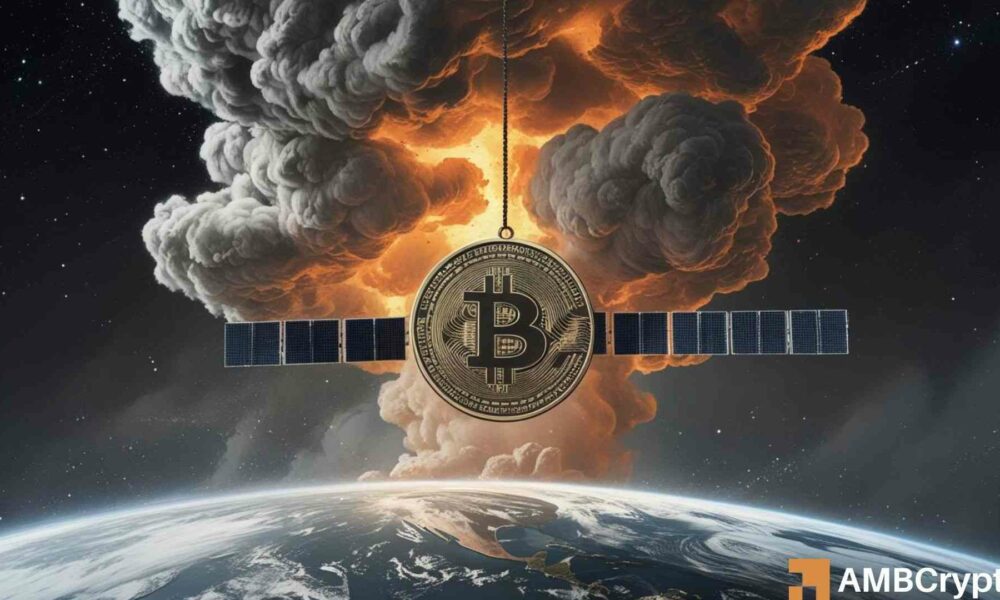
From a survival perspective, Bitcoin’s future hinges on the robustness of its decentralized network. Should a nuclear event lead to a catastrophic failure of the Internet, potentially reducing the active nodes to as few as 1,000, the cryptocurrency’s protocol could be placed in jeopardy. Such a decline could spark protocol splits or forks as remaining nodes struggle to maintain a unified consensus. On the other hand, if any network connections can be reestablished—perhaps utilizing satellite technology—there’s a possibility for Bitcoin to endure the harsh aftermath.
Current Probabilities and Future Outlook
As of now, speculative forecasts place the probability of a nuclear detonation occurring within 2025 at a mere 18%, underscoring the urgency of discerning Bitcoin’s immediate risk versus its long-term viability. While market analysts spotlight fluctuations due to geopolitical events, it is crucial for investors to weigh these in tandem with external risks. Understanding Bitcoin as a market asset and its transformative potential may offer investors insights that extend beyond short-term panic.
Conclusion
In summary, while Bitcoin presents a unique opportunity for hedging against inflation and political volatility, the implications of a nuclear conflict cannot be overlooked. The potential collapse of active nodes would lead to severe transaction breakdowns, affecting Bitcoin’s value. With various conflict scenarios at play, a nuanced understanding of the situation is imperative. Investors are encouraged to remain cautious and informed about not just the market dynamics but also the broader geopolitical landscape that could dramatically reshape the fate of Bitcoin as we know it.