



The U.S. Fiscal Crisis: A Spotlight on Bitcoin as a Hedge
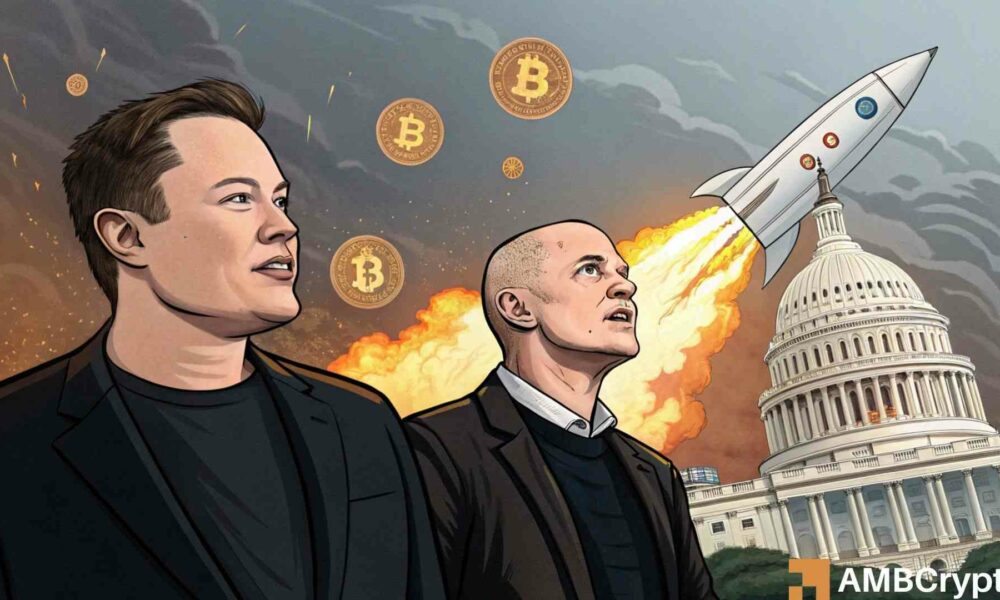
Elon Musk has intensified the discussion surrounding the U.S. fiscal crisis, recently warning that the government’s spending bill could burden American citizens with an additional $2.5 trillion in debt over the next decade. His statements have reignited interest in Bitcoin (BTC) as a potential alternative for those seeking refuge from the impending economic storm. As the country’s public debt continues to soar past a staggering $36.9 trillion, financial analysts are increasingly considering Bitcoin’s role as a hedge against inflation and economic instability.
Musk remarked that the government’s actions would “massively increase” the already substantial budget deficit, leading to what he characterized as "crushingly unsustainable debt." His take highlights the broader consensus that if Congress fails to address the worsening fiscal issues, Bitcoin could indeed take the lead as a world reserve currency. Coinbase’s Brian Armstrong echoed this sentiment, suggesting that the electorate must force Congress to act responsibly to prevent BTC from becoming the de facto standard for global currency.
The narrative surrounding Bitcoin as a viable solution is further supported by prominent financial figures. Larry Fink, CEO of BlackRock, previously stated that ongoing U.S. debt ballooning could jeopardize its status as the world’s reserve currency. His warning posits that if fiscal control isn’t regained, Bitcoin—and other digital assets—might fill the void. With Bitcoin’s capped supply of 21 million coins and a deflationary issuance rate, it presents a compelling case for becoming a safe haven asset as financial systems show signs of fragility.
Arthur Hayes, the founder of BitMEX exchange, reinforced Musk and Armstrong’s viewpoints by encouraging users to invest in Bitcoin. He contends that government spending is an unending cycle, underscoring Bitcoin’s potential for value appreciation in such an environment. When the spending bill recently cleared the Senate, the market responded positively—both gold and Bitcoin saw price surges, indicating a risk-off sentiment among investors. This reaction highlights an increasing alignment between traditional safe havens like gold and emerging assets such as Bitcoin during times of fiscal uncertainty.
Examining recent market data, we can see contrasting behaviors between gold and Bitcoin in terms of inflows. While gold enjoyed $17.8 billion of ETF inflows in the first half of 2025, BTC attracted only $7.2 billion, although this still represents significant growth. Despite gold’s dominance (outperforming BTC by 2.4 times), trends indicate a possible pivot. A notable decrease in gold inflows—from $30 billion to $17 billion—coupled with a surge in Bitcoin ETF inflows could suggest that Bitcoin might outperform gold in the mid to long term.
Looking ahead, both assets have shown some resilience. Bitcoin recorded a 12% gain year-to-date, while gold achieved a robust 28% increase. As Robert Kiyosaki predicts, fiscal deterioration in U.S. markets may drive people towards gold, silver, and Bitcoin this summer, as more investors seek safe havens for their assets. However amidst this optimistic outlook, long-term BTC holders have shown signs of apprehension, as many large holders continue to sell their assets. Analyst Willy Woo commented on the behavior of “big whales” who have been offloading their BTC since 2017—an indication that sentiment could be more nuanced than the bullish future many envision.
In conclusion, the alarm bells rung by figures like Musk and Armstrong reflect the growing awareness of Bitcoin’s potential amidst a deteriorating fiscal landscape. As the U.S. grapples with its burgeoning $36.9 trillion debt and fiscal deficits, investors are increasingly turning to Bitcoin as a hedge. Although Bitcoin faces challenges in its competition with gold, emerging market trends suggest that it could take its place as a key player in the financial landscape. Whether the current uptick in BTC adoption is sustainable remains to be seen, but it undoubtedly presents an intriguing narrative worth monitoring during these tumultuous economic times.