



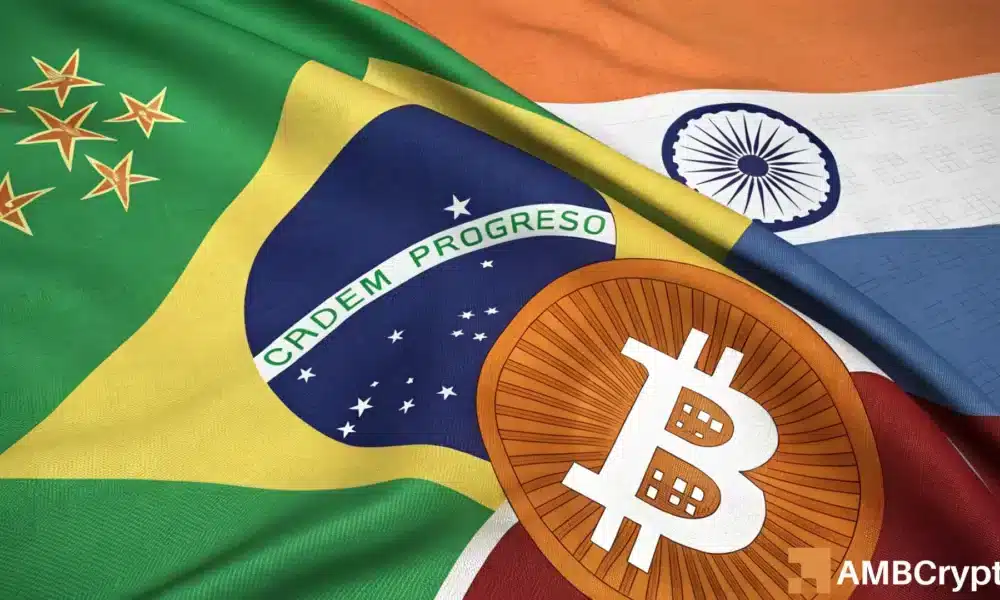

The Impact of Rising Liquidity in BRICS on Bitcoin’s Future: An In-Depth Analysis
Understanding the dynamics affecting Bitcoin’s value is crucial for investors and enthusiasts alike. Historically, Bitcoin has shown a tendency to respond positively to significant economic changes, such as the election of Donald Trump, which contributed to a remarkable rally. Today, a similar opportunity may be emerging with the rising liquidity within the BRICS nations (Brazil, Russia, India, China, and South Africa), potentially ushering in a new chapter for cryptocurrency investment.
Currently, the cryptocurrency market holds steady with a total capitalization of approximately $3.8 trillion. Bitcoin stands out with a market cap of about $2.21 trillion, reflecting its resilience amidst varying economic landscapes. The growing liquidity driven by the BRICS alliance could play a pivotal role in propelling Bitcoin’s growth even further, particularly as analysts, including those from AMBCrypto, explore how these developments could correlate with Bitcoin’s performance in the near future.
Recent reports indicate a significant increase in liquidity among BRICS nations, which is moving away from reliance on the U.S. dollar, traditionally the world’s dominant reserve currency. The focus on increasing monetary bases and bank liquidity signals the birth of a potential "new economic axis". Interestingly, a comparative analysis highlights a positive correlation between this growing liquidity and Bitcoin’s price movements; as liquidity expands within these emerging economies, Bitcoin has historically followed suit, suggesting that continued economic shifts could lead to further increases in its value.
Particularly noteworthy is the momentum building in Brazil and China regarding digital assets. In Brazil, plans are underway for a Bitcoin reserve, termed RESBit, where the government may allocate around 5% of its budget, equating to roughly $19 billion. This significant move could potentially inject more liquidity into the cryptocurrency market, promoting broader acceptance and integration of Bitcoin into national and economic strategies. Meanwhile, China is exploring a yuan-backed stablecoin even after its 2021 crypto ban. Such advancements could contribute significantly to global Bitcoin adoption and are critical indicators of shifting sentiments toward digital currencies.
Historical data confirms that large-scale global events have played a substantial role in shaping Bitcoin’s price. For instance, following Trump’s election victory in November 2024, Bitcoin experienced a staggering price surge of over 66% within a month, hitting an all-time high of $108,000. Such powerful correlations underscore the extent to which Bitcoin’s market behavior is intertwined with global economic developments.
In comparison to traditional asset classes, Bitcoin has consistently outperformed typical markets. In 2024, Bitcoin recorded a year-to-date gain of 103%, far overshadowing the S&P 500’s increase of just 32%. This impressive ascent has been paralleled by extraordinary trading activity across global exchanges, with platforms like Binance reporting trading volumes surpassing $700 trillion—more than the estimated global real estate value. This trend signals a marked acceleration in Bitcoin adoption on an international scale.
A vital aspect to consider remains the Bitcoin reserves held on exchanges, which have seen a consistent downtrend, indicating that more investors are choosing to store their assets in private wallets, often associated with long-term holding strategies. Currently, the reserves stand at approximately 2.4 million BTC according to CryptoQuant. A continued decline in this metric may suggest a deeper adoption of Bitcoin and decreasing sell-side pressure in the market, paving the way for a potentially bullish future as liquidity dynamics shift in favor of cryptocurrencies.
In conclusion, the intersection of rising liquidity within BRICS countries and Bitcoin’s historical responsiveness to economic changes sets the stage for potential growth in the cryptocurrency market. As nations like Brazil and China take steps toward increased Bitcoin adoption, coupled with the historical performance of Bitcoin during global shifts, investors are encouraged to keep a close watch on these developments. Understanding the evolving economic landscape and its impact on Bitcoin will be key in navigating the future of cryptocurrency investment.