




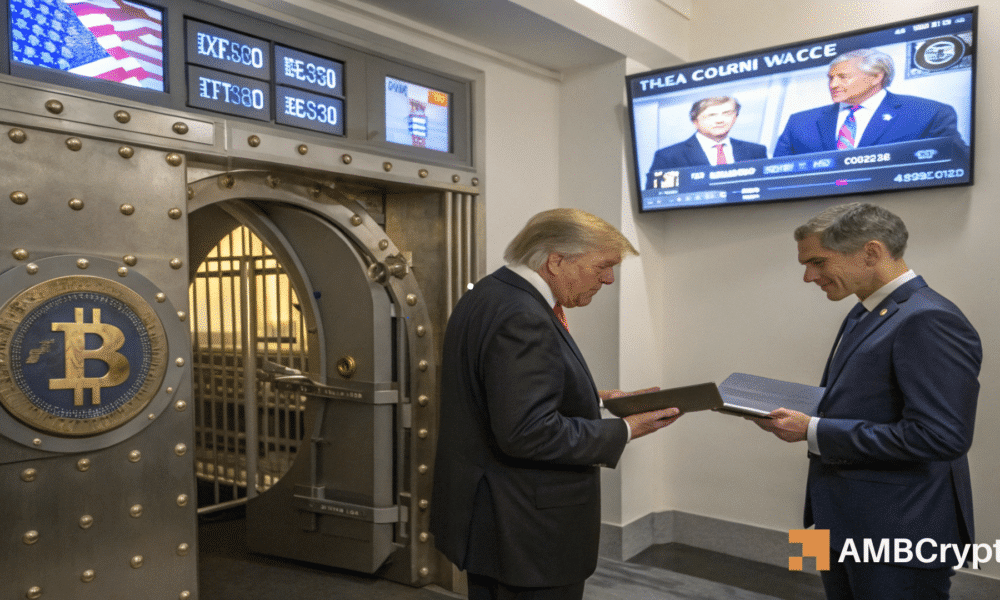
Understanding Recent Trends in the Crypto Market: Insights and Implications
In recent weeks, the cryptocurrency markets have experienced significant declines, leading analysts and investors alike to speculate on the potential causes behind this downturn. While some attribute this situation to a typical bear market, additional factors, including recent statements from prominent figures like Jim Cramer, have captured market attention and fueled discussions. This article explores the implications of Cramer’s remarks, the status of Bitcoin prices, and the prevailing sentiment surrounding the crypto market.
Jim Cramer’s Impact on Market Sentiment
On a recent episode of CNBC’s Squawk Box, Jim Cramer made headlines by suggesting that the U.S. government may be strategically buying Bitcoin at the $60,000 price point. This assertion followed Bitcoin’s price drop below its realized value of $79.1k, a situation Cramer termed a rare “Black Swan” event. He asserted, "I heard at $60k he’s gonna fill the Bitcoin Reserve," a statement that created waves in the crypto community. However, reactions varied, with many dismissing Cramer as an unreliable source and suggesting he might be conflating U.S. strategic reserves with broader strategic holdings.
Market Confidence and Potential Rate Cuts
The conversations generated by Cramer’s comments appear to have had an impact on market sentiment. Following his remarks, the likelihood of a rate cut during the upcoming Federal Open Market Committee (FOMC) meeting rose from 18% to 23.2%, as reported by CME Group. Typically, an increase in rate cut expectations boosts investor confidence, as lower interest rates allow traders to borrow more and invest in riskier assets like Bitcoin. This scenario could signal a potential bullish trend in the crypto market, although current probabilities remain low compared to historical data, where such forecasts often appeared in the 80th percentile or higher.
Key Price Levels for Bitcoin
As analysts observe Bitcoin’s price movements, the $60,000 level has emerged as a crucial area of interest. Historical data indicates that this price point has previously served as a psychological barrier and rally initiation zone; Bitcoin’s price surged to a high of $126,000 in 2025 from this range. However, despite the potential for a rebound, indicators such as the Relative Strength Index (RSI) suggest ongoing bearish pressure, raising concerns that Bitcoin may break below this critical support level instead of establishing a bullish trend.
Signs of Undervaluation and Market Recovery
On a positive note, the Bitcoin Mayer Multiple recently dropped to a value of 0.6, indicating that Bitcoin might be undervalued at current levels. This valuation analysis aligns with broader market expectations for a potential turnaround in price as traders begin to absorb recent market fears. Historical patterns suggest that similar conditions frequently accompanied bear market bottoms, leading to subsequent significant recoveries in December 2018, March 2020, and November 2022.
Interpreting the Current Market Landscape
Given the rapid fluctuations in sentiment and price levels, investors and market participants might question the implications of Cramer’s assertions and recent data trends. If the U.S. government does indeed transition to stronger Bitcoin buying and sentiment continues to bolster confidence, the $60,000 price level could serve as a critical foundation for recovery, supporting a more optimistic outlook for cryptocurrencies in general.
However, caution is warranted. Potential bearish pressures still loom, indicated by various market analysis tools. Investors should remain vigilant, understanding that volatility remains inherent to cryptocurrency trading.
Conclusion: Navigating the Crypto Future
In summary, the cryptocurrency market is currently grappling with uncertainty following recent price declines and mixed signals from influential figures like Jim Cramer. As Bitcoin hovers around the crucial $60,000 mark, understanding the intricacies of market sentiment and investor behavior is vital. Whether this situation represents a buying opportunity or a further descent into bearish territory is yet to be determined, but it underscores the need for informed decision-making in navigating the evolving landscape of digital currencies.
As stakeholders continue to analyze these trends, it remains essential to keep abreast of economic indicators and potential government actions that could influence market dynamics, particularly as we approach key financial developments in the coming weeks.