



Bitcoin Market Dynamics: Navigating Price Rally with Caution
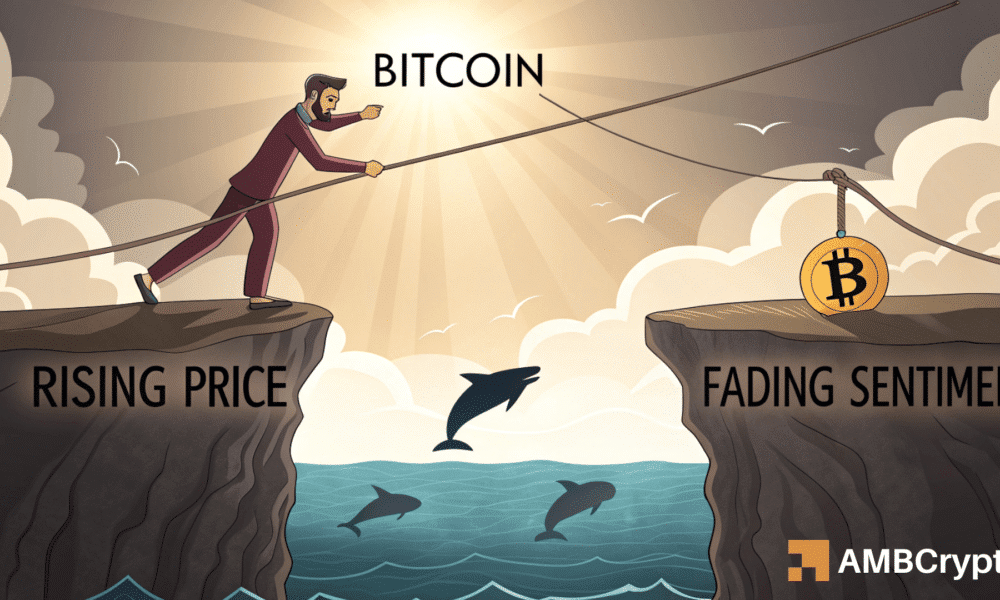
The Bitcoin (BTC) market has witnessed a significant price rally recently, surging from approximately $85,000 to over $103,000. However, despite this bullish movement, the Long-Term Holder Net Unrealized Profit/Loss (NUPL) has remained stagnant at 0.69, mirroring levels from April 1st. This indicates that long-term investor sentiment has not shifted, despite skyrocketing prices. While more December 2024 buyers are transitioning into long-term holders—diluting the overall unrealized profit share—the lack of conviction among long-term holders raises questions about the sustainability of this upward trend.
Why Long-Term Sentiment Matters
Long-term sentiment among Bitcoin holders plays a crucial role in shaping market dynamics. Currently, a staggering 94.88% of Bitcoin addresses are in profit, with only 0.88% out of the money. While high profitability is generally a positive indicator, it also presents a distribution risk. Historically, periods characterized by extreme profitability have often precede market corrections. Thus, if long-term holders rush to capitalize on their gains, it could extenuate selling pressure and negatively impact Bitcoin’s market value.
Whale Activity and Market Confidence
The actions of Bitcoin whales—large holders with significant positions—offer additional insights into market sentiment. Recent data indicates that these whales have offloaded over 30,000 BTC within just 72 hours, signifying a considerable reduction in their positions. The Large Holders Netflow has plummeted by 176.22% in the last week and 71.25% over the past month, suggesting a pattern of distribution rather than accumulation. This reluctance to hold further emphasizes a cautious outlook regarding short-term price movements, raising concerns about whether the current bullish rally can be maintained.
Derivatives Activity: Speculation Over Conviction
Interestingly, Bitcoin’s derivatives markets are seeing increased trading activity; futures volume has risen by 36% and options volume by 45%. However, a deeper analysis reveals that this heightened activity does not translate into strong investor conviction. The Futures Open Interest has only increased by 1.5%, while Options Open Interest has even decreased by 5%. These figures suggest that traders are engaging in speculative trading rather than forming long positions. This lack of deep leverage commitment contrasts distinctly with the strong backing usually seen during significant market rallies.
Stablecoins: A Reservoir of Untapped Capital
While stablecoins are accumulating on exchanges—evidenced by a 4.49% increase in the Exchange Stablecoin Ratio—this capital remains largely on the sidelines. The increased reserves suggest that traders are waiting for a more favorable entry point into Bitcoin markets. If the price of Bitcoin were to dip, these accumulated stablecoins might flood into the market, providing much-needed support. However, until such a trigger materializes, the demand remains idle, reflecting a cautious sentiment.
The Scarcity Factor: A Long-Term Perspective
One of the fundamental drivers of Bitcoin’s value is its scarcity, a narrative that has become even more pronounced following the recent halving. The Stock-to-Flow Ratio, a metric indicating the asset’s scarcity, has surged by an impressive 116.67%, reaching 43.5K. This heightened scarcity underscores Bitcoin’s intrinsic value in the long term. If demand surges, the reduced supply could lead to swift price appreciation. Nevertheless, the bullish structure remains underutilized without new inflows into the market.
In summary, while Bitcoin showcases resilience in price, a notable weakness in investor conviction prevails. Long-term holders appear muted, whale activities manifest caution, and derivatives metrics reflect uncertainty. Meanwhile, stablecoins indicate potential capital waiting for deployment. Yet, only the element of scarcity currently supports Bitcoin’s long-term bullish case. The sustainability of this rally hinges on renewed demand capable of absorbing excess selling pressure and validating current price levels. Investors remain in a delicately poised market, with caution prevailing amidst the optimism of rising prices.