



The Hyperunit Whale: A Shift from Aggression to Caution Amidst Bitcoin Sales
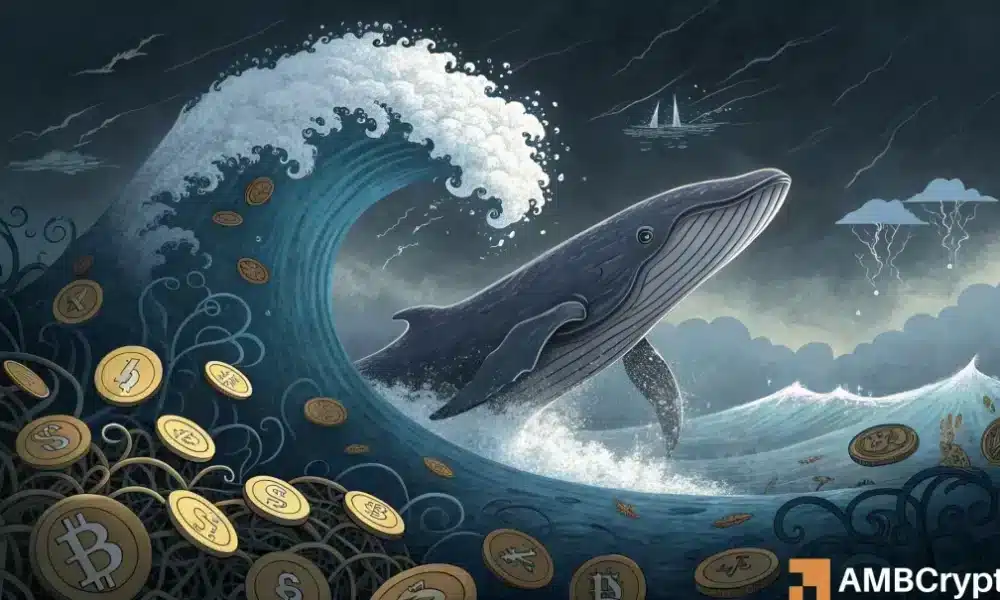
In recent developments, on-chain data from Arkham reveals that the Hyperunit whale wallet, associated with Garrett Jin, has offloaded over $340 million in Bitcoin (BTC), predominantly sending $341.8 million to Binance. This significant transaction has raised concerns regarding potential selling pressure in the market. Following several months of high-stakes trading, characterized by sharp gains and heavy losses—particularly notable with leveraged Ethereum (ETH) positions—the whale’s selling activity signals a cautious and calculative shift in strategy due to recent setbacks.
Historically, the Hyperunit whale’s holdings peaked at an astonishing $11.5 billion in Bitcoin; however, current estimates show a staggering decline, with assets now valued at approximately $2.2 billion. Instead of opting for a hold strategy during the Bitcoin rally, the whale’s decision to reduce exposure indicates a newfound emphasis on capital preservation. This strategic pivot comes in light of significant financial losses and an overall shift in market sentiment.
The tipping point for the Hyperunit whale occurred on February 1st, with a drastic sell-off triggered by the liquidation of a heavily leveraged ETH position on the decentralized exchange, Hyperliquid. This liquidation resulted in a $250 million loss, leaving the whale with a mere $53 remaining on the platform. The market price for Ethereum at the time hovered around $2,307, causing apprehensions about the sustainability of such high-risk trading practices. This incident marked the beginning of a more cautious phase for the whale.
Despite this setback, the whale attempted a comeback in late January, purchasing over $60 million in ETH after an earlier sell-off of nearly $100 million. Previously, the whale held more than 223,000 ETH but sold over 30,000 at market lows, incurring losses close to $9 million. However, the whale later seemed to regain confidence, rebuilding positions worth nearly $750 million across ETH, Solana (SOL), and BTC when ETH traded around $2,828. Although these trades reflect a momentary sense of optimism, they reveal an underlying fragility in long-term investment strategies.
The Hyperunit whale’s aggressive trading style has been evident since December, where he established over $400 million in ETH exposure, capitalizing on market volatility that yielded around $200 million during October’s crash. The whale also unstaked $361 million in ETH and borrowed $160 million in USDT using Aave, with significant capital movement to Binance, preparing for substantial leveraged positions while ETH was priced near $2,800. However, a pattern of heavy leverage and rapid fund movements now emphasizes risk exposure amidst changing market conditions.
Current Bitcoin price action reflects bearish sentiments, with Bitcoin trading at approximately $71,454.66. Technical indicators illustrate weakening momentum, with a sluggish MACD, red histograms, and an RSI floating below neutral levels. Additionally, a notable decline in Open Interest (OI) from around $61 billion to approximately $49 billion signifies a retreat among traders. This indicates that many have either exited leveraged positions or chosen to adopt a more conservative approach, stashing assets in cash or stablecoins instead of engaging in risky trades. Though this phase may appear painful, it potentially sets the stage for market stabilization by reducing risks and limiting extreme price swings.
In conclusion, despite Bitcoin’s proximity to recent highs, the Hyperunit whale’s decision to sell reflects diminishing confidence in the market. The pattern of swift re-entries to recover losses illustrates a focus on short-term gains rather than long-term investment convictions. As Bitcoin navigates through a phase of reset, characterized by weak technical signals and declining OI, the prevailing bearish control suggests that traders will remain cautious, highly attuned to shifts in sentiment and liquidity. As the market stabilizes, the hope is consensus could soon return, facilitating healthier trading conditions for investors.