



Aster DEX’s Stage 5 Buyback Program: A Strategic Move Amid Bearish Conditions
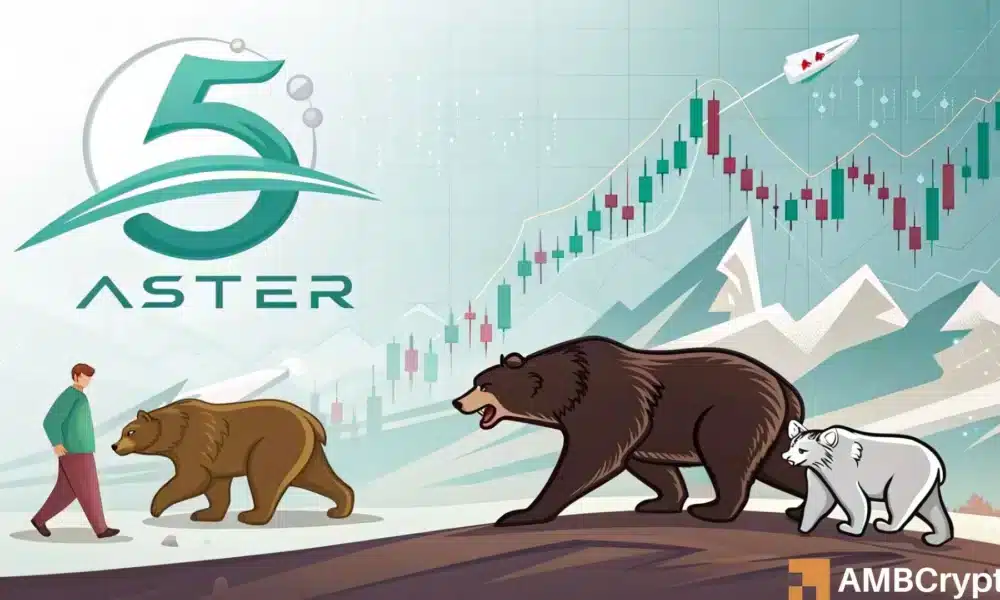
In the face of a prolonged bearish trend in the crypto market, Aster DEX is actively implementing strategies to mitigate downside risks. Recognizing the adverse effects of sell-side pressure, the platform has prioritized deflationary measures to stabilize the price of its native token, ASTER. This article explores Aster DEX’s recent initiatives, particularly its Stage 5 Buyback Program, aimed at ensuring long-term price stability in challenging market conditions.
The Buyback Strategy: A Pillar of Price Stability
Aster DEX has consistently turned to token buybacks as a key strategy to absorb selling pressure. Having successfully completed four buyback initiatives and purchasing over 209 million tokens worth more than $140 million, the platform has established itself as a proactive player in countering bearish market sentiments. The introduction of the Stage 5 Buyback Program marks a significant escalation in these efforts, with plans to allocate up to 80% of protocol fees towards token buybacks—showcasing an unwavering commitment to price stabilization.
Key Features of the Stage 5 Buyback Program
The Stage 5 Buyback Program operates with transparency at its core. Official reports confirm that 40% of daily platform fees are now being channeled into automatic daily buybacks, and community members can easily track these transactions through a transparent wallet. Furthermore, a percentage of the fees (20-40%) will be conserved as a strategic reserve, which can be advantageous for future initiatives. Since the launch of Stage 5, the team has already purchased 566k ASTER tokens valued at approximately $399k, highlighting the program’s immediate impact.
Innovative Use of Shield Mode Fees
To further bolster its buyback capabilities, Aster DEX has implemented Shield Mode Fees, which allocate 100% of these fees entirely to ASTER buybacks. This initiative introduces a profit-and-loss sharing fee structure that allows market participants to invest in Aster’s future. Individuals incur a 15% fee on net profits but face no costs when experiencing losses. The funds generated through these fees are exclusively invested in token buybacks. This innovative approach signifies a unique commitment to stakeholder engagement and market stability.
Ongoing Market Challenges
Despite these proactive measures, Aster DEX continues to confront substantial bearish pressure. Current market trends indicate that both retail and institutional investors—referred to as "whales"—have been actively offloading ASTER tokens. Recent reports from Coinalyze suggest significant sell volume of 4.43 million compared to only 3.54 million in buy volume, resulting in a concerning negative delta of -890k. This indicates strong selling activity, putting pressure on ASTER’s price.
Price Dynamics and Market Sentiment
The prevailing bearish sentiment is further supported by the data showing top holders recently offloading 17 million ASTER tokens in just 24 hours. Consequently, the altcoin is trading within a descending channel and remains below both the 20- and 50-EMA, a clear indicator of continued downward pressure. If this selling trend remains unaddressed, ASTER could potentially slide towards the critical support level of $0.60. For a meaningful trend reversal, the token must achieve a daily close above the EMA20, currently situated at $0.83.
Conclusion
In summary, Aster DEX has launched its Stage 5 Buyback Program with a significant allocation of up to 80% of protocol fees directed towards token buybacks. In tandem with the introduction of Shield Mode Fees, which further reinforces this initiative, Aster DEX is committed to stabilizing its ASTER token amid ongoing bearish conditions. However, market dynamics indicate a challenging environment for the altcoin, which risks further declines if selling pressure persists. To counteract this trend, achieving a daily close above $0.83 is crucial for Aster’s potential price reversal. As the cryptocurrency landscape evolves, Aster DEX’s innovative approaches may prove vital for its sustenance and growth in an increasingly competitive market.