




Bitcoin Reacts to Tariff Threats from President Trump: Market Implications and Future Outlook
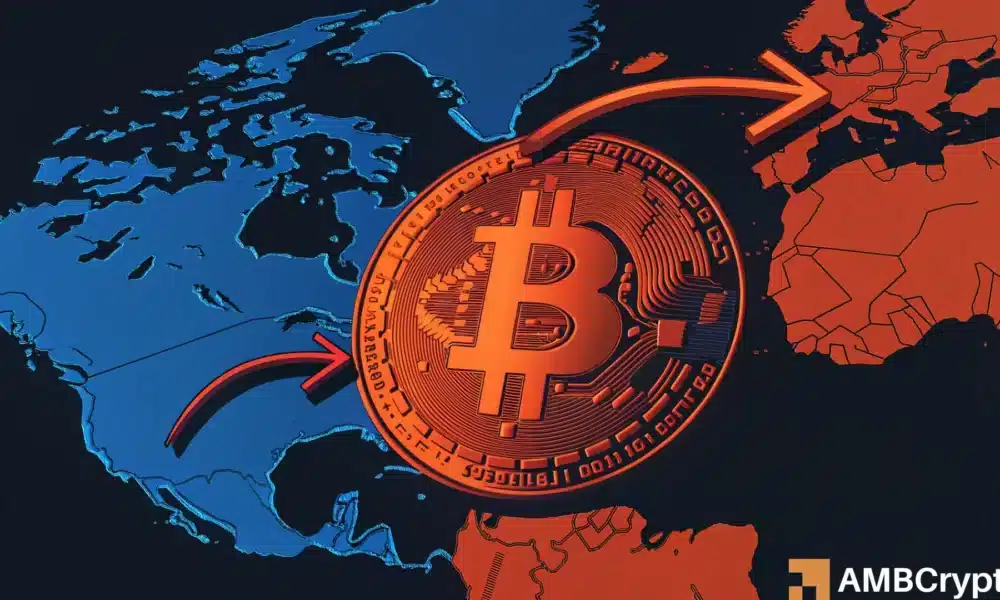
In a dramatic turn of events, Bitcoin’s price briefly approached the $92,000 mark during early trading in Asia, a direct response to tariff threats issued by President Trump. The proposed tariffs specifically target eight European nations: Denmark, Norway, Sweden, France, Germany, the Netherlands, Finland, and Britain. Initial tariffs are set at 10%, effective February 1, with potential escalations up to 25% by June if no agreements are reached. The President’s rhetoric included a notable remark linking the tariff to ongoing negotiations concerning the purchase of Greenland, adding a layer of geopolitical intrigue to the market.
The immediate aftermath of the tariff announcement saw a ripple effect across global financial markets. With U.S. cash markets closed for the holiday, the initial shock was felt in futures trading. The S&P 500 futures experienced a decline of approximately 0.7%, while Nasdaq futures dipped by 1%. Asian markets were not spared; Japan’s Nikkei index fell about 1%, and the MSCI Asia-Pacific index, excluding Japan, also reported a marginal drop of 0.1%. European indices followed suit, with Euro Stoxx 50 and DAX futures both exhibiting a downturn of around 1.1%, painting a bleak picture for investors.
Currency markets were not immune either, with the U.S. dollar slipping against various safe-haven currencies. The greenback fell about 0.3% against the Japanese yen and 0.2% against the Swiss franc, indicating a shift in investor sentiment towards more stable assets. Conversely, the Euro managed a slight recovery after its initial dip. Precious metals saw notable gains, with gold climbing 1.5% to reach record highs and silver also achieving an all-time high, while West Texas Intermediate crude traded lower amidst growing concerns over potential trade conflicts impacting global growth.
Despite these tremors within traditional markets, Bitcoin found some stability later in the trading session. The cryptocurrency managed to regain some of its earlier losses, attributed to bargain buying and a steady market sentiment that prevented further declines. Investors seemed to react cautiously, positioning themselves to capitalize on potential price corrections. As global markets navigate this uncertain landscape, attention remains fixated on capital flows and upcoming economic data that could sway future market trends.
European investors are particularly noteworthy, holding around $8 trillion in U.S. bonds and equities. Recent reports from Bloomberg voiced concerns from Deutsche Bank, warning that any significant shifts in this capital could have more severe implications for the market than the tariffs themselves, labeling such a shift as a "weaponization of capital." This raises the stakes for both investors and policymakers, emphasizing the interconnected nature of global finance where decisions in one region can reverberate worldwide.
Looking ahead, several key events may further shape market behaviors. Economic growth data from China is expected to be released this week, alongside critical policy decisions from the Bank of Japan. Additionally, U.S. economic indicators could heavily influence the Federal Reserve’s next moves. Compounding these financial concerns, world leaders are gathering in Davos, where discussions surrounding security issues — including the contentious Greenland acquisition — are likely to dominate the agenda.
Final Thoughts and Market Outlook
In conclusion, while Bitcoin has managed to weather the initial storm, its price remains precarious amid ongoing global economic tensions. The looming threat of an $8 trillion shift in European holdings could dramatically alter market dynamics. Investors and analysts alike are advised to closely monitor developments in China, U.S. economic metrics, and the outcomes of discussions in Davos, as these factors have the potential to move markets swiftly and significantly.
As the situation unfolds, it becomes increasingly clear that Bitcoin and other digital assets could face volatility linked to broader geopolitical and economic trends. Market participants should prepare for potential disruptions as economic indicators and trade discussions could fundamentally reshape investor strategies in the near future. As always in this dynamic environment, staying informed and agile will be key to navigating the upcoming challenges.