



Title: The Evolving Landscape of Bitcoin Mining: AI Engagement and Market Dynamics
Introduction
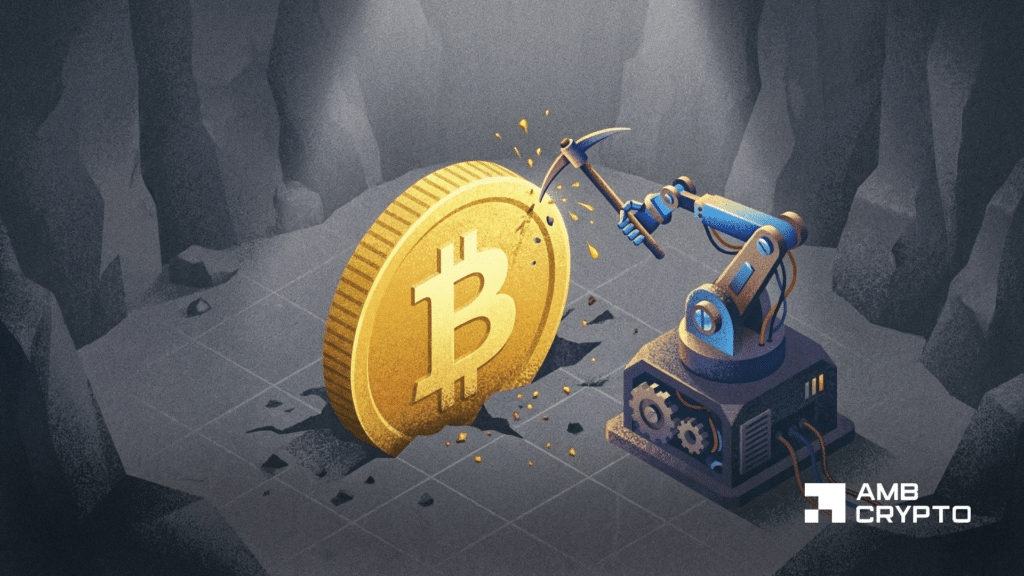
Bitcoin mining is currently experiencing profound shifts, with miner behavior significantly influencing the cryptocurrency’s market structure. As profitability within the mining sector diminishes, key players are adapting their strategies to navigate tighter margins effectively. A recent move by Marathon Digital Holdings (MARA), which involved transferring 298 BTC after updating its treasury sales policy, underscores the increasing pressure on mining operations. With Bitcoin trading in the range of $68,000 to $70,000, the mining environment is under severe duress, prompting a closer examination of miner strategies and the potential for market corrections.
Mining Margins Under Pressure
At present, the average cost to mine one Bitcoin for companies like Marathon is around $70,027. This figure indicates that production costs are surpassing potential revenue, compelling miners to liquidate reserves to maintain their operational viability. Such actions are often characteristic of miner capitulation phases, which typically occur during late-stage market corrections and can serve as bellwethers for significant market shifts. The pressures from rising operational costs create an atmosphere where historical trends may resurface, making it crucial for stakeholders to closely monitor miner activity as a potential signal for upcoming market corrections.
The Shift Toward AI Infrastructure
As profitability constraints tighten around traditional Bitcoin mining, many firms are beginning to pivot toward alternative avenues such as artificial intelligence infrastructure and high-performance computing (HPC) services. This strategic transition not only allows for diversification but also presents opportunities for higher and more stable profit margins. The mining economics remain tense, illustrated by data showing that hashprice is nearing $33 per PH/s, indicative of weak revenue generation per unit of hash power. As competition intensifies within the network, and hashrates exceed 1,000 EH/s, the sustainability of mining operations becomes a pressing concern amid rising costs.
Rising Competition and Resource Allocation
The rapid acceleration of AI infrastructure spending, with estimates suggesting over $500 billion in hyperscaler investment by 2026, places additional pressures on Bitcoin miners. As these miners interface more directly with technology firms for high-quality electricity and advanced computing resources, operational costs are likely to rise. This competition for essential resources could reshape the long-term economics of Bitcoin mining as firms grapple with the need to balance their core activities against the expenditure required for this transition.
Equity Markets and Investor Sentiment
The pivot towards AI infrastructure by mining firms is not going unnoticed in equity markets. For example, Core Scientific (CORZ) has shown remarkable resilience, trading at approximately $16.54, representing a staggering 90% year-over-year increase. This upward trajectory indicates that the market is beginning to reflect future profitability expectations linked to AI partnerships and high-performance computing services. Such initiatives promise to provide a more stable revenue stream compared to traditional Bitcoin mining cycles, signaling a critical shift in resource allocation and asset management within the sector.
Conclusion
As Bitcoin mining margins contract due to escalating production costs, miners are increasingly turning to reserve liquidation and diversifying into AI-related operations. This transition is revealing a new paradigm within the mining landscape, emphasizing strategic adaptability over prolonged sector contraction. Equity markets are now aligning investor sentiment with these changes, pricing in expectations of a more diversified revenue model, ultimately indicating a burgeoning convergence between Bitcoin mining and AI infrastructure. Moving forward, stakeholders must remain vigilant, as the evolving mining economics may redefine the future landscape of cryptocurrency.