



Analyzing Ethereum’s Market Performance and Future Potential
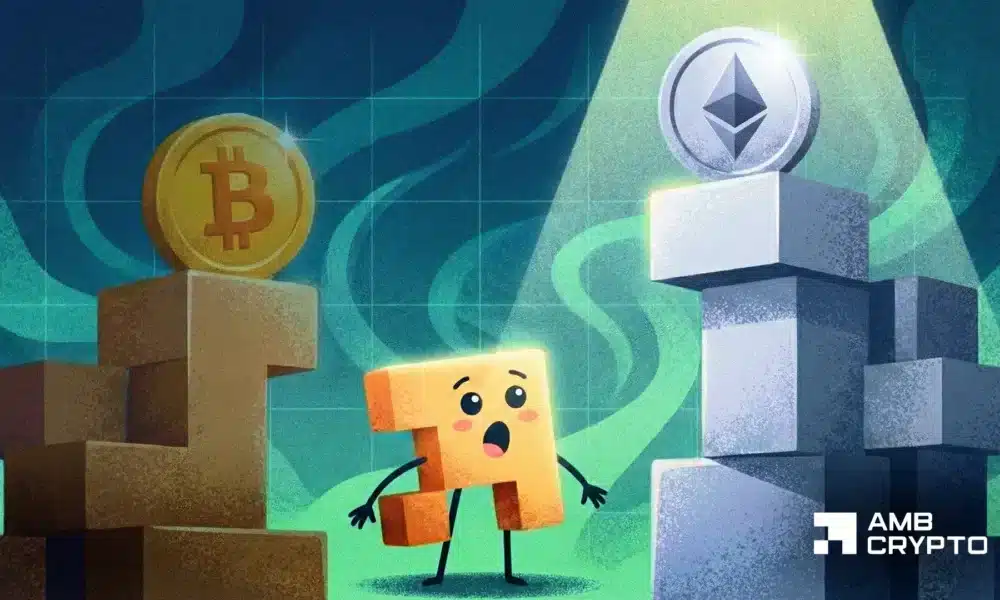
In the shifting landscape of cryptocurrency, understanding market trends can be crucial for investments. As risk assets follow cycle patterns from 2025, we see a stark contrast between Bitcoin (BTC) and Ethereum (ETH). While BTC established a more robust foothold, ETH faced challenges that resulted in underperformance. However, the resilience of Ethereum’s network fundamentals, coupled with growing institutional interest, suggests potential for a comeback that investors should watch closely.
Current Market Dynamics
Throughout the 2025 cycle, Ethereum’s performance has been significantly weaker than Bitcoin’s. Ethereum has witnessed a decline of about 45.4% compared to Bitcoin’s -11.8% return on investment (ROI), resulting in a roughly 13% decrease in the ETH/BTC ratio. Furthermore, while Bitcoin’s dominance decreased by 12%, Ethereum’s dominance plummeted by 33% during the same period. These numbers paint a concerning picture for ETH, raising questions about its market trajectory. However, a closer look reveals a resilient network that remains buoyed by strong fundamentals despite market volatility.
The Rebound: Q2 Insights
The second quarter of 2025 marked a turning point for Ethereum. After a rough start, ETH demonstrated strong resilience, achieving a dominance ratio that was double that of Bitcoin. This robust comeback is significant, suggesting that Ethereum might once again emerge as a leader if the market conditions become favorable. Analysts are eager to determine whether Ethereum’s strong on-chain accumulation can pave the way for another exceptional quarter, reminiscent of its performance in Q2.
Institutional Confidence in Ethereum
A key factor bolstering Ethereum’s prospects is its growing institutional adoption. An illustrative example is BitMine, a prominent player in the cryptocurrency space, which recently increased its ETH holdings by purchasing an additional 45,759 ETH, thus amassing a total of 4.37 million ETH. This move indicates a high level of confidence in Ethereum’s future prospects, driven by its foundational network strength and broad adoption. Additionally, well-known financial institutions like BlackRock and J.P. Morgan are developing blockchain versions of traditional payment systems on the Ethereum platform, further solidifying its long-term viability.
Market Valuation and Real-World Assets
One of the driving forces behind Ethereum’s resilience is the growth of Real-World Assets (RWAs) on its blockchain. The market cap for RWAs has soared to over $15 billion, representing a remarkable year-over-year increase of 200%. This growth underlines that Ethereum’s recent challenges are more reflective of market dynamics than any intrinsic weaknesses within the network itself. The divergence between Ethereum’s market performance and its underlying value is critical for investors looking to capitalize on future opportunities.
Potential for Future Performance
Given the current conditions, the possibility of Ethereum outperforming Bitcoin again is on the horizon. The foundational strength of the Ethereum network, coupled with institutional backing, creates a fertile environment for recovery. If the market sentiment shifts back to a risk-on approach, Ethereum stands to benefit significantly. This potential rebound is fueled by a combination of solid on-chain activities, institutional investments, and an optimistic outlook for the cryptocurrency market.
Conclusion
The journey of Ethereum in the volatile landscape of cryptocurrencies serves as a compelling case study on resilience and opportunity. While it may have lagged behind Bitcoin in performance, the recent institutional interest and robust network fundamentals signal a strong possibility for a rebound. As investors keenly watch market dynamics, those who recognize Ethereum’s underlying value could find themselves well-positioned for significant returns in the future. The coming quarters will undoubtedly be crucial in determining whether Ethereum can harness its strengths and redefine its role in the crypto ecosystem.