



Aave Governance Drama: An Opportunity for Smart Money and Whale Accumulation
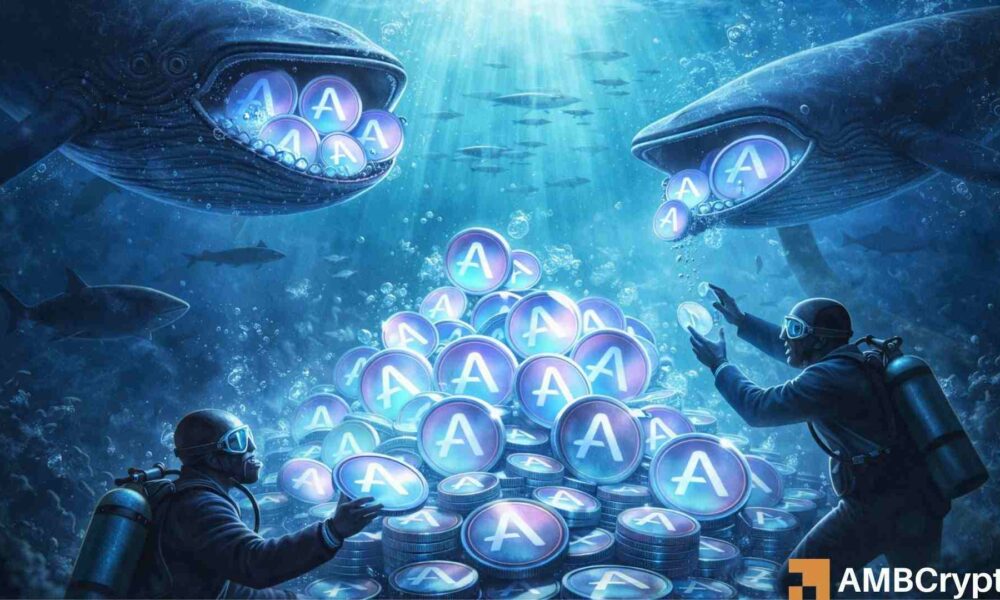
In the ever-evolving world of decentralized finance (DeFi), the recent Aave governance drama has not only shaken investor confidence but also opened doors for savvy investors to scale their exposure to the AAVE token at discounted prices. Following a significant price decline of approximately 20%, which saw AAVE plunge to around $143 and wipe out over $500 million from its market cap, whale investors and the top 100 addresses seized the moment. They increased their holdings to 12.92 million AAVE, accounting for about 8% of the total supply. This accumulation has resulted in these addresses now controlling a staggering 80% of the total AAVE supply, indicating a growing concentration of wealth in the hands of a few.
As retail investors retreated during the governance debacle, the number of whale wallets—those holding over $1 million—surged significantly. Between early and late December, these whale wallets increased by 66%, rising from 120,000 to 200,000. This sharp increase reflects not only a surge in demand among large holders but also a significant shift in market dynamics as smaller investors opted out. This influx of smart money stands in stark contrast to retail investors who may have been discouraged by the turbulence surrounding Aave’s governance.
To better understand the recent sell-off, it’s crucial to look at the selling pressure across exchanges. Data from Santiment reveals that during the peak of the Aave Labs-DAO drama and around the Christmas week voting period, AAVE tokens available on exchanges surged from 1.22 million to 1.43 million. This spike in supply directly correlated with the price drop from $182 to $143. However, as the situation began to stabilize, selling pressure eased, dropping to 1.31 million AAVE at the time of writing. This reduction in selling pressure has provided some relief to AAVE’s price and is a promising sign for potential recovery.
Interestingly, the hostilities surrounding the governance drama began to de-escalate when Aave Labs and founder Stani Kulechov announced plans to share non-protocol revenue with AAVE token holders. While this move has helped alleviate some tensions, it is important to note that the underlying issues are not entirely resolved. The different factions must reach an enforceable agreement for the governance structure to maintain stability moving forward.
In terms of market performance, AAVE showed resilience amid all this uncertainty. Despite challenges, bulls have attempted to reclaim the crucial 50-day Moving Average, currently positioned at around $174, for the second time since December. Although they have yet to succeed, a successful reclamation could signal a significant bullish shift in market sentiment and potentially lead to a sustainable price recovery. If AAVE can consolidate its trading range between $160 and $174, it may successfully push towards the upper resistance levels, projecting a possible upside of 30% to the $210-$220 range.
Nonetheless, if the price falls below the $160 support level, such a move would invalidate the bullish outlook and likely lead AAVE back down to around $140. Traders and investors alike are keeping an eye on this critical support level as market sentiments can shift rapidly in the volatile DeFi landscape.
In conclusion, the Aave governance situation has demonstrated not only substantial whale interest but also an increase in accumulation by smart money. The tapering off of overall selling pressure offers a glimmer of hope for potential price recovery, but the crucial focus remains on whether the $160 support level will hold. If it does, AAVE could see a significant rebound, while any breach of this support could lead to further declines. The DeFi landscape is ever-changing, and AAVE’s journey will be one to watch closely in the coming weeks.