



Crypto Venture Capital Funding in 2025: Trends and Future Prospects
In 2025, the landscape of crypto venture capital funding evolved significantly, largely matching investor expectations but exhibiting surprising concentration. While total investment dollars saw a recovery from earlier lows, most of this capital funneled into a limited set of companies and strategies. This trend left early-stage founders grappling with one of the most challenging funding environments in recent years.
Concentration of Capital: The Rise of Digital Asset Treasury Firms
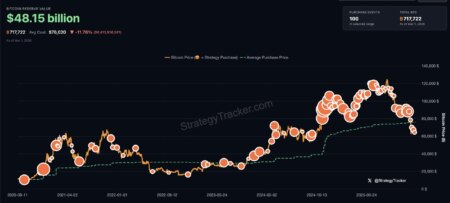
A primary driving force behind this funding concentration was the emergence of Digital Asset Treasury (DAT) companies. According to The Block Pro, these firms alone garnered around $29 billion in investments throughout 2025. They provided institutional investors with a straightforward method to gain exposure to cryptocurrencies without the complexities of supporting startups directly. Traditional venture capital investments reached about $18.9 billion, an increase from $13.8 billion in 2024. However, the number of deals fell by nearly 60%, with only about 1,200 transactions recorded—a stark contrast to the more than 2,900 deals in the previous year.
Mathijs van Esch, a general partner at Maven 11, noted the unexpected concentration of capital among a few companies, particularly DATs. He attributed this shift to increased institutional adoption, which overshadowed expectations for more diversified early-stage funding.
Factors Behind Declining Early-Stage Funding
The drop in early-stage funding can be traced back to several critical factors. One major aspect was the reduced availability of venture capital due to many crypto firms nearing the end of their financial runway from earlier funds. Rob Hadick, general partner at Dragonfly, reported that many funds struggled to attract new capital, as limited partners became more cautious following underperformance compared to traditional risk assets like Bitcoin. Consequently, this scarcity of dollars adversely affected seed and pre-seed investing.
Moreover, as regulatory clarity improved, companies with proven product-market fit began scaling more quickly, leading to a phenomenon referred to as "investor bunching." This trend was particularly pronounced within high-potential sectors such as stablecoins, exchanges, decentralized finance, and supporting infrastructure.
Expectations for Early-Stage Funding Recovery in 2026
Investor sentiment suggests a modest recovery in early-stage funding in 2026, though still falling short of previous cycle heights. Quynh Ho of GSR anticipates a rebound, albeit with higher benchmarks for investor interest focused on traction and business fundamentals rather than narratives alone. Hadick echoed this, expressing hope for growth driven by regulatory clarity, mergers and acquisitions, and more initial public offerings (IPOs), which could help realign venture capital interests toward operating businesses.
The fading excitement surrounding DAT companies is thought to allow venture capitalists to refocus on promising startups. Investors are optimistic about growth within the stablecoin-centric application space alongside broader blockchain adoption.
Key Themes and Areas of Interest for Investors in 2026
Heading into 2026, several themes emerged as focal points for venture capitalists. Stablecoins and payment solutions stood out, driven by increasing institutional adoption and clearer regulations. The overlap between stablecoins and traditional fintech signifies a shift towards simpler revenue models based on transaction fees rather than complex token-based economics.
Investor interest also gravitated toward institutional-grade market infrastructure, including exchanges, risk and compliance tools, and crypto-native financial products. Real-world asset tokenization remains appealing, with improvements in liquidity and trading infrastructure. Beyond stablecoins, prediction markets are expected to see significant growth potentials for both applications and supporting businesses.
Evolving Landscape of Token Sales and ICOs
With the rise of digital asset treasuries, token sales and initial coin offerings (ICOs) also re-emerged in 2025. However, investors dismissed the notion that they could replace venture capital funding. Token sales were seen as increasingly selective and cyclical, although some investors viewed them as valuable for price discovery in favorable scenarios. Pai indicated a growing interest in hybrid funding models, suggesting that while token sales may gain traction, top-tier projects will likely continue pairing them with venture backing.
Despite the allure, challenges persist in the form of speculative risks overshadowing tangible utility, making venture capital the prevailing means for securing funding from the strongest crypto companies.
Conclusion: Navigating Uncertainty in Crypto Venture Funding
As the crypto funding landscape evolves, the focus turns toward sustainability and operational rigor, especially amid regulatory changes anticipated in the near future. The dynamics observed in 2025 underline a complex yet promising environment for venture capital investing. Investors are mindful of balancing risk with potential growth opportunities, aiming to navigate the intricacies of venture funding effectively. Despite challenges faced in early-stage financing, optimism prevails, suggesting a recalibration and maturity within the crypto venture capital ecosystem as it moves into 2026 and beyond.
Staying connected with the latest trends and developments in crypto funding is essential for investors and enthusiasts alike. To keep up with ongoing shifts in the market, consider subscribing to dedicated newsletters or platforms that provide insights into crypto venture capital and M&A activity.