



Bitcoin’s Shift: Easing Sell-Side Pressure Signals a New Era
The analysis by K33 Research suggests a significant shift in Bitcoin’s market dynamics as prolonged sell-side pressure from long-term holders appears to be nearing saturation. For the first time since a multi-year distribution phase began, indicators show that these sell-side pressures are diminishing, potentially paving the way for a new phase in Bitcoin’s price trajectory.
Declining Long-Term Supply
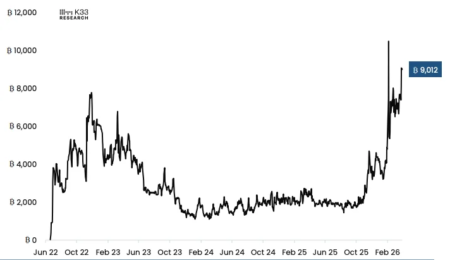
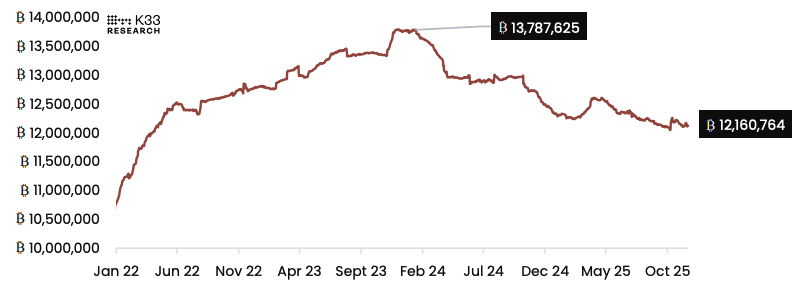
K33’s recent report highlights that Bitcoin held in unspent transaction outputs (UTXOs) older than two years has been on a steady decline since 2024. Approximately 1.6 million BTC, worth $138 billion at current market prices, have been reactivated, reflecting sustained on-chain selling pressure from early holders. Vetle Lunde, K33’s Head of Research, emphasizes that the sheer volume of this reactivation suggests a significant distribution trend, rather than merely technical fluctuations. While some sell-offs have been attributed to causes like Grayscale’s Bitcoin Trust transitioning to an exchange-traded fund (ETF) and wallet consolidations for enhanced security, these factors alone do not account for the substantial volume of supply returning to circulation.
A New Era of Ownership Dynamics
The years 2024 and 2025 stand out as the second and third largest periods for long-term supply reactivation in Bitcoin history, trailing only behind 2017. Interestingly, the previous cycle was characterized by trading in altcoins and initial coin offerings (ICOs), whereas the current activity is primarily driven by direct selling into liquidity created by U.S. spot Bitcoin ETFs and significant corporate treasury demand. These shifts in motivation highlight a more mature and institutionalized market, with notable large transactions serving as proof of this trend, including several significant OTC sales involving tens of thousands of BTC.
Institutional Liquidity and Its Effects
K33’s research indicates that around $300 billion worth of Bitcoin, aged a year or more, has been reactivated in just 2025. The availability of institutional liquidity allows long-term holders to realize profits at higher price points, which fundamentally reduces ownership concentration. With a new reference price established for large portions of the circulating supply, the dynamic of Bitcoin ownership is undergoing a significant transformation. This influx of institutional demand suggests that Bitcoin is becoming more entrenched in mainstream financial systems, providing a fresh layer of stability and legitimacy.
Future Outlook: Easing Sell-Side Pressure
Looking forward, K33 anticipates that the sell-side pressure will continue to diminish. Lunde projects that with 20% of Bitcoin’s supply reactivated over the past two years, the on-chain sell-side pressure may be reaching saturation. He believes that the amount of Bitcoin held for over two years will cease its downtrend and may even rise through 2026, driven by a slowdown in early holder sales and an emergent net buy-side demand.
Potential Market Rebalancing
As we approach the end of the financial quarter, K33 notes the possibility of market rebalancing. Historical patterns suggest that Bitcoin tends to move in the opposite direction of its performance in the previous quarter. Given that Bitcoin has lagged behind other asset classes in the fourth quarter, managers adhering to fixed allocation strategies may provide a support mechanism for inflows as we transition into late December and early January. Such rebalancing could trigger a short-term rally, mirroring the dynamics observed earlier this year.
A Unique Cycle
Despite historical cycles indicating that supply reactivation usually peaks at market tops, Lunde argues that the current environment may differ. The increasing integration of Bitcoin into mainstream finance, including expanded ETF access, advisory platforms, and clearer regulatory guidelines, could foster a more sustainable demand landscape. As sell-side pressures wane, the unique characteristics of this cycle suggest the potential for a more durable upward trajectory for Bitcoin in the years ahead.
In conclusion, the trends highlighted by K33’s research indicate a significant shift in Bitcoin ownership and demand dynamics. With sell-side pressures easing and institutional liquidity rising, Bitcoin’s future appears to hold promise, potentially leading to a more stable and mature market landscape.