



Bitcoin vs. Gold and Silver: Analyzing Performance Amid Geopolitical Instability
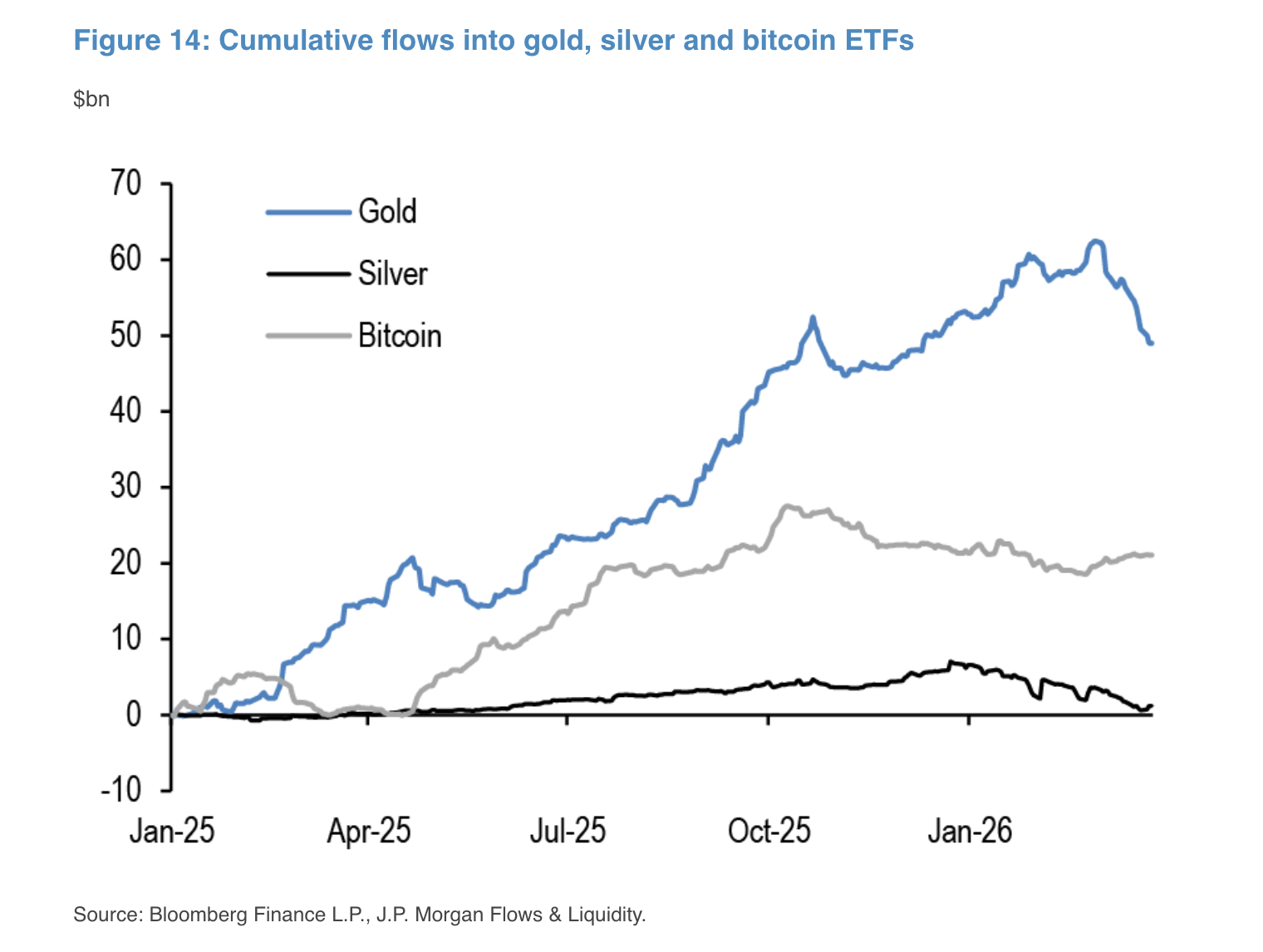
In recent weeks, Bitcoin has demonstrated remarkable resilience compared to traditional safe-haven assets like gold and silver during the ongoing Iran conflict. Analysts at JPMorgan highlight that while precious metals have experienced significant outflows and position unwinds, Bitcoin has seen net inflows and increased activity. This performance underscores Bitcoin’s evolving status as a preferable asset during times of economic and geopolitical crisis.
The Current Landscape of Precious Metals
Gold has fallen approximately 15% this month alone, influenced by rising interest rates and a stronger U.S. dollar, which have exerted pressure on previously crowded positions. Earlier this year, gold prices surged to record highs near $5,500, and silver approached $120. However, this spike left both metals susceptible to profit-taking and liquidation when market conditions shifted. JPMorgan reported an alarming trend: gold exchange-traded funds (ETFs) faced nearly $11 billion in outflows within the first three weeks of March, while silver ETFs reversed inflows accumulated since last summer. This contrasts sharply with Bitcoin’s positive trajectory during the same timeframe.
Bitcoin’s Rising Momentum
Following the onset of the Iran war, Bitcoin’s adoption has surged significantly, particularly as citizens began transferring funds from local exchanges to self-custody wallets and international platforms. According to data from Chainalysis, the unique characteristics of Bitcoin—its borderless nature, ability for self-custody, and 24/7 trading—make it an attractive option for transferring capital amidst economic turmoil and currency control. Therefore, while traditional safe-haven assets like gold and silver falter, Bitcoin emerges as a reliable alternative for those seeking to safeguard their wealth.
Institutional Investment Dynamics
Institutional investors, once bullish on gold and silver, have begun reassessing their positions. JPMorgan’s analysis revealed a significant decline in institutional futures positioning for these precious metals since January 2023. This shift indicates that profit-taking has become a prevalent strategy among these investors. Conversely, Bitcoin futures positioning has remained relatively stable, highlighting its appeal as a more consistent investment during turbulent times. This divergence emphasizes Bitcoin’s potential as a digital safe-haven asset, particularly as traditional assets lose their allure.
The Role of Momentum Strategies
The ongoing volatility in precious metals is exacerbated by momentum-driven trading strategies employed by investors. JPMorgan’s analysts noted that positioning signals for gold and silver swung from overbought levels to below neutral, suggesting that forced liquidations have contributed to price declines. In stark contrast, Bitcoin’s momentum signals are recovering from oversold conditions, indicating a shift toward improved market sentiment. This resilience could attract more investors seeking stability amidst the chaos.
Liquidity Conditions: A Turning Point
Historically, gold has maintained stronger market liquidity compared to Bitcoin and silver, as evidenced by the Hui-Heubel ratio, which measures liquidity levels. However, current liquidity dynamics indicate a significant shift. The liquidity conditions for gold have deteriorated, causing its market breadth to fall below that of Bitcoin, which now appears to offer better liquidity. Furthermore, silver has faced even steeper declines in liquidity, worsening its price movements. These changes in liquidity conditions further establish Bitcoin as a favorable asset for investors navigating uncertain economic climates.
Conclusion: Bitcoin as a Viable Safe Haven
As the geopolitical landscape continues to evolve, Bitcoin’s performance relative to gold and silver underscores its growing relevance as a safe-haven asset. Analysts stress the importance of cryptocurrencies in providing financial stability during times of economic and currency instability, evidenced by the surge in crypto activity in Iran. With Bitcoin exhibiting resilience amid market turmoil and traditional assets experiencing significant challenges, investors may increasingly turn to Bitcoin as a viable alternative for securing their wealth during uncertain times.
As the economic landscape changes, understanding these shifts will be crucial for investors looking to navigate the complexities of modern finance.