




Title: Bitcoin vs. Precious Metals: A Shift in Investor Preferences
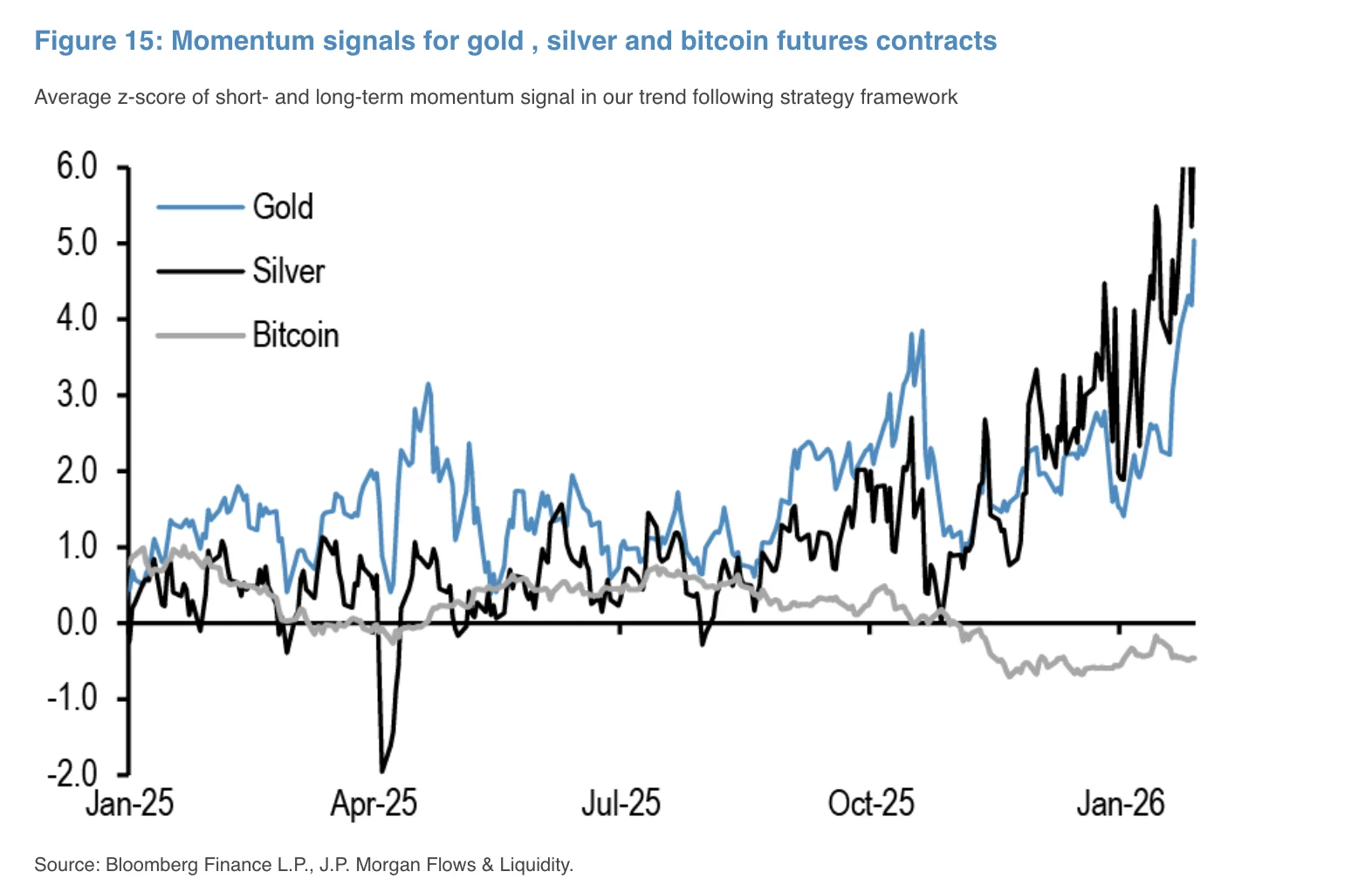
In a recent analysis, JPMorgan’s experts indicate that the landscape of investment is evolving, particularly concerning bitcoin, gold, and silver futures. The analysts have observed that bitcoin futures appear to be oversold, while futures for gold and silver have moved into overbought territory. This shift in dynamics suggests that investors, both retail and institutional, are increasingly turning to precious metals over bitcoin as the preferred choice for secure investments.
Throughout much of 2025, retail investors engaged in what’s known as the "debasement trade," actively purchasing both bitcoin and gold exchange-traded funds (ETFs). However, by August, a notable change occurred; cumulative inflows into bitcoin ETFs stagnated and subsequently saw a decline in the fourth quarter. Conversely, gold ETFs experienced a substantial uptick, closing the year with nearly $60 billion in cumulative inflows. Silver ETFs also gained traction during this same period, reinforcing the narrative that retail investors are moving away from bitcoin in favor of precious metals.
Institutional investors have mirrored this trend, according to the analysis. JPMorgan’s measure of institutional futures positioning, gleaned from changes in CME futures open interest, indicates a significant increase in long positions in silver during late 2025 and early 2026. This surge, primarily driven by hedge funds, suggests heightened confidence in silver. Similarly, gold futures have shown robust growth in long positioning over the last year. In stark contrast, bitcoin futures have not experienced a similar increase, signaling a noteworthy shift in institutional sentiment.
The report highlights important differences in liquidity across these three assets, measured by the Hui-Heubel ratio—a gauge of market breadth and liquidity. Gold consistently demonstrates a lower ratio, pointing to deeper liquidity and wider market engagement. Meanwhile, silver’s higher ratio indicates relatively thinner liquidity, which may have exacerbated recent price fluctuations. Surprisingly, bitcoin has the highest Hui-Heubel ratio, denoting its sensitivity to small order flows. This contrast highlights how market dynamics can influence investor behavior differently across these asset classes.
Despite the short-term risks associated with precious metals, the analysts maintain a bullish outlook on gold for the long term. Both private investor allocations and central bank purchases of gold continue to rise, suggesting a strong foundational demand. The analysts project that private investment in gold could rise from the current 3% to approximately 4.6% in the coming years. Should households shift their long-duration bond allocations towards gold for equity hedging, gold prices could potentially soar to a theoretical range of $8,000 to $8,500.
While JPMorgan’s analysts previously set an ambitious price target of $170,000 for bitcoin over the next 6 to 12 months, this forecast’s applicability remains uncertain given the current market conditions. As investors navigate these evolving trends, understanding the dynamics between cryptocurrencies and precious metals will be crucial in shaping future investment strategies.
In summary, the current analysis from JPMorgan encapsulates a pivotal moment in the investment landscape. With a clear shift from bitcoin towards gold and silver among investors and the enduring appeal of precious metals, the financial community is witnessing a transformation that may redefine asset allocation strategies for the foreseeable future. The interplay of institutional and retail behaviors, coupled with differing liquidity dynamics, emphasizes the importance of adaptability in investment approaches as market conditions evolve.