


The Expanding Crypto Ecosystem in Iran: Insights from Chainalysis
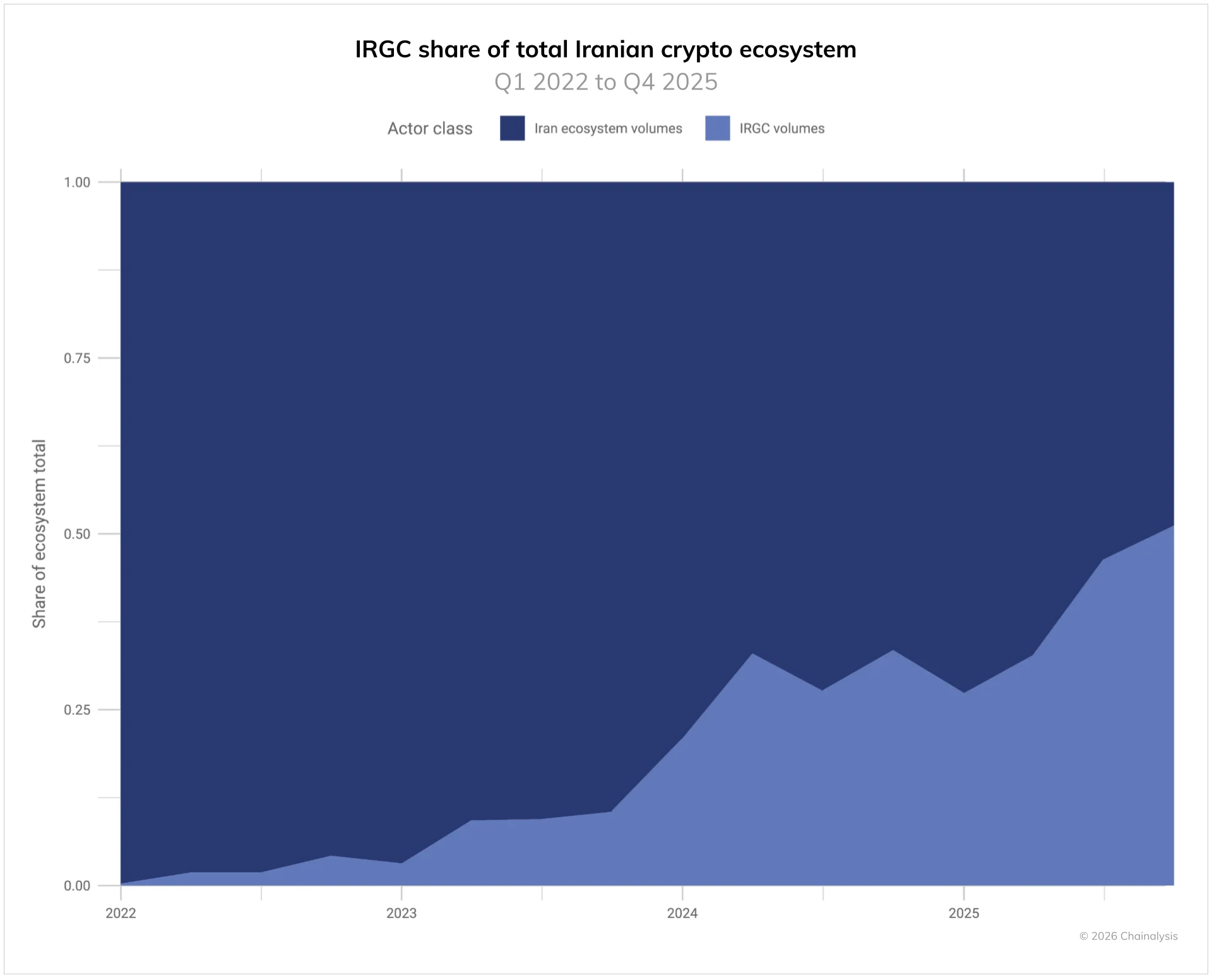
In 2025, Iran’s cryptocurrency ecosystem blossomed into a robust industry worth over $7.78 billion, driven by significant political events and increasing involvement from entities like the Islamic Revolutionary Guard Corps (IRGC). A recent analysis conducted by blockchain forensics firm Chainalysis revealed that the IRGC was responsible for around 50% of the total cryptocurrency value received by Iranian addresses in the final quarter of 2025. This percentage has surged over time, paralleling the expanding economic influence of the IRGC within Iran’s sanction-heavy environment.
Cryptocurrency: A Financial Alternative for Iranians
In recent years, cryptocurrency has emerged as a vital financial alternative for the Iranian populace, particularly in response to accelerating currency depreciation, rampant inflation, and increasing external pressures, including sanctions. Chainalysis reports indicate that cryptocurrency has provided a financial lifeline to everyday citizens, acting as a hedge against economic instability. As traditional financial avenues became restricted, many Iranians adopted cryptocurrency to maintain their purchasing power and navigate the tumultuous economic climate.
Political Events and Crypto Spikes
The analysis by Chainalysis also highlighted significant spikes in Iranian on-chain cryptocurrency activity around major political events, such as domestic protests and escalations in regional conflicts. These spikes suggest that citizens are increasingly turning to cryptocurrency during periods of unrest, using it as a medium of exchange or a safe haven for their assets. Notably, the report pointed to instances where cyber incidents targeting Iranian financial infrastructure coincided with such spikes, suggesting a strategic move into decentralized finance during times of crisis.
Retail Behavior Shift During Unrest
Chainalysis observed a notable shift in retail behavior amidst recent civil unrest in Iran. The firm documented substantial increases in transfers to personal wallets, particularly bitcoin withdrawals from local exchanges to unattributed wallets—a trend described as a potential "flight to safety." This behavior underscores a growing mistrust of domestic financial institutions as citizens seek alternative means to retain control over their wealth. The increase in personal wallet transactions signals a community adapting to the volatile economic landscape through decentralized currencies.
Nation-States and Sanctions Evasion
The broader implications of these findings resonate beyond Iran, as the data illustrates a growing trend of nation-states utilizing cryptocurrency to evade sanctions. In its comprehensive crypto crime report, Chainalysis estimated that illicit addresses received at least $154 billion in 2025. Notably, 694% of that value was linked to sanctioned entities, showcasing a burgeoning concern for regulatory bodies worldwide. The ability of nation-states to leverage cryptocurrencies for economic maneuvers continues to evolve, offering insights into potential future challenges for global financial systems.
External Scrutiny and Global Implications
Iran’s crypto activities have attracted attention beyond the scope of Chainalysis. A recent case study by TRM Labs highlighted that two UK-registered entities, operating as a singular exchange operation, processed nearly $1 billion linked to the IRGC. This example reflects a hand-in-hand relationship between illicit financial activities and the global crypto market. Additionally, reports surfaced discussing how Iranian authorities may explore cryptocurrency as a mechanism for circumventing sanctions on weapon sales. The increasing scrutiny highlights the potential global impact of Iran’s crypto ecosystem, beckoning a reevaluation of regulatory frameworks worldwide.
Conclusion
As illustrated by the Chainalysis report, Iran’s cryptocurrency ecosystem is not only a financial refuge for its citizens but also a conduit for state-sponsored activities amid ongoing sanctions. The intertwining of personal finance with national interests in the face of economic adversity begs a broader discourse on the role of cryptocurrencies in geopolitics. Stakeholders across the globe, from governments to investors, must recognize the dynamic and complex relationship between digital currencies and geopolitical landscapes to better navigate future challenges in financial regulation.