



Bitcoin’s Current Market Dynamics: An Analytical Perspective
Introduction to Bitcoin’s Recent Performance
Bitcoin (BTC) has recently found itself in one of the most impactful oversold situations it has ever faced. This analysis, provided by research and brokerage firm K33, highlights how months of sustained selling pressure have led to an unprecedented decline in investor sentiment. As noted by K33’s Head of Research, Vetle Lunde, the market sentiment has shifted towards pessimism, especially within crypto derivatives. After experiencing a significant downtrend, including six consecutive weeks of losses and five straight monthly declines, Bitcoin’s relative strength index (RSI) has fallen to 26.84, marking it as one of the most oversold phases in its history. This situation raises questions about market stability and potential recovery.
Selling Pressure and Market Dynamics
The report specifies that the recent downtrend in Bitcoin’s value can largely be attributed to selling activities from long-term holders and institutional investors. Notably, throughout the latter part of 2025, there was a significant reduction in the supply of aged Bitcoin, specifically those held for six months or more, indicating that even seasoned investors were locking in losses. Institutional investors reduced their Bitcoin exposure, selling nearly 100,000 BTC, while open interest in CME futures has declined to levels not seen in two years. However, it appears that these outflows are beginning to stabilize, potentially signaling a shift in market sentiment.
The Bearish Sentiment in Derivatives Markets
According to K33, the ongoing bearish positioning evident in derivatives markets is one of the clear indicators of current market sentiment. The average funding rate for Bitcoin perpetual futures has recently turned negative, a rare occurrence that has only happened ten times since 2018. This negative funding rate reflects a persistent demand for reducing long positions or establishing short positions, thus causing perpetual futures to trade at discounts compared to spot markets. Additionally, options markets reveal that traders are paying high premiums for downside protection, reinforcing the strong bearish sentiment among market participants.
Historical Trends Following Negative Funding Rates
Interestingly, historical data suggests that periods marked by negative funding rates have often preceded Bitcoin’s price recovery. On average, Bitcoin has demonstrated around a 13% return over 30 days following similar bearish conditions, with win rates improving significantly over longer time frames—56% for 90 days and 78% for 180 days, yielding average gains of 62% and 101%, respectively. This historical perspective serves to create a cautiously optimistic outlook for long-term investors despite the existing bearish sentiment.
Bitcoin’s Stability Amid Geopolitical Unrest
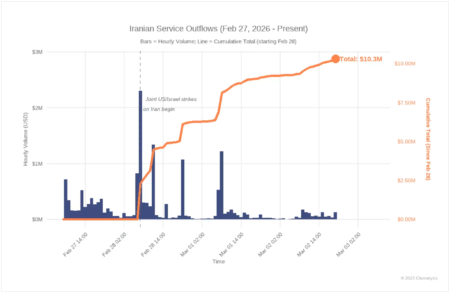
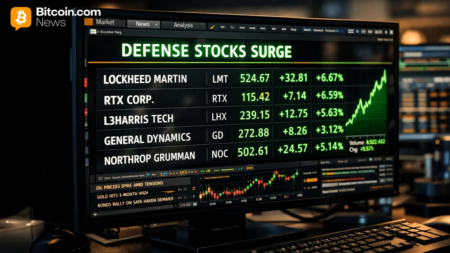
Amid escalating geopolitical tensions, particularly in the Middle East, Bitcoin has shown a surprising level of stability. After the U.S. and Israel conducted military operations in Iran, which resulted in heightened oil and gas prices and a decline in equity markets, Bitcoin managed to achieve modest gains. This resilience may be attributed to significant de-risking that has transpired in recent months, as institutional exposure on CME has dropped by around 35% and ETF investors have offloaded approximately 90,000 BTC over the past five months. Meanwhile, the selling pressure from long-term holders seems to be easing, suggesting a potential turnaround as the supply of aged Bitcoin begins to increase again. Moreover, Bitcoin’s consolidation near the 200-week moving average—a critical support level that has historically aligned with market bottoms—adds to the case for a potential recovery.
The Future Outlook on Bitcoin Investment
In summarizing the current landscape of Bitcoin investing, Lunde asserts that "the worst is behind us; now we wait." Bitcoin is currently trading just below $71,000, reflecting a recent gain of 4.7% in just 24 hours and an 8.7% increase over the past week. Given these conditions, the analyst expresses that there is no compelling reason to sell Bitcoin at this level, emphasizing that the current risk-reward profile is advantageous for potential accumulation. While the bottoming phases for Bitcoin have historically taken time to develop, the favorable indicators and easing selling pressure could suggest a bright future for the asset.
Conclusion
In conclusion, Bitcoin’s market dynamics, characterized by overselling, bearish derivatives sentiment, and resilience in turbulent times, present a complex but promising picture for investors. Historical patterns encourage a cautious yet hopeful perspective on potential gains following this period of downturn. As the market stabilizes and accumulative sentiment grows, Bitcoin’s long-term potential remains intact, inviting investors to consider strategic positions in the ever-evolving landscape of cryptocurrency.