


The Rise of Gold and Its Implications for Cryptocurrency Markets
In recent months, two powerful trends have emerged in the financial landscape, according to Bitwise Chief Investment Officer Matt Hougan: gold’s rapid ascent and the unresolved regulatory uncertainty surrounding cryptocurrencies in the United States. These influences are not only reshaping traditional investment preferences but also impacting the dynamics of digital asset markets. As demand for non-sovereign stores of value grows, the interplay between gold’s resurgence and crypto adoption will play a pivotal role in shaping both near-term price movements and long-term investment strategies.
The Performance of Gold: A Historical Perspective
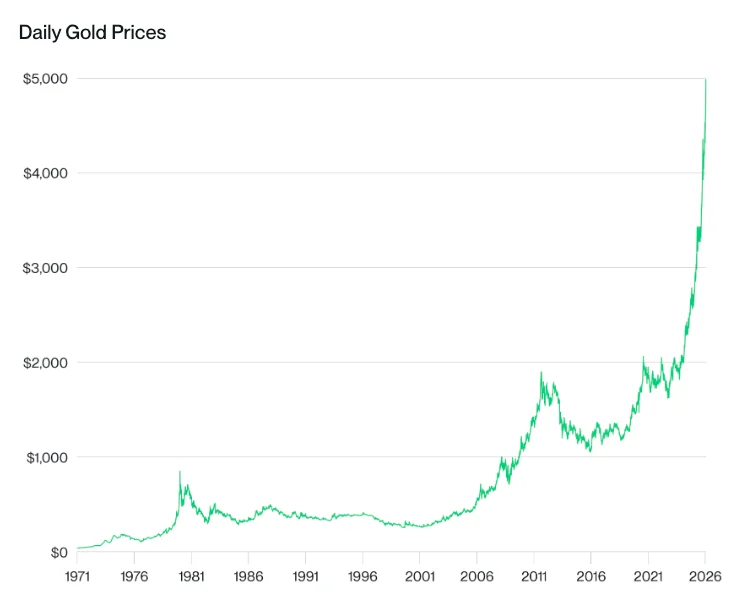
Gold has experienced remarkable growth, with prices soaring 65% in 2025 and rising an additional 16% so far in 2026, surpassing the $5,000 per troy ounce mark for the first time. This rally is particularly noteworthy given gold’s long history as a trusted store of value, spanning over 2,000 years. Hougan points out that roughly half of gold’s current value has been created in just the past 20 months, largely fueled by unprecedented levels of money printing, increased debt, and currency debasement. Investors are gravitating toward gold as a hedge against these economic uncertainties, signaling a change in how people wish to store their wealth.
Trust Erosion and the Shift to Gold
The surge in gold prices is closely linked to a profound erosion of institutional trust, a sentiment amplified by geopolitical tensions. Central banks have ramped up their gold purchases, nearly doubling annual acquisitions since the U.S. acted to seize Russian treasury assets in 2022. Countries are now more inclined to seek reserves that remain insulated from external control. Recent calls from German economists to repatriate gold held at the New York Federal Reserve and warnings from Norwegian government panels about possible regulatory interventions reflect growing anxieties about the security of traditional banking systems. As a result, gold is increasingly viewed as a reliable asset that can withstand external pressures.
The Role of Cryptocurrency in Eroding Trust
In this shifting financial landscape, the unique attributes of cryptocurrencies are becoming more pronounced. Bitcoin, Ethereum, and Solana are gaining traction as alternatives to traditional investments, enabling ownership independent of centralized institutions. Features such as self-custody, censorship resistance, and trustless systems are particularly appealing in a climate where confidence in traditional intermediaries is waning. Hougan notes that these concepts, often treated as mere buzzwords, may become increasingly relevant as investors seek more reliable avenues for preserving their wealth.
Regulatory Uncertainty Surrounding Cryptocurrency
However, the path forward for cryptocurrency adoption is complicated by regulatory uncertainties in the U.S., particularly regarding the potential passage of the Clarity Act. Initially perceived as a pro-crypto measure, the chances of the bill’s passage have decreased from 80% to approximately 50%. Setbacks, including critiques from industry leaders like Coinbase’s CEO Brian Armstrong, suggest that the current iteration of the bill may not be viable. If the legislation fails, Hougan warns that the crypto market could enter a tentative "show me" period over the next three years, where real-world adoption would be essential for growth.
Market Outcomes Based on Regulatory Decisions
The implications of the Clarity Act are significant for market behavior. Should a version of the legislation favorable to the industry be passed, it could ignite a bullish rally, with investors quick to price in the anticipated growth of stablecoins and tokenization. Conversely, if the bill fails, the market could adopt a more cautious, "wait and see" attitude, with prices influenced primarily by demonstrated adoption rather than speculative expectations. In either case, the trajectory of cryptocurrency markets hinges on regulatory developments and societal shifts toward asset ownership.
An Inflection Point for Cryptocurrency
Despite the uncertainties, Hougan expresses optimism regarding the eventual passage of the Clarity Act but advises investors to prepare for a more measured ascent if the legislative process falters. The current landscape for cryptocurrencies stands at an inflection point where gains in regulatory clarity or genuine utility in the real world will dictate the market’s next phase. As we move forward, the outcomes of these developments will likely influence investment strategies across both the cryptocurrency and gold markets, making it essential for investors to remain vigilant in tracking these evolving dynamics.
In conclusion, the rising demand for gold and the ongoing uncertainty surrounding cryptocurrency regulation are shaping the future of investment landscapes. Whether through institutional trust erosion or the pursuit of more decentralized financial systems, the evolution of both assets suggests a significant shift in how individuals approach wealth preservation and investment strategies. As these dynamics continue to unfold, staying informed and adaptable will be crucial for investors navigating this increasingly complex market.