



Institutional Crypto Investment Products Experience Major Outflow
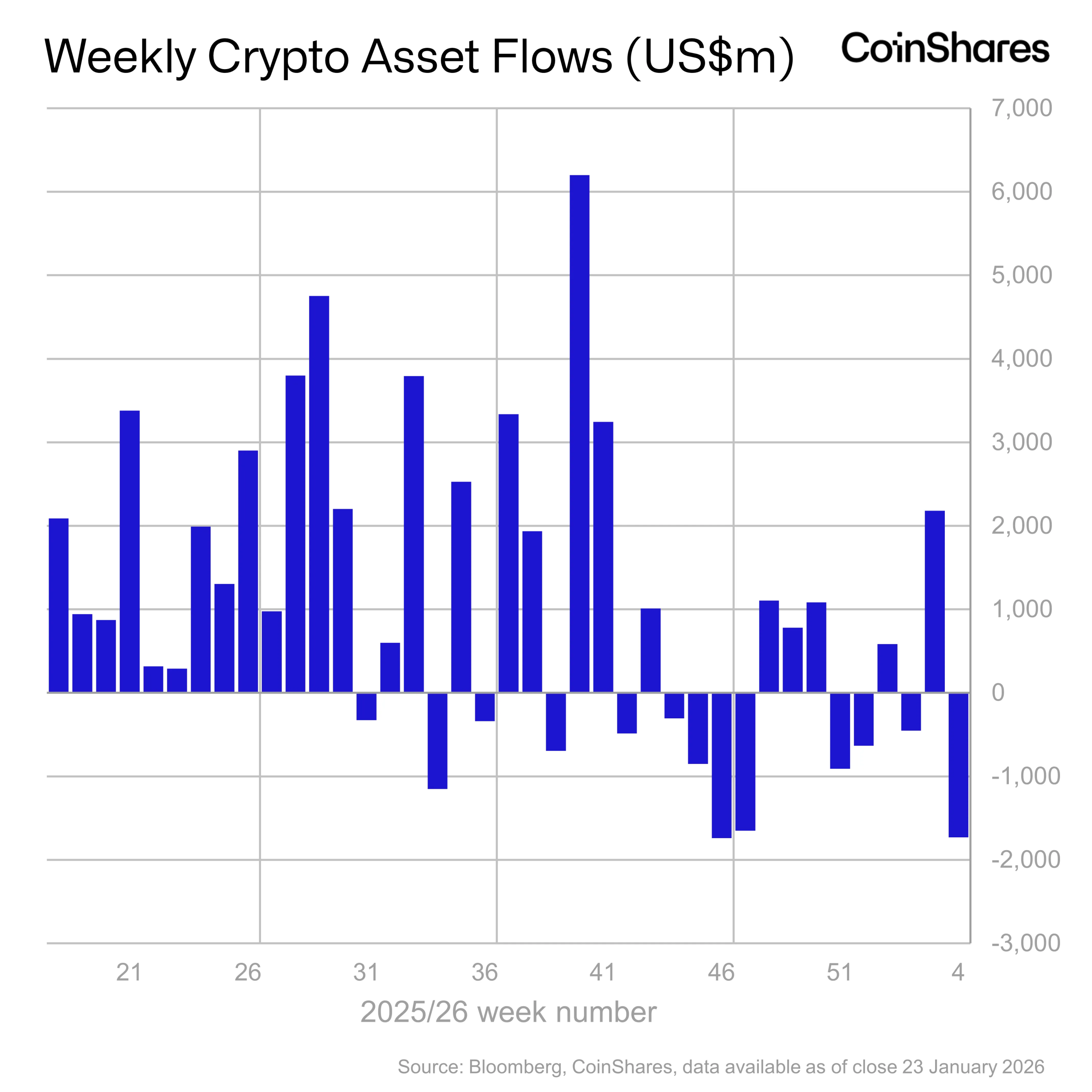
In a significant turn of events, global crypto investment products issued by prominent asset managers such as BlackRock, Fidelity, and Grayscale saw substantial outflows last week, amounting to $1.73 billion. This marked the largest weekly withdrawal since mid-November 2025, according to data from CoinShares. This dramatic shift in financial behavior almost completely reversed the $2.2 billion inflows recorded just a week earlier, signaling how rapidly institutional sentiment has changed amid deteriorating macroeconomic conditions and price movements.
Understanding the Factors Behind the Outflows
James Butterfill, the head of research at CoinShares, highlighted a few critical elements fueling this trend. Dwindling expectations for interest rate cuts, alongside negative price momentum, appear to be contributing to renewed selling pressures. Investors seem frustrated that digital assets have not yet engaged positively within the broader economic context, often referred to as the "debasement trade." These factors combined have led to heightened risk aversion among institutional investors, reflecting their caution in navigating the crypto market’s volatile landscape.
Price Implications of Institutional Activity
The outflow trends were closely mirrored by the performance of major cryptocurrencies. Bitcoin, for instance, experienced a 5% decline over the past week, now trading under $89,000. Ether followed suit, dropping nearly 10%, as the broader market reacted to adverse macroeconomic challenges. Such fluctuations underscore the intimate connection between institutional trading behavior and cryptocurrency price dynamics, making it crucial for investors to keep a close eye on both.
Bitcoin Funds Lead Withdrawals
Delving deeper into the assets involved, it’s evident that Bitcoin funds were at the forefront of these withdrawals, losing around $1.09 billion. While CoinShares’ data indicated minor inflows into short-bitcoin products, overall sentiment regarding Bitcoin hasn’t significantly improved since the price shock experienced in October 2025. Ether exchange-traded products (ETPs) also experienced considerable outflows, totaling $630 million for the week. The pattern of redemptions suggests a widespread risk aversion among investors, as evidenced by $18.2 million exiting XRP products as well.
Geographic Variations in Investor Sentiment
Interestingly, while the U.S. experienced nearly $1.8 billion in weekly redemptions, sentiment in other jurisdictions showed a more mixed response. Countries such as Switzerland, Germany, and Canada reported inflows, logging $32.5 million, $19.1 million, and $33.5 million respectively in new investments. On the other hand, nations like Sweden and the Netherlands saw smaller outflows, indicating that while U.S. sentiment may be bearish, other markets are approaching the crypto landscape with more optimism.
Noteworthy Exceptions Amid a Tumultuous Market
In a landscape dominated by outflows, Solana stood out as a bright spot, managing to attract $17.1 million in inflows, defying broader trends. Other smaller allocations were observed in products tracking Binance and Chainlink, indicating that specific sectors within the crypto market continue to draw investor interest. The dynamic nature of these inflows may reflect niche investment strategies or emerging confidence in particular assets, thus presenting opportunities for investors looking to capitalize on specific trends in the volatile crypto market.
As the crypto landscape continues to evolve, understanding these market dynamics is essential for both institutional and retail investors. Following the influx and outflow trends can offer valuable insights into the broader financial ecosystem and how they reflect investor sentiment in relation to macroeconomic factors.