



The Role of Crypto as a Pressure Valve in Iran Amid Geopolitical Tensions
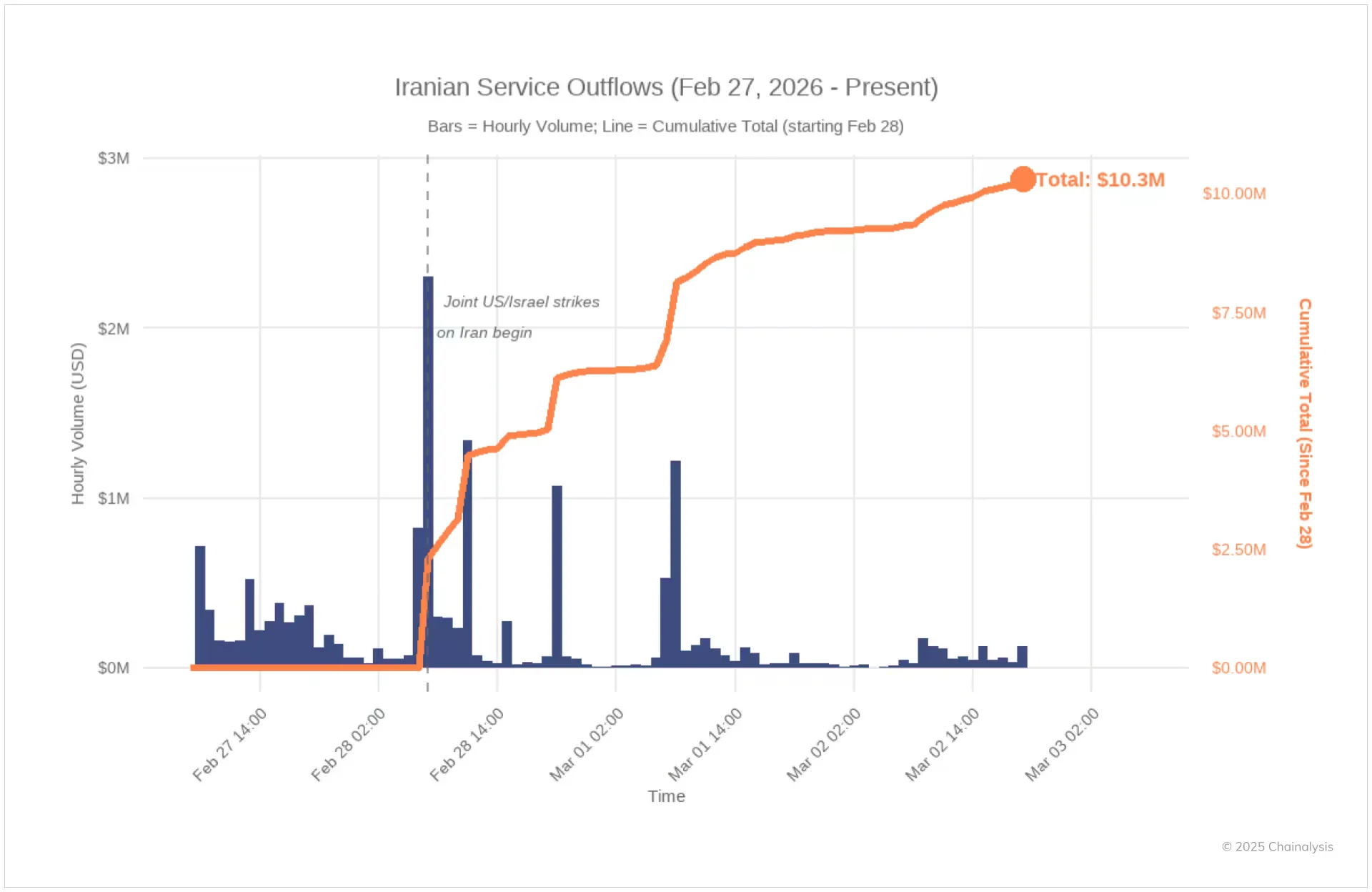
In recent events following U.S.-Israeli airstrikes on February 28, 2023, Iranian cryptocurrency activity exhibited a significant response, acting as a pressure valve in the face of geopolitical shock. According to Chainalysis, the immediate aftermath saw a substantial outflow of approximately $10.3 million from major Iranian exchanges by March 2. Notably, trading volumes which had previously been stable surged dramatically, often reaching above $2 million per hour. This pattern parallels earlier observations from Elliptic, indicating that outflows from Iran’s major exchange soared by 700% directly after the strikes, with overall trading volumes plummeting by 80% in the following days. These trends suggest that crypto assets serve not merely as speculative investments in Iran, but as a vital alternative financial pathway during periods of crisis.
An Ongoing Trend
The reactions observed following the airstrikes are not isolated incidents; they are part of a persistent trend within Iran’s cryptocurrency ecosystem. Chainalysis has projected that the Iranian crypto market could reach about $7.8 billion by 2025, characterized by frequent spikes in trading volumes correlating with domestic unrest and regional conflicts. Historical data indicates that episodes of protests, confrontations with Israel, and escalating sanctions have frequently coincided with economic instability, exemplified by a declining rial and soaring inflation rates. In this setting, cryptocurrencies have emerged as a critical mechanism for value preservation and transfer, particularly for individuals, and at times even state-affiliated actors. Dual objectives seem to emerge, as crypto operates as both a hedge against traditional economic systems and a method for circumventing international sanctions.
Precedent Patterns
Similar behavioral patterns were established in previous protests where anticipatory withdrawals of Bitcoin from Iranian exchanges surged before government-mandated internet blackouts. For instance, Bitcoin outflows grew steadily leading up to these cutoffs, plateauing during the blackouts, and then resuming rapidly once internet access was restored. This behavioral trend underscores a strategy among users to move assets into self-custody in anticipation of coming restrictions, reflecting both awareness of geopolitical threats and a need for financial autonomy. Thus, the Bitcoin ecosystem within Iran is marked by a tactical adaptability to governmental pressures.
Ambiguous Transfers
Tracking the ultimate destinations of these substantial outflows remains a complex challenge. As highlighted by Chainalysis, the rapid outflows following the February airstrikes complicate the analytical landscape. Factors such as internet throttling, exchange outages, and operational security measures can obscure immediate market signals. Consequently, it becomes difficult to decisively categorize the outflows as either retail-driven exits, internal management maneuvers by exchanges, or state-linked financial activities. The uncertainty around these transactions necessitates further analysis emphasizing wallet-level tracking in order to elucidate the context and intentions behind these movements.
Patterns of Movement
A closer examination of the outflows shows varied patterns, with transfers heading to both international mainstream exchanges and local platforms, as well as a significant portion moving to "other wallets." These could range from everyday users seeking to secure their funds in self-custody, to exchanges attempting to redirect liquidity for operational security, or state-affiliated actors utilizing local venues for strategic routing. Instead of being seen merely as a hike in withdrawals, this sustained flow of digital assets reflects an entrenched behavioral pattern wherein cryptocurrencies serve as a means of financial relief during distressing circumstances.
Navigating Financial Vulnerabilities
Iran’s cryptocurrency exchanges continuously grapple with external pressures, including sanctions and cybersecurity risks, exemplified by the significant hack of Nobitex in 2025, which led to the theft of over $90 million. In politically tense situations, exchanges often shift liquidity away from high-profile wallets as a countermeasure, reinforcing the perception of crypto assets as vital safety nets. Additionally, the Islamic Revolutionary Guard Corps, along with other state-affiliated entities, have historically utilized domestic platforms to facilitate international transfers in a bid to evade sanctions. Thus, the Iranian crypto ecosystem operates under a paradoxical framework; while it offers a refuge during turmoil, it is also entangled with state interests and regulatory challenges.
In conclusion, cryptocurrency in Iran functions as both a lifeline for individual financial resilience and a tool leveraged within state apparatuses. The events following the U.S.-Israeli airstrikes are a stark reminder of how geopolitical dynamics can heavily influence crypto liquidity and settlement patterns. As scrutiny intensifies and technologies evolve, distinguishing between retail investors’ reactions and organized state maneuvers will remain crucial for a deeper understanding of the complex landscape that is Iranian cryptocurrency. This scenario illustrates that while the crypto world offers opportunities for financial freedom, it also mirrors the intricacies of the real-world socio-economic fabric in which it exists.