



Navigating the Future of Crypto Exchange-Traded Funds: Trends and Insights for 2026
As we enter 2026, crypto exchange-traded funds (ETFs) are set to make significant strides, characterized by quicker approval processes, an influx of new products, and increased institutional interest, despite some market fluctuations in late 2025. The overall landscape for cryptocurrencies is evolving, and understanding these dynamics can empower investors to make informed decisions.
Bitcoin and Ether: The Cornerstones of Demand
In 2025, U.S. spot Bitcoin ETFs showcased remarkable resilience, benefitting from consistent net inflows that totaled approximately $22 billion for the year, despite facing around $140 million in outflows towards the end of December. Bitcoin’s performance during this timeframe was marked by volatility; opening at roughly $93,000, peaking at an all-time high above $126,000 in October, before retracting to the low $80,000s. Comparatively, traditional markets, such as the S&P 500, experienced steadier gains, increasing by about 17%. The demand for Bitcoin and Ether remains robust, solidifying their status as fundamental players in the crypto ETF market.
Ether ETFs also captured investor attention, amassing nearly $10 billion in inflows over 2025. This momentum was particularly notable following the implementation of the GENIUS Act, which clarified the regulatory framework for stablecoins and positioned Ethereum as a key player for settlement in digital dollar transactions. In a significant twist, August saw Ether ETFs outpacing Bitcoin ETFs for the first time, with Ethereum products attracting over $3.87 billion, showcasing the shifting dynamics of investor preference in crypto assets.
The Rise of Altcoin ETFs
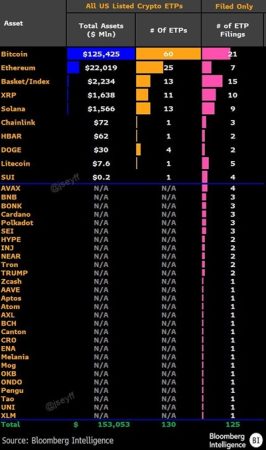
Beyond Bitcoin and Ether, the landscape for altcoin ETFs broadened significantly in 2025, with new products linked to assets such as Solana, XRP, Dogecoin, and Chainlink emerging in the market. This diversification provides investors with more options but does not yet indicate a clear favorite for long-term demand. According to Ben Slavin from BNY Asset Servicing, though altcoin ETFs are gaining traction, they are influenced by market cycles and may not achieve the same scale as Bitcoin ETFs, which currently represent about 7% of the global Bitcoin supply.
The rapid growth of these products is supported by predictions from asset manager Bitwise, which forecast that over 100 new crypto ETFs could enter the U.S. market as approval timelines become more efficient. They argue that ETFs will play a crucial role in driving demand for major digital assets, potentially absorbing more than 100% of new Bitcoin, Ether, and Solana issuances by 2026. This structural demand could help stabilize the market, even during price fluctuations.
A Thriving Pipeline of New Products
The momentum in crypto ETF development shows no signs of waning, with a staggering 126 additional crypto ETP filings pending, indicating a busy market landscape. While analysts like James Seyffart from Bloomberg Intelligence foresee ongoing approvals, there are concerns that this influx could also result in product liquidations by 2026. The market, while exhibiting strong absorption capacity in 2025, may experience challenges as under-subscribed products struggle to attract sustainable assets.
Despite the potential for attrition, Slavin maintains that the overall market’s strong absorption capacity reflects a broadening investor base ready to explore new ETF offerings. He emphasizes that while volatility can lead to short-term challenges, the market’s structural foundations remain solid against the backdrop of ongoing product development.
Regulatory Changes and Easier Approvals
A significant factor influencing the optimistic outlook for crypto ETFs is a recent regulatory shift finalized in September. The U.S. Securities and Exchange Commission (SEC) approved new listing standards that allow crypto exchange-traded products to gain quicker access to the market, reducing approval timelines from 240 days to as short as 75 days. This evolution aligns crypto ETFs more closely with traditional commodity-based products and has significantly expanded the universe of crypto ETFs that can now enter the market.
The SEC’s approval of the Grayscale Digital Large Cap Fund further signals a willingness to embrace diversified crypto exposures. This multi-asset product not only includes Bitcoin and Ether but also allocates portions to other digital assets, indicating a shift in regulatory comfort regarding a broader array of options in the crypto space.
Bridging the Gap to Institutional Adoption
Ripple president, Monica Long, highlights that crypto ETFs, despite having seen more than 40 launches within the year, still occupy a minor share of the U.S. ETF market. Their growth is promising but represents only a small percentage of total ETF assets. However, the emerging trend of wider ETF adoption is poised to foster greater engagement with digital assets among corporations and institutions.
Long notes that regulatory advancements, including the GENIUS Act, are integral to establishing a sustainable U.S. digital dollar framework. With banks and financial institutions now able to issue and custody regulated stablecoins, the groundwork for a compliant, 24/7 payment and collateral system is being laid, further supporting institutional involvement in digital assets.
Conclusion: A Promising Horizon for Crypto ETFs
As we look towards 2026, the crypto ETF sector is set to thrive amid evolving regulations, a diverse product lineup, and greater adoption by institutional players. While Bitcoin and Ether remain at the forefront, the rise of altcoin ETFs and the potential for an expansive pipeline of new offerings signal a transformative era for crypto investing. Investors should remain vigilant in understanding these dynamics, as the market is poised for both opportunities and challenges in the years to come.