




Bitcoin Price Movements Amid Geopolitical and Macro Uncertainties
Bitcoin (BTC) experienced notable fluctuations on Tuesday, briefly dipping below $66,000 due to prevailing geopolitical risks and macroeconomic uncertainties as the first quarter nears its close. The cryptocurrency market continues to exhibit volatility, with BTC remaining near the lower end of its recent trading range. Meanwhile, ether (ETH) also traded close to the $2,000 mark, reflecting some of the gains it achieved earlier in the week. This shift in sentiment was influenced by changing narratives around tensions between the U.S. and Iran.
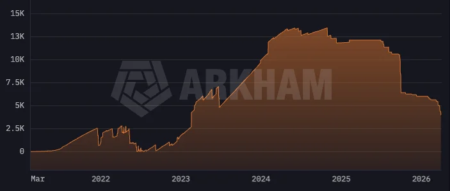
Despite a modest increase in institutional inflows, the overall demand in the cryptocurrency market remains lackluster. As reported by SoSoValue, U.S.-based spot bitcoin ETFs saw $69.4 million in net inflows on March 30, while ether products recorded $5 million. Though these figures indicate a return of some institutional interest, they have not significantly influenced the broader market dynamics. In the current climate, even corporate activities reveal conflicting trends; for instance, Nakamoto Holdings reported a $20 million sale at a loss, and notable figures like Michael Saylor have paused their acquisitions. In contrast, entities linked to former President Trump appear to be increasing their Bitcoin holdings despite adverse market conditions.
Market Direction: Geopolitical Pressures at Play
Analysts note that the cryptocurrency market is caught between various external pressures. Simon Massabni from XS.com points out that Bitcoin’s efforts to stabilize and establish an upward momentum are hindered by rising oil prices, persistent inflation, and central banks signaling restrictive monetary policies. The geopolitical landscape continues to evolve, and analysts believe these factors are affecting capital allocation decisions significantly. Ryan Lee, a chief analyst at Bitget Research, highlights the influence of weakened Asian equities and surging oil prices, emphasizing how these developments have created a risk-averse atmosphere in the market.
Kyle Rodda, senior market analyst at Capital.com, corroborates this perspective, linking the recent market reaction to escalating rhetoric from the Trump administration regarding Iran. The exchange of threats concerning Iranian energy infrastructure has contributed to a spike in crude oil prices, putting additional pressure on equities and maintaining a risk-off climate in cryptocurrency markets. Although comments from Federal Reserve Chair Jerome Powell have somewhat alleviated concerns about imminent rate hikes, the market remains shrouded in uncertainty.
Liquidity Constraints in the Cryptocurrency Market
The current state of the crypto market can be characterized by tight liquidity, as noted by analysts at Bitunix. With the market caught in a low-liquidity oscillation, Bitcoin has been trading within a narrow band of $66,100 to $68,500. This limited price range demonstrates how the lack of sufficient market depth has become a defining feature of the current environment. Market makers are retreating, leading to wider spreads and heightened sensitivity to short-term economic and geopolitical catalysts.
As liquidity conditions further constrict, the potential for price movements becomes increasingly contingent upon overcoming immediate resistance levels. Analysts suggest that a break above key resistance is essential for Bitcoin to unlock its next potential upward leg. With market dynamics being driven more by liquidity sweeps rather than conviction in directional trends, traders must carefully monitor unfolding events and macroeconomic developments.
Turning Towards the Second Quarter: What Lies Ahead?
As the month of March comes to a close, market participants are shifting their focus to the future, particularly concerning the outlook for April and beyond. Research analyst Lacie Zhang from Bitget Wallet offers a cautiously constructive view for Bitcoin, suggesting it could trade within a broader band between $60,000 and $84,000 depending on ongoing geopolitical tensions. The adaptive role of stablecoins and Bitcoin itself as conduits for capital flow indicates that fundamental demand may persist despite the observable volatility.
Zhang’s analysis underscores that the second quarter of the year could unfold in a more binary manner. If conflicts continue to escalate, spiking oil prices could further tighten liquidity, pushing Bitcoin towards a potential floor of $55,000. Conversely, a rapid de-escalation of geopolitical tensions could reopen risk appetites among investors, potentially pushing Bitcoin prices above $90,000. Such scenarios indicate market participants’ need to be agile and well-informed as events continue to unfold.
Current Market Positioning and Investor Sentiment
As of now, Bitcoin’s trading position remains around $66,600 while Ethereum is hovering near $2,035 ahead of the U.S. market open. This positioning reflects the existing atmosphere of caution and the necessity for monitoring further developments. The market is characterized by an undercurrent of anxiety, affected by both noted geopolitical developments and financial indicators that continue to signal caution among investors.
Overall, the cryptocurrency space, with its inherent volatility, demands an active approach from traders and investors alike. Understanding the interplay between macroeconomic pressures, sentiment shifts, and external geopolitical factors will be crucial as the market navigates through this uncertain landscape.
As the crypto world grapples with these challenges, keeping an eye on both institutional demand and corporate strategies will be essential for anticipating future movements. The interplay of various elements will contribute to shaping the narrative of Bitcoin and other digital assets as they continue to adapt to the rapidly changing market environment.