



Bitcoin Price Drop Signals Changing Market Dynamics
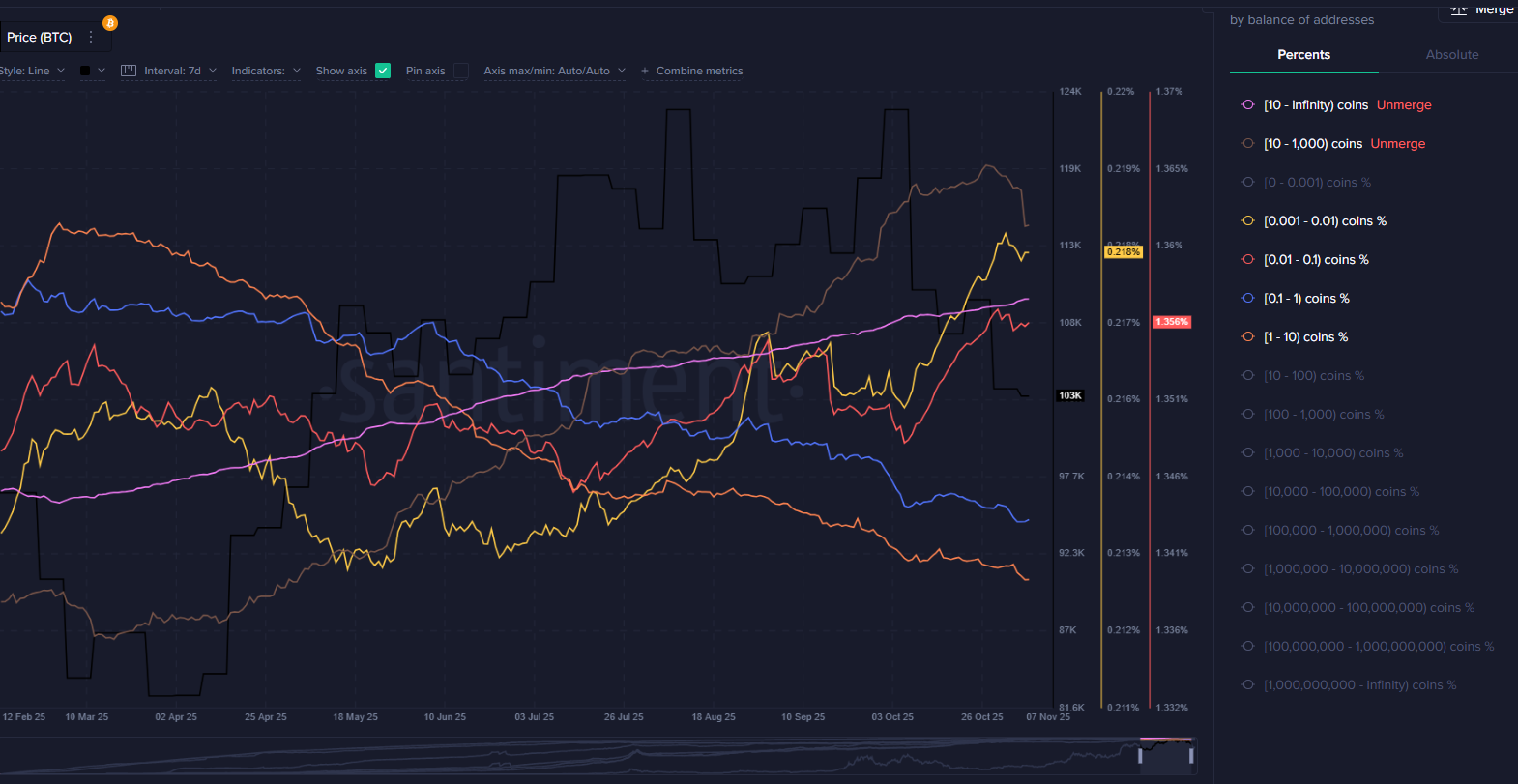
On early Monday, Bitcoin experienced a sharp decline, dropping below $86,000 and aligning with significant changes in wallet behavior among investors. Analysts have noted a distinct trend where large holders, often referred to as "whales," have slowed their accumulation of Bitcoin, while smaller retail wallets have increasingly committed to buying during recent dips. Timothy Misir, head of research at BRN, warns that this diverging behavior typically indicates a late-cycle phase, which can lead to increased market fragility. As the crypto market responds to these shifts, the implications are profound for both short-term price movements and long-term investment strategies.
Divergence in Accumulation Patterns
Recent on-chain data reveals a clear slowdown in accumulation by long-term and large-wallet holders. In stark contrast, smaller wallets holding under 1 BTC have ramped up their buying activities, effectively indicating a shift in market sentiment. Misir characterized the recent price dip as a "liquidity and positioning event," suggesting that the market has not signaled a fundamental regime change, but rather a moment of stress as retail buyers react to price fluctuations. The volatility prompted by this change raises questions about the sustainability of Bitcoin’s price levels and signifies a pivotal moment in market behavior.
Impact of Market Liquidity Events
The drop in Bitcoin’s price was exacerbated by a significant liquidity event in early Asian trading, where the cryptocurrency fell to around $85,600, resulting in an erasure of approximately $144 billion in total crypto market value. Liquidations across the market reached over $600 million within 24 hours, primarily impacting long positions. Such drastic shifts not only reflect current trader sentiment but also underline the emotional aspect of trading, particularly among short-term holders who appear to be realizing losses in this turbulent environment.
Bearish Developments in Asia
The backdrop for Bitcoin’s rapid decline featured a series of bearish developments in Asia. Comments from Bank of Japan Governor Kazuo Ueda regarding hawkish monetary policy raised Japan’s two-year yield to 1%, suggesting a potential rate hike by the end of the year. Furthermore, deteriorating economic data from China, particularly the non-manufacturing PMI which contracted for the first time in nearly three years, sparked additional concerns regarding global liquidity and regional economic conditions. These factors collectively contributed to a climate of uncertainty, further impacting Bitcoin and broader market sentiment.
Market Fundamentals Versus Price Dynamics
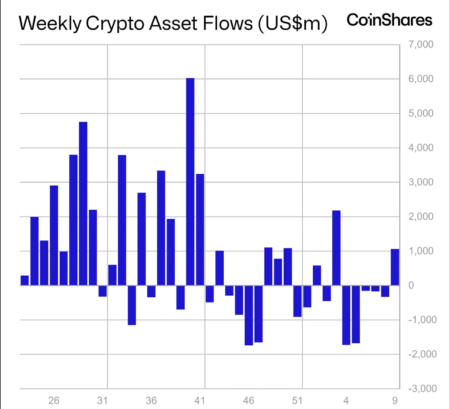
Despite a seemingly supportive macroeconomic environment characterized by the cessation of U.S. quantitative tightening and increasing odds of rate cuts, Bitcoin’s price has failed to respond positively. Crypto investment products have seen significant inflows, yet the resilience of Bitcoin remains in question, especially following a rebound from previous lows. Analysts suggest that while a pullback was expected after a substantial rise, the crucial concern now is whether Bitcoin can maintain its previous lows in the face of shifting sentiment. The cryptocurrency currently trades near $86,500, a stark reminder of the volatility that defines the market.
Future Outlook and Expectations
As traders analyze data from upcoming U.S. economic indicators—such as ISM PMIs, ADP employment figures, and PCE inflation metrics—the immediate future for Bitcoin is uncertain. Misir cautions that the recent drop could represent a capitulation point or the onset of a deeper downturn, depending on how these economic signals play out. With gold increasingly attracting safety flows and competing for investment capital, Bitcoin will need to reclaim stability and push towards the low-$90,000s for renewed confidence among traders and investors.
Conclusion
In summary, the recent drop in Bitcoin’s price and the shift in accumulation behaviors among wallet holders is indicative of a changing market landscape. This divergence between large holders and retail investors positions the market in a fragile state, marked by heightened volatility and uncertainty. As traders look ahead to forthcoming economic data, it remains essential to approach rallies with skepticism until definitive positive signals from on-chain flows and institutional movements can be observed. The interplay between market fundamentals and price dynamics will continue to shape the future trajectory of Bitcoin and the broader cryptocurrency market.