




Bitcoin’s Recent Pullback: Analyzing the Market Dynamics
Bitcoin recently experienced a significant pullback from its peak price of nearly $74,000 over the weekend, following a diminishing positive sentiment stemming from developments in the Middle East. Analysts suggest that the ongoing global macroeconomic trends have once again forced traders to reassess their strategies, particularly with rising oil prices and inflation concerns weighing heavily on market confidence. As of April 12, Bitcoin (BTC) was trading around $71,000, while Ether (ETH) hovered near $2,190, indicating a retreat across the broader cryptocurrency landscape.
The downturn coincided with faltering talks between the United States and Iran, coupled with escalated tensions relating to a potential naval blockade in the Strait of Hormuz. According to financial firm QCP Capital, the anticipation of a favorable agreement had bolstered market sentiments; however, traders were ultimately preparing for disappointment. Bitcoin met resistance at the $74,000 level as crude oil prices surged back above $100, further dampening risk appetite in the market.
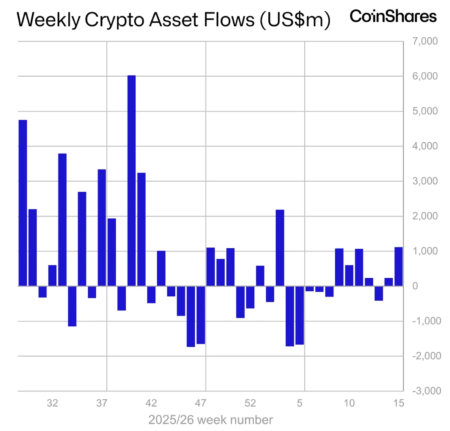
Despite this pullback, many analysts believe that widespread panic has yet to take hold. Nexo analysts noted that while the "ceasefire-driven relief trade" appears to be unwinding, forced selling within the market remains relatively contained. They highlighted nearly $1 billion in spot Bitcoin ETF inflows from the previous week, suggesting that the market absorbed the recent shocks more resiliently than it would have earlier in the year. The situation reflects a degree of confidence among institutional investors, despite ongoing volatility.
Resistance remains a critical factor for Bitcoin as it attempts to maintain its position above $70,000. Timothy Misir from BRN noted that while the cryptocurrency’s resurgence above the $70,000 mark is significant, each advance into the $70,000 to $80,000 range is met with profit-taking. Approximately 13.5 million Bitcoin addresses continue to operate at a loss, indicating sustained overhead supply, even as institutional flows show improvement. Data from Glassnode further confirms that the count of addresses in loss remains elevated, suggesting that market participants are navigating a challenging landscape.
Many analysts converge on the notion that Bitcoin’s current performance is closely tied to macroeconomic factors rather than solely influenced by crypto-specific dynamics. Simon Massabni, head of business development at XS.com, remarked that the rally prompted by softer inflation data lacked a strong foundation to maintain momentum. Meanwhile, Kyle Rodda, a senior analyst at Capital.com, bluntly stated that the prevailing market sentiment is now swayed by the interplay of rising oil prices and the subsequent strain on risk assets.
Despite these dynamics, some analysts are optimistic about the overall health of the cryptocurrency market. FalconX’s Martin Gaspar observed that the aggregate futures open interest had significantly declined, dropping 54% from its peak in October 2025 and reverting to levels from mid-2024. This decline serves as evidence that excess leverage has been systematically eliminated from the market. Gaspar further noted that Bitcoin’s resilience through early April suggests a potential nearing completion of the deleveraging cycle, although macroeconomic shocks could still disrupt progress.
Options markets also reflect a nuanced landscape. According to Laser Digital, while volatility spiked briefly during Bitcoin’s rise to $74,000 and subsequent selloff, it ultimately stabilized. Currently, Bitcoin’s implied volatility sits around 45, indicating that traders anticipate continued choppy range trading rather than a clear breakout. QCP Capital echoed this sentiment, stating that implied volatilities and risk reversals have returned to pre-conflict levels, demonstrating lingering uncertainty while panic appears to have subsided.
In summary, the macroeconomic environment plays a pivotal role in shaping Bitcoin’s current trajectory, as inflationary pressures in the U.S. seem to have reaccelerated, leading analysts to question the Federal Reserve’s next moves. The March Consumer Price Index (CPI) indicated a year-over-year increase of 3.3%, a marked rise from February’s 2.4%, compounded by the energy shock linked to Iran-related tensions. This places Bitcoin in a challenging position: despite being weaker than when it approached $74,000, it remains more resilient than one might expect during a complete macro unwind. As the market navigates these complexities, traders may continue to adjust their strategies, keeping a close watch on external influences as they weigh risk amidst changing economic conditions.
Disclaimer
This article is intended for informational purposes only and should not be construed as legal, tax, investment, financial, or any other form of advice. The information herein reflects current developments in the cryptocurrency market and is subject to change.