




Global Market Selloff: Cryptocurrencies, Equities, and Precious Metals Dive
On Thursday, a sharp, tech-driven selloff swept through global markets, causing significant declines across cryptocurrencies, equities, and precious metals. As risk appetite waned, the overall market structure shifted dramatically throughout the U.S. afternoon. Crypto markets, in particular, experienced a decisive downturn, with total market capitalization dropping from approximately $3.1 trillion on Wednesday to just over $2.9 trillion—a stark decline of about 6%. This marked one of the most substantial single-day reductions in the crypto landscape since the major liquidation event on October 10, which was triggered by talk of tariff threats from former President Trump. During that event, nearly half a trillion dollars was eroded within a day.
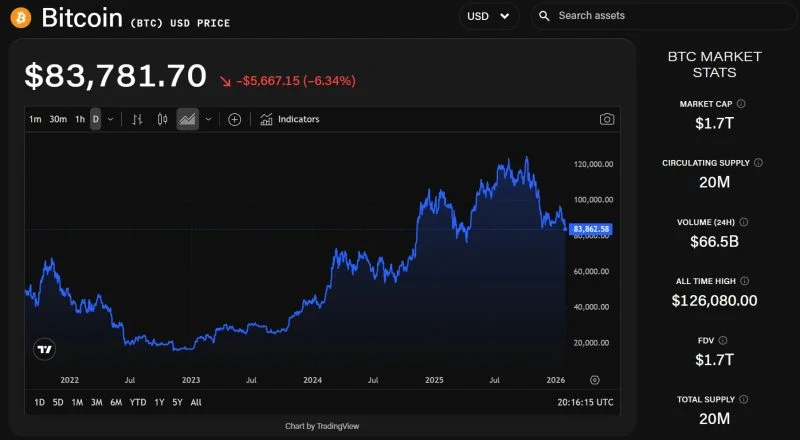
The market turmoil resulted in a wave of liquidations, particularly in leveraged crypto positions. According to Coinglass, more than $1 billion in these positions were liquidated over the past 24 hours, predominantly impacting long positions. Bitcoin (BTC), the largest cryptocurrency, was observed trading slightly below $84,000, a level reminiscent of its trading patterns from April. Concurrently, Ethereum (ETH) fell below $2,800, and Solana plummeted to a nine-month low near $115. XRP also drifted downwards, hovering around a one-year low of $1.75.
Interestingly, the market breadth was already fragile before Thursday’s selloff. Ryan Rasmussen, head of research at Bitwise, highlighted that only two of the top 20 crypto assets—Hyperliquid’s HYPE and Canton’s CC—had managed to post gains in double digits over the past week. Besides the LEO exchange token from Bitfinex, it was mostly downhill for other significant tokens. Hyperliquid reported a remarkable increase of approximately 54% recently, while Canton gained about 12%, contrasting with the prevailing bearish trend experienced by large-cap assets.
The weakness observed in the cryptocurrency market mirrored declines in U.S. equities, particularly in the technology sector. Tech stocks were at the forefront of the losses, with Microsoft witnessing a drastic decline of more than 12%. This marked the company’s worst single-day performance since March 2020, significantly impacting the broader software sector. Additionally, precious metals, which had previously surged to record highs, also experienced sharp declines during the selloff. Gold dropped from around $5,500 to near $5,150 before making a modest recovery to approximately $5,300. Silver, too, saw a decline from an all-time high near $121 per troy ounce to about $108, later bouncing back to around $113.
The timing of the market’s downturn coincided with increasing political risks emanating from Washington D.C. Investors were alerted as lawmakers failed to advance a procedural vote on a government funding package, raising chances for another U.S. government shutdown if the legislation wasn’t passed by the weekend. The ramifications of a previous shutdown, which lasted 43 days, had adverse effects on the crypto market, including a 15% drop in Bitcoin prices at that time. Should a similar downturn occur now, Bitcoin could see prices dip to just above $70,000, illustrating the interconnectedness of political developments and market dynamics.
In conclusion, the recent market selloff encapsulates a confluence of factors, including waning risk appetite, disappointing earnings in tech, and looming government uncertainties. The sweeping decline across cryptocurrencies, equities, and precious metals underscores a precarious environment for investors, where vigilance is paramount. As the landscape evolves, stakeholders in the financial sector must stay informed about both economic indicators and geopolitical events to navigate these turbulent waters effectively. Understanding the implications of market movements is crucial for strategic decision-making in these ever-fluctuating markets.