



Bhutan’s Bitcoin Outflow: A Deep Dive into Recent Transfers
In a significant development for the cryptocurrency world, the Royal Government of Bhutan recently transferred approximately 374.9 BTC, valued at around $25.2 million, to an undisclosed address. This transaction, executed on a Tuesday morning at 7:28 a.m. UTC, marks a continuation of what appears to be an escalating outflow of funds from the Himalayan kingdom’s digital asset reserves, as tracked by the on-chain analytics platform Arkham.
Analysts from Onchain Lens have observed that the recipient of the latest Bitcoin transfer has a history of forwarding received funds to Galaxy Digital, a prominent investment management firm. This correlation suggests that Bhutan may be liquidating its Bitcoin for reasons that remain unclear. Over the past week alone, outgoing Bitcoin transactions from Bhutan’s government-associated wallets have surpassed 1,000 BTC, reflecting a notable shift in its cryptocurrency strategy.
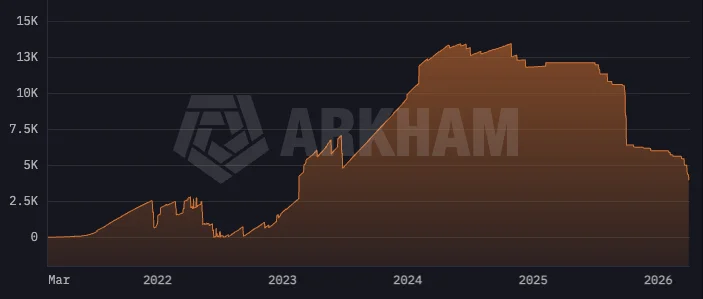
Adding to the intrigue, the latest transfer follows previous transactions of 519.7 BTC on March 25 and 123.7 BTC on March 27, some of which involve trading firms like QCP Capital. Despite these outflows, Bhutan still maintains a substantial balance of roughly 3,954 BTC, valued at approximately $263.9 million. However, this figure represents a stark decline from a peak holding of nearly 13,000 BTC recorded in October 2024, indicating that the country has been offloading its stakes aggressively throughout the year.
Bhutan’s Mining History and Current Holdings
Bhutan’s approach to acquiring Bitcoin is distinct from many other nations. Instead of relying on criminal seizures or purchases, the country has established itself as an eco-friendly Bitcoin miner, capitalizing on its abundant hydroelectric resources. Currently, Bhutan ranks as the seventh-largest known nation-state holder of Bitcoin, trailing behind major players such as the United States, China, and several other nations.
With its Bitcoin holdings managed under the state investment arm Druk Holding & Investments, Bhutan has garnered international attention for its innovative progress in cryptocurrency mining. However, speculations regarding whether Bhutan has ceased or slowed its mining operations have emerged, especially considering that the last notable Bitcoin inflow exceeding $100,000 happened over a year ago.
The kingdom’s unique geographical and climatic conditions allow it to operate eco-friendly mining farms that align well with its commitment to sustainability. This factor has contributed to fostering a growing interest in how Bhutan may navigate its future in the cryptocurrency space.
Emerging Speculations and Future Prospects
As analysts dissect the recent capital outflows from Bhutan, speculation about the government’s motivations for selling its Bitcoin intensifies. Some industry observers suggest that the government may be funding public projects or paying off debts. Others speculate about potential moves to bolster the local economy, given the volatile nature of cryptocurrency markets.
The apparent liquidation of assets adds a layer of complexity to understanding Bhutan’s long-term strategy with Bitcoin. The kingdom’s large reserves initially painted a picture of a forward-thinking country harnessing the power of digital finance. However, persistent sales may indicate a shift in strategy that could have ramifications for its future endeavors in this ever-evolving market.
Moreover, as global economic conditions fluctuate, the volatility of Bitcoin poses inherent risks. The prospect of further outflows leads market experts to contemplate the implications for both Bhutan’s financial health and the broader crypto ecosystem, particularly amid rising interest rates and tightening liquidity conditions in traditional financial markets.
The Impact on Cryptocurrency Markets
Bhutan’s activities could serve as a bellwether for other nations contemplating their cryptocurrency strategies. As one of the few nation-states engaging in eco-friendly mining, the country presents an appealing model for harnessing renewable energy for digital asset generation. However, the ongoing sale of its holdings could prompt other nations with similar capabilities to reconsider their approaches to Bitcoin.
Moreover, Bhutan’s significant Bitcoin transfers underscore the need for transparency in cryptocurrency transactions and the implications of government actions on market dynamics. The ongoing outflow could generate volatility in Bitcoin’s price, especially if other entities perceive it as a signal to sell off their reserves as well.
As such, observers are keenly watching Bhutan’s next moves, particularly regarding its Bitcoin strategy in light of its recent transactions. The country’s dynamic will undoubtedly affect regional and global perceptions of cryptocurrency governance and utility in the coming years.
Conclusion: Bhutan at the Crossroads of Digital Finance
In conclusion, Bhutan’s journey in the world of Bitcoin showcases the multifaceted nature of state involvement in cryptocurrency. While the nation has made headlines for its initial environmental approach to mining, the recent sharp selling of its holdings raises critical questions about its economic strategies moving forward. As Bhutan navigates these waters, it will serve as a case study for how emerging economies can balance the benefits and risks of digital assets.
In an increasingly digital economy, the global community remains watchful of Bhutan’s decisions concerning its Bitcoin reserves. This outcome may not only affect the country’s economic landscape but could also redefine how other nations view and engage with cryptocurrency. The story of Bhutan serves as a reminder of the complex interplay between innovation, sustainability, and financial strategy in today’s fast-paced digital market.