




Bernstein Analysts Predict Crypto Market Recovery by 2026: A Comprehensive Analysis
The cryptocurrency market is currently experiencing a downturn, with Bitcoin (BTC) trading around 40% below its all-time high of about $75,000. However, analysts at Bernstein, led by Gautam Chhugani, foresee a recovery beginning in 2026. This article explores their insights, contextualizing the current market conditions, institutional participation, and potential future trends within the crypto space.
Current Market Conditions and Bitcoin’s Performance
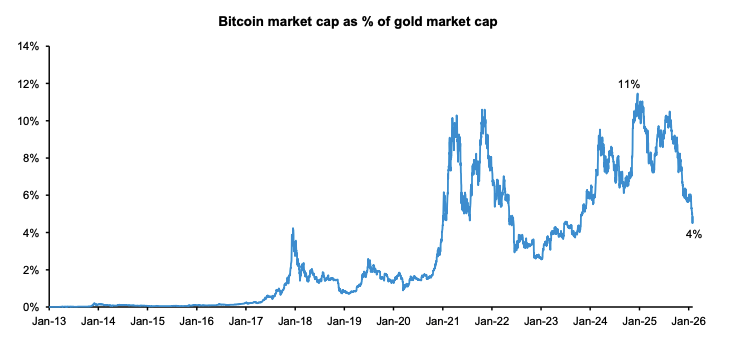
As of now, Bitcoin is navigating through what Bernstein describes as a "short-term crypto bear cycle." They predict that Bitcoin will likely bottom out around its previous cycle highs, particularly in the $60,000 range during the first half of the year. This downturn coincides with Bitcoin’s relatively poor performance compared to gold over the past year—a period marked by significant central bank gold accumulation. According to Bernstein, Bitcoin’s market cap has fallen to approximately 4% of gold’s market cap, hitting a two-year low.
The current dynamics of market capitalization suggest a potential shift in investor sentiment. As central banks in countries like China and India ramp up their gold holdings—thereby increasing gold’s share of global reserves to roughly 29% by the end of 2025—Bitcoin’s standing may be diminishing in the eyes of institutional investors. This comparative decline raises questions about Bitcoin’s long-term viability as a reserve asset.
Institutional Involvement Shaping the Landscape
Despite the bearish market sentiment, Bernstein emphasizes that the last two years have marked an "institutional cycle" for Bitcoin. This cycle has seen the rise of spot Bitcoin exchange-traded funds (ETFs), now boasting approximately $165 billion in assets under management. Furthermore, there has been an increase in corporate treasury holdings in Bitcoin, reflecting a shift away from purely retail-driven market activities.
Such developments present a robust foundation for Bitcoin’s future, suggesting that institutional investors are adopting a longer-term perspective rather than participating in impulsive buy-sell cycles characteristic of earlier crypto market trends. This institutional involvement is pivotal, as it has a stabilizing effect on market volatility and enhances overall liquidity.
U.S. Political Dynamics and Crypto Regulation
U.S. policy dynamics could play a critical role in Bitcoin’s recovery trajectory. Bernstein analysts highlight the formation of a Strategic Bitcoin Reserve, comprising seized government assets, as a possible catalyst for legitimizing Bitcoin as a sovereign or reserve-style asset. They suggest that a shift in leadership at the Federal Reserve, particularly under the expected nominee Kevin Warsh, could align federal policies more closely with crypto’s interests.
While these potential outcomes are speculative, Bernstein maintains that a proactive approach from the U.S. government will be necessary to mitigate further declines in digital asset markets. As Bitcoin continues to gain traction, policymakers may be encouraged to shape regulatory frameworks that foster growth rather than stifle innovation.
Market Resilience Amid Fluctuations
Bernstein’s analysis suggests that institutional participation in the crypto market remains resilient, which signals the potential for recovery. They note that outflows from ETFs since their peak have been relatively modest, indicating sustained investor confidence. Moreover, there has not been significant capitulation among miners—further distinguishing this cycle from previous downturns where miner sell-offs led to drastic price declines.
Corporate entities also continue to acquire Bitcoin despite short-term fluctuations. For instance, major players have collectively invested around $3.8 billion in Bitcoin year-to-date, indicating strong demand even when prices dip below their cost basis. Furthermore, miners are diversifying into AI-related ventures, showcasing adaptability in their revenue models during challenging market conditions.
A Late-Stage Correction Rather than a Prolonged Winter
Bernstein argues that the current downturn may be interpreted as a late-stage correction rather than the onset of a prolonged crypto winter. Analysts expect near-term volatility, but they advocate that Bitcoin has the potential to establish a higher baseline with a projected recovery in 2026. This recovery could become one of the most significant cycles in Bitcoin’s history, as it would not only align with traditional four-year market patterns but may also transcend them.
As investors keep a close eye on market indicators, there is cautious optimism regarding Bitcoin’s trajectory. The evolving landscape, influenced by both institutional adoption and policy dynamics, presents a compelling narrative for the future of cryptocurrencies.
Conclusion: Looking Ahead to 2026
The current state of the cryptocurrency market reveals a complex interplay of bearish sentiments, institutional involvement, and regulatory considerations. Analysts at Bernstein are optimistic that the cryptocurrency sector, particularly Bitcoin, may soon transition from a short-term bear cycle to a more stable and prosperous phase by 2026. As Bitcoin strives to reclaim its position as a viable reserve asset amid increasing competition from gold, understanding these dynamics will be crucial for investors and stakeholders alike.
In summary, the coming years will likely be defining for Bitcoin, making it essential for investors to remain informed about market narratives and institutional shifts. With a firm foundation set by institutional adoption and supportive policies, the future of Bitcoin could be brighter than many anticipate.