




Bitcoin’s Resilience: How Institutional Involvement is Reshaping the Market
Bitcoin has been making headlines globally, especially in light of recent developments that hint at a changing landscape in cryptocurrency ownership. Analysts from Bernstein, a well-regarded research and brokerage firm, have noted that Bitcoin is evolving into a more robust asset due to increased institutional capital flows through exchange-traded funds (ETFs) and corporate treasury strategies. This burgeoning resilience highlights Bitcoin’s ability to hold its ground even amid geopolitical tensions, outperforming traditional assets like gold and equity indices.
Institutional Capital: A Game Changer for Bitcoin
Amidst the turbulence of the recent Middle East conflict, Bitcoin demonstrated remarkable stability, rising approximately 7% over the past week. Meanwhile, Ethereum also saw a boost of around 9%. This stability can be attributed to the maturing dynamics of the market, primarily shaped by institutional capital entering the Bitcoin space. Bernstein analysts, led by Gautam Chhugani, emphasize that this shift marks a pivotal change in Bitcoin’s investor base. The asset is reducing its reliance on more speculative retail investors, thereby establishing a stronger foundation for future growth and stability in its long-term prospects.
The Role of Strategy: Bitcoin’s Central Bank
A significant player in this market evolution is Strategy, which has been dubbed the "Bitcoin central bank of last resort." The firm has adopted an aggressive accumulation model, consistently purchasing large quantities of Bitcoin. This year alone, Strategy has acquired over 66,231 BTC at an average cost of approximately $85,000, leading to total holdings of over 761,000 BTC, equivalent to around $56 billion. Such massive acquisitions signal not only confidence in Bitcoin’s long-term performance but also a major shift in the underlying financial structures associated with the cryptocurrency, further enticing income-focused investors.
Financing Structures and Market Impact
Strategy’s diversification into various financing instruments tied to its Bitcoin strategy has attracted significant attention. Their STRC product, which offers an impressive 11.5% dividend, has seen trading volumes surpassing $2 billion weekly. The capital raised from these instruments has bolstered additional Bitcoin acquisitions, creating a cyclic model that reinforces its liquidity and market presence. Bernstein highlights that Strategy’s balance sheet is heavily supported by crypto assets, with $57 billion in Bitcoin and liquid cash set against approximately $17 billion in debts, showcasing a solid risk management approach in volatile times.
ETF Inflows: The Institutional Surge
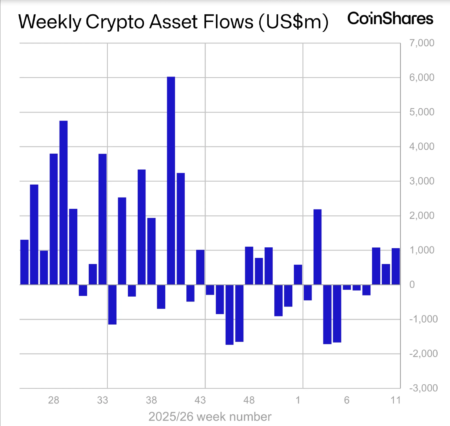
The rise of spot Bitcoin ETFs has further contributed to this resilience. Recent estimations reveal that ETFs have garnered around $2.1 billion in inflows over just three weeks, positioning them as a significant player in the cryptocurrency ecosystem. With total ETF assets hovering around $92 billion, these funds now control approximately 6.1% of the entire Bitcoin supply. This shift highlights a growing institutional interest and positions Bitcoin as a more sought-after asset, reducing market volatility spurred by speculative trading.
The Long-Term Holder Phenomenon
Another crucial aspect of Bitcoin’s evolving landscape is the prevalence of long-term holders, often referred to as “diamond hands.” Coins that have been inactive for over a year now comprise approximately 60% of the circulating supply, signifying that a substantial portion of investors view Bitcoin as a store of value. This long-term holding mentality adds a layer of stability to the market, even amid price fluctuations. According to Bernstein, institutional vehicles now account for around 14% of the total Bitcoin supply, incorporating ETFs, corporate treasuries, and even government holdings, reflecting the institutional reservoir of confidence in the asset’s potential.
A Bright Future Ahead
Earlier this year, Bernstein characterized much of the bearish sentiment surrounding Bitcoin, particularly concerning its cyclical nature and competition with gold, as the "weakest bear case in history." Their bullish long-term price target remains steadfast at $150,000 for 2026. With Bitcoin currently trading around $73,600, the outlook remains promising, especially with substantial institutional backing and an evolving framework that seems to strengthen its capital base. As the cryptocurrency market matures, these transformative forces signal an exciting new era for Bitcoin, characterized by increased stability and an evolving investor base that favors longevity over speculation.
In summary, the current trends demonstrate that Bitcoin is not just a speculative asset but has fortified its standing as a significant component of financial portfolios, especially for institutions. As we move forward, the confluence of dynamics from ETFs, corporate treasury purchases, and long-term holders is reshaping the narrative around Bitcoin, embedding it deeper into the financial fabric of global markets.