




Bitcoin Faces Major Downturn: An In-Depth Analysis
Bitcoin, the world’s leading cryptocurrency, has experienced a severe market correction, wiping out all gains since its all-time high of $69,000 in late 2021. As selling pressure intensified across both spot and derivatives markets, Bitcoin dipped below the critical $70,000 threshold, reaching its lowest levels since October 2024. Currently, Bitcoin’s value is down over 8% for the day and approximately 30% year-to-date. This substantial decline, nearly 45% from its October peak, raises various questions about the future trajectory of Bitcoin and the broader crypto market.
Market Dynamics: A Shift to Bearish Sentiment
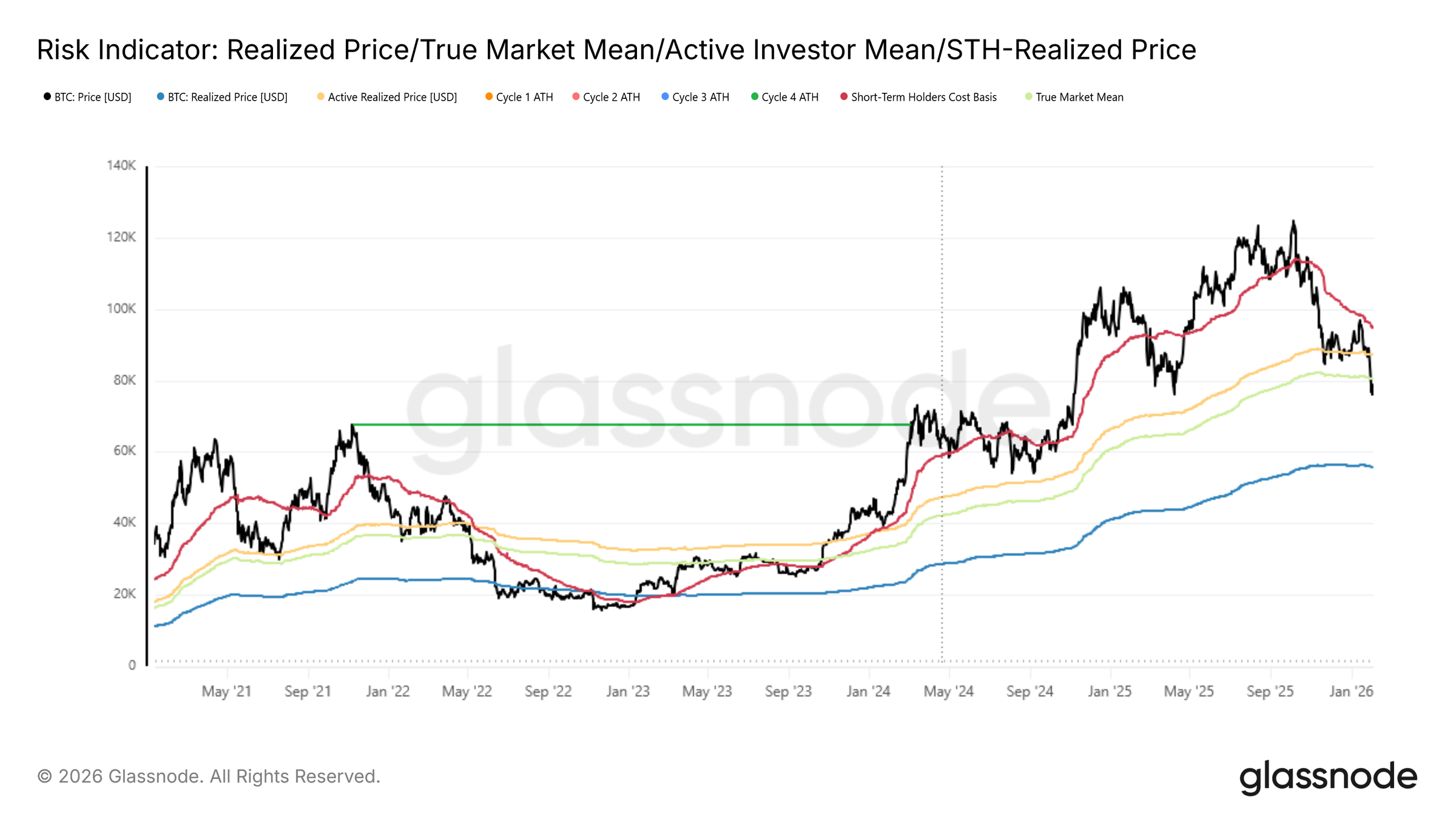
The sharp decline below the $70,000 mark signals a significant deterioration in the market’s overall structure. Analysts from Glassnode have noted that on-chain indicators suggest forced selling, weak spot demand, and declining institutional support. The transition to a more defensive market has led to accelerating realized losses, with many holders opting to exit positions at a loss. The data reveals that Bitcoin’s price has now fallen below its "True Market Mean," a vital on-chain metric that reflects the average acquisition price of Bitcoin in active circulation. The breakdown of this level indicates a broader market decline reminiscent of previous bear markets.
Accumulation Zone Amidst Selling Pressure
Despite the negative sentiment, on-chain data also hints at early signs of accumulation within the $70,000 to $80,000 range. A dense cost-basis cluster between approximately $66,900 and $70,600 could serve as a near-term support level. However, the elevated realized losses—averaging over $1.2 billion per day—indicate that fear-driven selling remains prevalent. While some traders are looking for signs of stabilization, analysts caution that the current market dynamics continue to present significant risks for Bitcoin investors.
Derivatives Markets Amplify Volatility
The downturn in Bitcoin’s price has been exacerbated by activity in the derivatives markets, evidenced by a massive spike in long liquidations as prices dipped into the low $70,000s. Over the past 24 hours, reported crypto liquidations exceeded $1 billion, primarily from long positions. The staggered release of deleveraging data by exchanges suggests that the actual wipeout could be even larger than reported. Furthermore, the options markets reflect an elevated downside risk, with increased implied volatility as traders seek protection against potential further declines.
Softening Institutional Demand
A crucial factor influencing Bitcoin’s recent struggles is the decline in institutional demand. Net inflows across spot Bitcoin ETFs, corporate treasuries, and government-related holdings have turned negative, stripping the market of much-needed support. For instance, U.S. spot Bitcoin ETFs experienced a second consecutive day of outflows totaling $545 million. This shift has put substantial pressure on high-profile Bitcoin treasury strategies, including those led by prominent figures such as Michael Saylor, whose position is significantly underwater as Bitcoin trades below their average entry price.
Broader Market Implications and Potential Recovery
Market analysts suggest that the current downturn in Bitcoin is reflective of broader deleveraging across various asset classes, including equities and commodities. The volatility within these markets creates a cascading effect on cryptocurrencies. Some experts, like Nic Puckrin, co-founder of Coin Bureau, argue that the current phase represents a transition from distribution to a more profound reset, which could take several months to resolve. Given the situation, the key variable for a potential recovery remains robust spot demand. Without the return of fresh buyers, Bitcoin is likely to be vulnerable to further declines and intermittent recoveries.
Conclusion: A Cautious Outlook for Bitcoin
As the cryptocurrency market grapples with further uncertainties, Bitcoin’s recent trajectory presents a mixed bag of cautious optimism and significant risks. While early signs of accumulation may emerge, they are currently overshadowed by prevailing fears and a lack of institutional appetite. Given the complexities at play, any short-term relief rallies may not signify a lasting trend reversal but rather a corrective phase. Investors and analysts alike will need to remain vigilant as they navigate the turbulent waters of the crypto market, eager for signs of renewed conviction from spot market participants to gauge the potential for a durable recovery.
In conclusion, the ever-evolving landscape of Bitcoin and cryptocurrencies requires prudent assessment, especially amid recent developments that challenge the stability of this once-skyward-trending asset. As Bitcoin continues to oscillate in value, staying informed and adaptable is crucial for anyone involved in the crypto realm.