



State of Crypto Security: Insights on Hacks, Losses, and Industry Implications
The cryptocurrency landscape remains fraught with challenges as protocol builders grapple with the relentless threat of hacks. The latest report by Immunefi highlights that the financial toll from such breaches has reached a notable "baseline" of approximately $25 million stolen upfront, compounded by a significant decline in token value following attacks. As the industry strives to improve its security measures, the data reveals an unsettling reality: vulnerabilities persist, even in the face of incremental defensive progress.
Persistent Vulnerabilities in the Crypto Space
Immunefi’s 2026 State of Onchain Security report underscores a grim picture of ongoing vulnerabilities within the cryptocurrency sector. Over the course of 2024 and 2025, there were 191 publicly disclosed incidents, which resulted in losses totaling $4.67 billion, pushing the five-year total to a staggering $11.9 billion across 425 hacks. The frequency of these attacks, with 94 reported in 2024 and 97 in 2025, indicates a stabilization at elevated levels, rather than a decline. This ongoing threat landscape raises pressing questions about the adequacy of current security measures.
Changing Nature of Crypto Hacks
While the total losses remain alarmingly high, the report reveals an interesting shift in the nature of these attacks. The median loss from a hack has decreased significantly from $4.5 million to about $2.2 million, suggesting some improvement in mitigating routine exploits. However, this drop in median losses contrasts sharply with the average loss, which remains at approximately $24.5 million, highlighting a market that is increasingly shaped by rare but catastrophic events. In fact, the five largest hacks in 2024–2025 were responsible for an astounding 62% of all stolen funds, demonstrating the concentrated risk posed by a few significant breaches.
The Role of Centralized Exchanges
Centralized exchanges remain a focal point of concern in the crypto security narrative. Despite being responsible for only 20 of the 191 reported incidents, these exchanges incurred over half of the total losses, amounting to $2.55 billion. This concentration of risk suggests that custodial vulnerabilities are a persistent threat to the industry, casting a long shadow over its overall security posture. As crypto protocols increasingly rely on centralized custodial solutions, the potential for damaging failures remains alarmingly high.
Market Reactions to Hacking Incidents
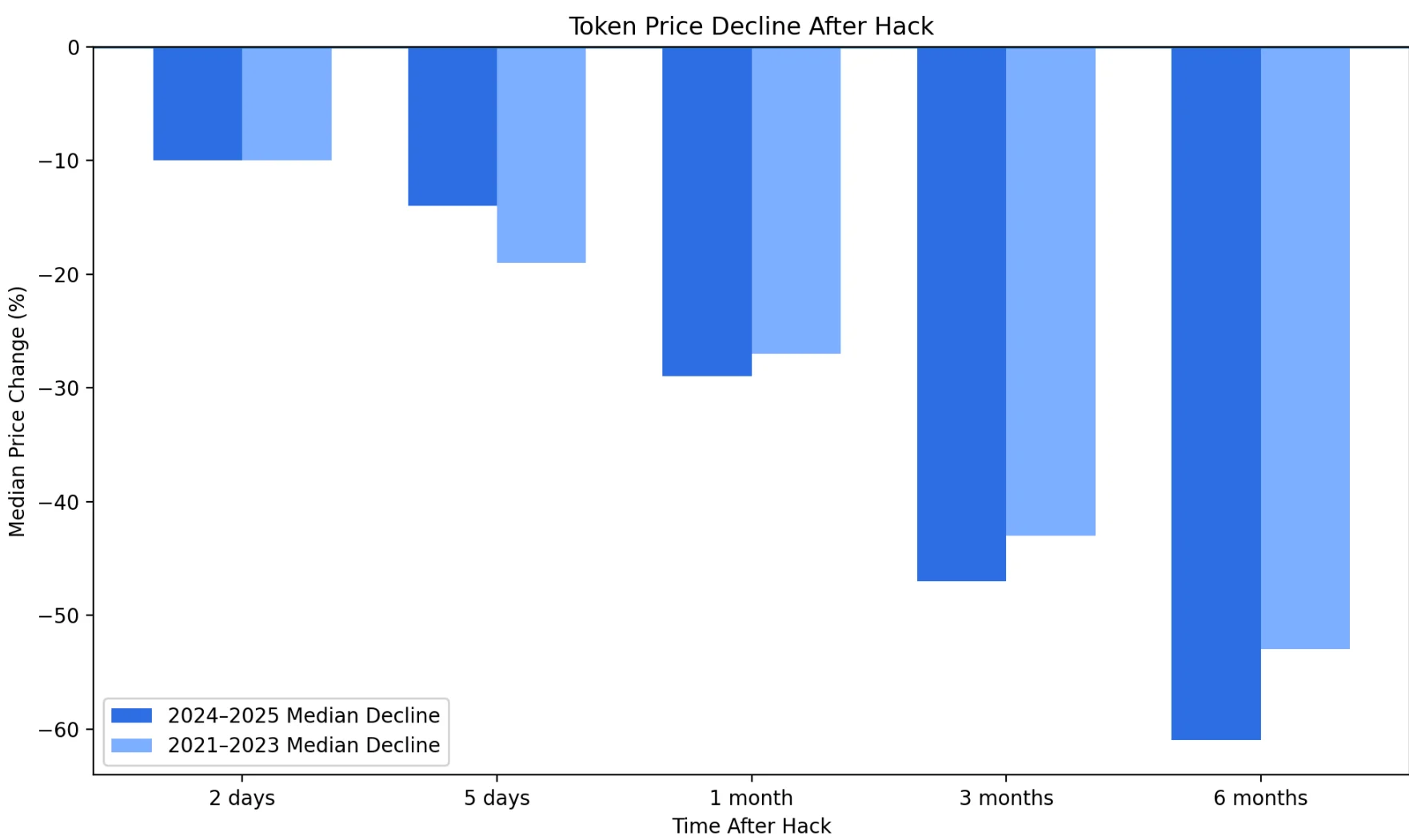
The market’s response to hacks has become notably harsher over the years. Tokens associated with hacked projects typically experience an average decline of 10% within two days of the breach. In the long term, median token losses have worsened to 61% after six months, up from 53% in earlier assessments. This punitive market behavior signifies a loss of confidence that extends beyond mere price volatility, indicating that the ramifications of hacks permeate through broader investor sentiment as well.
Consequences for Project Viability
The fallout from hacking incidents has substantial implications for the viability of affected projects. Many crypto projects retain their tokens as treasury reserves, meaning a significant drawdown directly impacts their operational runway, hiring capacity, and development budgets. In an interconnected ecosystem, the risks multiply; a single stablecoin failure, such as the deUSD incident in 2025, showcases how a collapse can trigger cascading failures across multiple protocols, straining the industry further. Not only do such incidents erode value, but they also obstruct the ability of teams to focus on innovation and progress, as they are often forced to divert resources towards recovery and remediation.
Organizational Impact and Recovery Challenges
The internal impact of hacks ripples through organizations, often resulting in rapid turnover among security leadership within weeks of a breach. The need for immediate remediation strains existing resources, frequently resulting in stalled product initiatives. Indeed, recovery can consume months of dedicated effort, further compounding the challenges faced by affected teams. As evidenced, the 84% of tokens remaining below their pre-hack levels after six months highlight the increasing difficulty of not just recovering stolen funds, but also restoring faith with investors and users alike.
The cryptocurrency ecosystem faces a formidable battle against the continuing threat of hacks. While some improvements in defense mechanisms are apparent, the persistence of vulnerabilities and the concentrated risk of catastrophic events underscore the urgent need for enhanced security measures. The grim statistics outlined in Immunefi’s report should serve as a clarion call for protocol builders, investors, and the broader crypto community to collectively bolster defenses, ensuring a safer future for the industry.