



Bitcoin’s Major Move: Influences Beyond the Crypto Sphere
Bitcoin, often considered the bellwether of the cryptocurrency market, is witnessing price movements influenced less by crypto-specific events and more by broader economic factors. According to analysts from Bitfinex, the upcoming major swings in Bitcoin’s value may hinge more on the dynamics of oil prices, bond yields, and the policies enacted by the Federal Reserve. This shift in market structure, where macro liquidity plays an increasing role, represents a departure from the leverage-driven phenomena characteristic of previous market cycles.
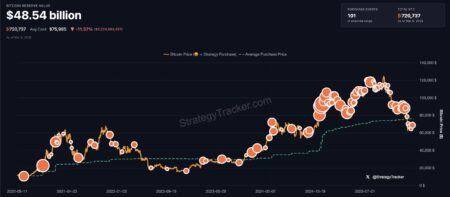
As of recent trading data, Bitcoin has surged to just under $72,000, demonstrating an impressive over 4% increase in a single day. Notably, over $100 million in short positions were liquidated during this rally, reflecting heightened volatility and investor dynamics. However, analysts caution that while this rebound has captured attention, it does little to alter the overarching narrative of a market still in recovery from previous deleveraging cycles and constrained by macroeconomic elements. As Bitfinex aptly articulated, Bitcoin appears to be transitioning from a phase driven by leverage dynamics to one dictated by macroeconomic consolidation.
The Impact of Oil Prices
A significant event in February saw Bitcoin’s value plummet from approximately $79,000 to a low of $60,000, drastically reducing the leverage in the crypto market. This slump led to a reduction in open interest in derivatives markets, ultimately rendering the market cleaner but more vulnerable to wider macro liquidity conditions. In this new environment, fluctuations in energy markets, particularly in crude oil prices, have gained considerable relevance.
Recent weeks have seen crude oil prices soar approximately 80% from their lowest levels, peaking above $100 per barrel amid rising geopolitical tensions in the Iran-Israel region. The Bitfinex analysts emphasized that the ramifications of escalating oil prices extend far beyond the energy sector. Traditionally, periods marked by rising oil costs correspond to increased U.S. real yields and a stronger dollar. These developments can tighten global liquidity and limit the upward potential of risk assets, including Bitcoin. Additionally, steady oil prices contribute to inflation expectations, affecting consumer prices directly, as energy constitutes about 9% of the Consumer Price Index in many developed nations.
Bitcoin and Inflation Expectations
In the backdrop of these dynamics, Bitcoin’s market behavior has increasingly mirrored that of technology stocks rather than traditional safe-haven assets such as gold. Analysts from Bitfinex noted that the cryptocurrency’s performance is increasingly correlated with the overall macro liquidity landscape, further complicating its potential as a hedging instrument against inflation. Rising energy prices can delay anticipated interest rate cuts, which keeps financial conditions strictly aligned and creates challenges for Bitcoin as a potential store of value.
Despite these surface pressures, there are nascent indications of stabilization within the Bitcoin market. For instance, spot Bitcoin ETFs witnessed impressive inflows of $167 million on March 9, with significant participation from institutional investors like BlackRock, which alone accounted for about $109 million in new funds. Such inflows are crucial indicators of institutional sentiment and market confidence. The Bitfinex analysts pointed out that, barring a significant shift in ETF flows, Bitcoin could remain within a price range of $63,000 to $72,000 over the near term.
Market Stability Indicators
Analyzing market structures, Bitfinex highlighted that a balance seems to be forming between buyer and seller dynamics. Large holders of Bitcoin appear to be accumulating, which effectively absorbs retail selling pressure, creating a certain equilibrium. Furthermore, analysts have identified key technical levels that reinforce the current consolidation narrative: $60,000 as a structural support level, between $70,000 and $72,000 as a near-term supply zone, and $78,000 as a crucial on-chain cost-basis resistance separating a consolidation phase from a new bull market.
Nevertheless, broader macroeconomic developments could eventually dictate Bitcoin’s next directional shift. Stephen Coltman, the head of macro at 21Shares, has expressed concerns about the potential for rising energy prices to exacerbate inflation risks, placing additional pressure on U.S. consumers, who are already grappling with financial strains. The U.S. savings rate, which has dipped to 3.6%—significantly below the long-term average—illustrates the precarious financial situation for households, further limiting their buffers against rising energy and food costs.
The Dual Forces Affecting Bitcoin
In light of these features, Bitcoin currently occupies a complex position influenced by stabilizing crypto fundamentals and an increasingly uncertain macroeconomic environment. If ETF inflows maintain their upward trajectory alongside stable macro conditions, analysts from Bitfinex suggest that Bitcoin may gradually ascend toward the low-$70,000 range. Conversely, if inflation driven by oil prices leads to rising yields, we may witness a revisit to the $60,000 support zone before any sustained rally.
In the end, the Bitcoin market stands at a crossroads, with its future price trajectories hanging in the balance. Market dynamics are increasingly shaped by factors beyond crypto-specific events, necessitating a broader understanding of global economic conditions. As analysts dissect the interplay between energy markets, liquidity conditions, and investor sentiment, it becomes apparent that Bitcoin’s next major moves will likely reflect the complex tapestry of these interconnected forces.
Conclusion
As the cryptocurrency market evolves, it is essential for investors and industry stakeholders to acknowledge the growing influence of macroeconomic factors, particularly oil prices and U.S. monetary policy. Keeping track of these elements will provide crucial insights into Bitcoin’s future performance. Moving forward, effective navigation through these turbulent waters may demand not only a keen understanding of crypto fundamentals but also a nuanced appreciation for how external forces shape the landscape. With this in mind, investors should remain vigilant, keeping their eye on both the crypto-specific developments and the broader economic realities at play.