




MSTR vs. BTC: The Ongoing Debate as February Closes
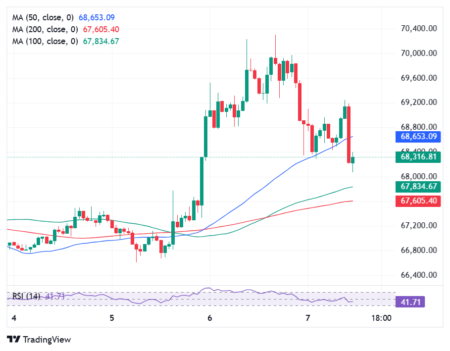
As the end of February approaches, the conversation surrounding MicroStrategy (MSTR) and Bitcoin (BTC) remains dynamic. Investors are carefully analyzing whether MSTR stock can surpass Bitcoin in performance. Currently, Bitcoin is trading at $68,063, showing a notable decline of 23% over the past month, while MSTR closed the previous Friday at $131.05.
Price Trends: MSTR vs BTC
February has not been kind to Bitcoin, which despite a slight daily gain of 0.15%, faces ongoing price pressure. In contrast, MSTR’s stock increased by 1.24% on the same day, fluctuating between $129.41 and $136.14 and trading approximately 17.6 million shares. Following this activity, it ended the day at $131. MicroStrategy now holds an impressive 717,131 BTC, with an average purchase price around $76,027, amounting to a total investment near $54.5 billion. As of current Bitcoin valuations, MicroStrategy’s BTC assets total approximately $48.8 billion, highlighting the tricky balance between its stock price and Bitcoin holdings.
Bitcoin Treasury Management and Financing
MicroStrategy’s financial framework involves around $6 billion in net debt coupled with adjustments in cash reserves, allowing their stock to hover at a minor discount relative to its Bitcoin treasury value. This situation starkly contrasts with previous bullish trends, where MSTR often traded at a significant premium due to its Bitcoin holdings. Historically, MSTR has served as a leveraged proxy for Bitcoin, with a beta of 3.5 over five years. Notably, a standard 2% movement in Bitcoin typically results in a correlating shift of 4% to 6% in MSTR.
Upcoming Events and Corporate Strategy
Adding to the intrigue, MicroStrategy will host its "Bitcoin for Corporations" conference in Las Vegas on February 24-25. During this event, CEO Michael Saylor is expected to showcase the firm’s treasury strategy, which may become a focal point for increased trading interest as February draws to a close. Moreover, MicroStrategy has established a pattern of making weekly Bitcoin acquisitions, often announcing these purchases every Monday. This relentless accumulation strategy, funded through various means such as debt or equity issuance, demonstrates the firm’s commitment to Bitcoin without resorting to selling its holdings.
Market Sentiment and Challenges
Despite the firm facing a gap in its asset value—reportedly around $5.7 billion below its average cost—Saylor’s strategy continues to focus on capital raising rather than liquidating BTC. Market analysts, however, view the landscape cautiously; Mizuho Securities recently revised its 12-month price target for MSTR from $403 to $320, citing a staggering $12.4 billion net loss and a $17.4 billion unrealized loss in digital assets.
Technical Analysis and Broader Market Trends
From a technical perspective, MSTR’s stock oscillates between $125 as support and $135 as resistance, having rebounded from a $105-$110 range. The Relative Strength Index (RSI) currently sits at 54.97, suggesting mild bullish momentum. Meanwhile, the Moving Average Convergence Divergence (MACD) indicator indicates a potential positive crossover, although its expansion is limited.
Year-to-date, MSTR is down by 13.75%, which is considerably better than Bitcoin’s decline of 22%. This relative performance has intensified discussions regarding the MSTR vs. BTC relationship. According to reports, Bitcoin faces pressure from ETF outflows that have totaled $3.8 billion over five weeks, though cumulative ETF inflows still hover around $54 billion.
The Future Outlook for MSTR and BTC
With the Bitcoin network showing robust health, evidenced by a hash rate nearing 1,000 exahashes per second and Lightning Network capacity above 5,600 BTC, market stakeholders continue to watch closely. As Bitcoin stabilizes around the $68,000 mark and precious metals like gold trend upwards, there is palpable curiosity over whether MSTR can maintain its current strength before the month concludes. The ongoing narrative between MSTR and BTC is far from settled, and as this strategy unfolds, the implications for both investors and the broader market remain significant.
In summary, as MSTR holds substantial Bitcoin, its performance as a cryptocurrency proxy will be scrutinized closely in the coming weeks. Investors will continue to weigh the dynamics of MSTR’s stock against Bitcoin’s market volatility. The resulting debates will shape future investment strategies in an ever-evolving digital asset landscape.