



Massive Liquidity Injection by the US Federal Reserve: What It Means for Markets and Bitcoin
The U.S. Federal Reserve (Fed) made headlines recently by injecting $13.5 billion into the banking system through overnight repurchase agreements (repos), effectively marking the end of its quantitative tightening (QT) cycle. This significant liquidity injection stands as the second-largest since the COVID-19 pandemic, igniting considerable trading activity in cryptocurrencies, particularly Bitcoin, as well as stocks like MicroStrategy (MSTR). This article delves into the implications of this liquidity pump and its immediate impact on markets.
Understanding the Fed’s Repo Operations
The December 1 repo operation, featuring a substantial $13.5 billion liquidity injection, might suggest easing stresses in the banking system. Data from the Federal Reserve Bank of New York confirmed that this move was part of a broader strategy to manage liquidity effectively, especially following another $25 billion injection earlier that day. Notably, this operation included $12.5 billion in treasuries and $12.5 billion in mortgage-backed securities as collateral. Such maneuvers are designed to provide short-term funding to primary dealers and banks, primarily serving to stabilize liquidity during financially tense periods.
Historically, repo operations—and their ensuing demand—rise when banks face liquidity shortfalls. This situation echoes the infamous September 2019 repo crisis, which led to the Fed conducting emergency operations for several months. The recent liquidity creation may indicate that banks are straining under the weight of short-term funding needs, a scenario reminiscent of past economic crises. It raises questions about the overall health of the banking sector, compelling market analysts to scrutinize upcoming economic indicators, particularly in relation to interest rates.
The Broader Context of Quantitative Tightening
Ending quantitative tightening (QT), a post-2008 financial crisis strategy aimed at normalizing monetary policy, brought the Fed into the limelight again. Amidst looming economic concerns, such as the stress caused by a prolonged government shutdown, the Fed’s timing for these extraordinary liquidity measures is intriguing. In assessing how this reversal of QT impacts various markets, it becomes clear that the surroundings are ripe for volatility, especially as macroeconomic factors evolve.
Metroeconomic conditions have shifted considerably, compelling the Fed to adapt its strategies. Unlike traditional tightening, the new liquidity approach may create conditions favorable for riskier assets like Bitcoin. Observers note a historical trend where such liquidity injections often prompt bullish sentiments in cryptocurrencies and stocks, despite the current market apprehension. With the Federal Reserve shifting its focus, traders are keenly watching, especially with the Federal Open Market Committee’s (FOMC) upcoming interest rate decision.
Market Reactions: Bitcoin and MSTR Stock
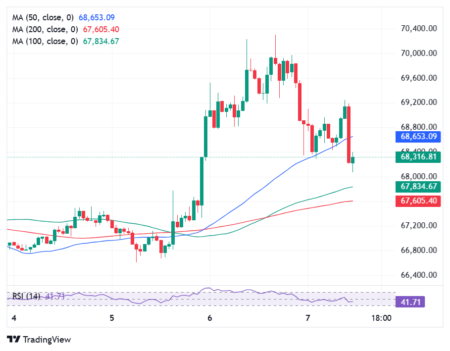
The Federal Reserve’s liquidity pump triggered immediate reactions in the markets, particularly in Bitcoin, where prices saw a slight recovery shortly after the news broke. Bitcoin’s price jumped by 2% within 24 hours, climbing from approximately $83,862 to around $86,900. During this period, Bitcoin even reached an intraday high of $87,325. This uptick accompanied an increase in trading volume, rising by 13%, reflecting heightened trader interest and signaling a potentially bullish turnaround for the digital asset.
Conversely, shares of MicroStrategy (MSTR) displayed varied responses. While MSTR stock bounced back by 0.68% during pre-market trading, it ended the previous day down by 3.25%, closing at $171.42. This decline was primarily attributed to a panic selloff within the cryptocurrency market. Nevertheless, MicroStrategy’s aggressive investment strategy continued to unfold as the company disclosed a purchase of an additional $11.7 million in Bitcoin, bringing its total holdings to a staggering 650,000 BTC. These strategic moves emphasize MicroStrategy’s commitment to Bitcoin as a long-term asset, juxtaposed against market volatility.
The Implications for Investors and Traders
The Fed’s actions not only impact financial markets but also signal important considerations for investors and traders. With liquidity expectations changing rapidly, risk management becomes paramount. Investors should be vigilant about market trends influenced by the Fed’s liquidity policies, as these conditions can foster erratic price movements. The relationship between monetary policy and market performance underscores the necessity for informed decision-making as the landscape shifts.
Particularly for cryptocurrencies like Bitcoin, the latest liquidity injections may revive bullish sentiment after a period of significant declines. Traders and investors should monitor indicators such as trading volumes and market sentiment while also considering macroeconomic factors such as interest rates and inflation. Ultimately, remaining adaptable in strategies and expectations can provide a competitive edge in navigating these complex economic waters.
Anticipating Future Developments
As we look ahead, the ongoing interaction between Fed policies and market dynamics requires careful attention. The imminent FOMC interest rate decision is crucial, as it will help determine future monetary policies. Moreover, traders must remain attuned to macroeconomic signals that could shift investor sentiment, particularly as liquidity conditions continue to fluctuate.
While today’s markets appear responsive to the Fed’s actions, uncertainty still looms. Economic indicators—such as inflation, employment rates, and geopolitical tensions—must inform investor sentiment in the coming weeks. Heightened volatility can be expected, making it imperative for investors to maintain a watchful eye on developments and adapt strategies accordingly.
In summary, the Fed’s recent liquidity injection signifies a critical juncture in the financial landscape. While offering short-term relief to banks and markets, it also raises significant questions about the underlying economic conditions. With traders already responding in Bitcoin and other risk assets, the potential for bullish sentiment remains—provided investors maintain vigilance as they navigate an ever-evolving monetary policy environment.