




Supreme Court Overturns Trump Tariffs: A Boost for Bitcoin and the Crypto Market
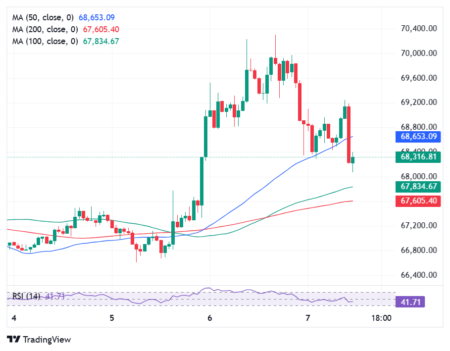
In a landmark decision, the U.S. Supreme Court has ruled against the Trump-era tariffs, concluding that the president lacks the statutory authority under the International Emergency Economic Powers Act (IEEPA) to impose them. The ruling, which passed with a 6-3 majority, asserts that the president cannot unilaterally enact such tariffs during peacetime. This verdict marks a significant political and economic shift and has immediate ramifications for the cryptocurrency market, particularly Bitcoin (BTC), which surged above the crucial $67,000 mark following the announcement.
The Supreme Court’s decision comes almost a year after Trump characterized the day he imposed reciprocal tariffs in April as “liberation day.” Back then, these tariffs contributed to a notable downturn in the crypto market. The reversal of this policy is viewed positively by many, as it removes an economic wildcard that traders had been concerned about, allowing them to focus on more predictable market factors. Following the ruling, Bitcoin demonstrated robust performance, climbing as high as $67,600, suggesting that traders are regaining confidence.
Further driving the optimism around BTC, Chief Investment Officer Matthew Sigel of VanEck pointed out that the elimination of tariff revenues could lead to increased money printing and currency debasement. This situation often prompts investors to seek refuge in alternative assets like Bitcoin and gold, traditionally seen as hedges against inflation and a weakened dollar. Sigel’s comments underscore a pivotal turning point for Bitcoin as it emerges as an attractive option for traders looking to anticipate and react to the economic landscape.
Earlier in the day, Bitcoin had dipped to approximately $66,500, coinciding with the release of the December Personal Consumption Expenditures (PCE) inflation data, which came in at 2.9%, slightly above expectations. The release of such economic indicators can create volatility in the markets; however, the Supreme Court ruling served as a catalyst for renewed investor activity. The shift in sentiment is indicative of how intertwined economic policy and cryptocurrency markets can be.
Despite the ruling’s clear opposition to the Trump tariffs, uncertainty remains regarding the potential refund of tariff revenues, which could amount to $150 billion. The Supreme Court did not provide clarity on whether such refunds would be mandated, leading to speculation among crypto traders. Many are betting that the court may compel the Trump administration to address this financial aspect, providing further fuel for crypto market volatility and investor speculation.
In response to the ruling, Trump depicted it as a “disgrace” and indicated he has a contingency plan to reinstate some form of tariffs. He mentioned at least five alternative strategies to revive such levies, albeit under more restrictive terms that do not grant him the same leeway for blanket tariffs. This ongoing tension between past and current administration policies could serve to keep the economic landscape dynamic, affecting various markets, including cryptocurrencies.
As Bitcoin continues to rally following the Supreme Court’s ruling, the implications of this decision go beyond just immediate market reactions. Investors keenly observe how political decisions affect economic policies and financial assets like Bitcoin. The evolving narrative surrounding the U.S. economy adds layers of complexity to investment strategies, especially for those in digital currencies. The crypto market remains vigilant to legislative changes and the corresponding economic ramifications, marking a critical moment for Bitcoin and potentially setting new precedents for the future of tariffs and trade policies.