



Morgan Stanley Enters the Crypto Space with Ethereum ETF Filing
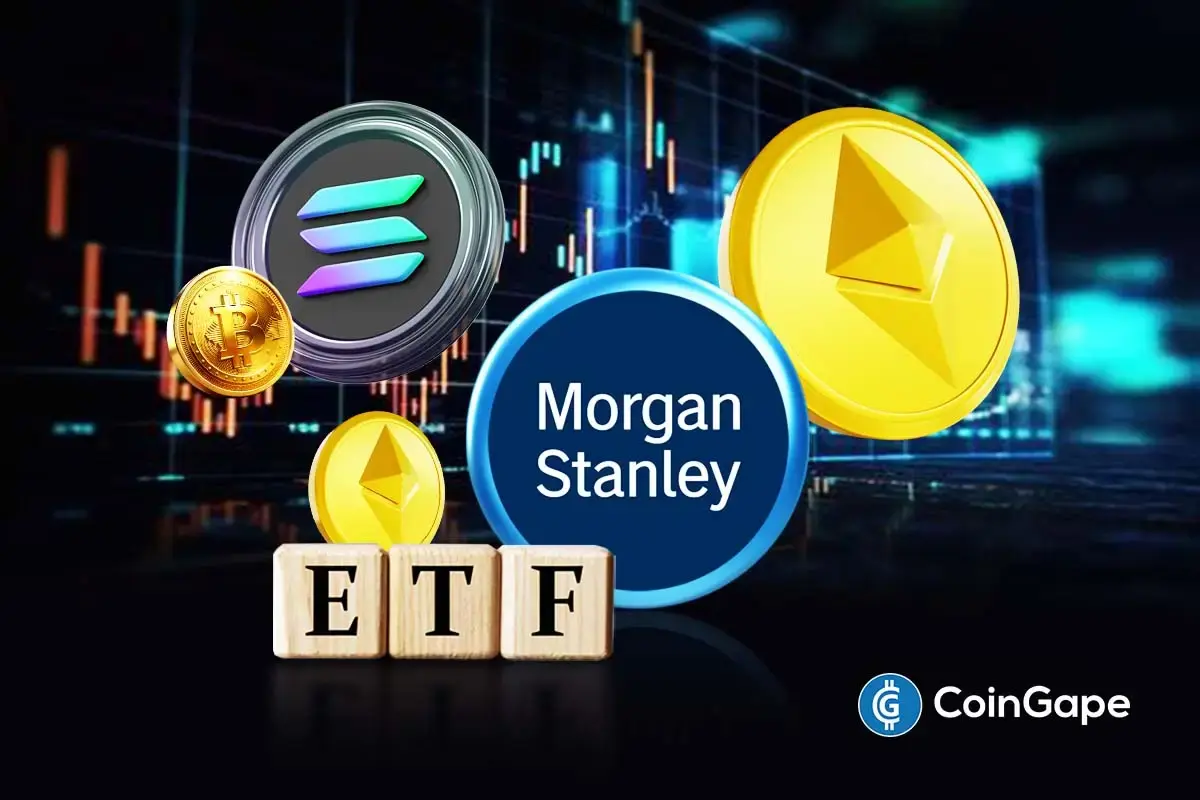
Morgan Stanley, a leading financial services firm managing nearly $9 trillion in assets, has made headlines with its recent move to file for an Ethereum Exchange-Traded Fund (ETF). This announcement follows the firm’s earlier filings for Bitcoin and Solana ETFs, signifying a strategic expansion into the cryptocurrency market. As the Wall Street giant aims to provide its clients exposure to digital assets, it positions itself at the forefront of financial innovation.
SEC Filing for Ethereum ETF
The official registration statement for the Morgan Stanley Ethereum Trust has been submitted to the U.S. Securities and Exchange Commission (SEC). This filing outlines the firm’s intention to track Ethereum’s price and generate returns for its investors. Unlike traditional investment vehicles, ETFs allow for easier trading of cryptocurrencies, paving the way for retail and institutional investors alike to gain access to Ethereum’s potential. The close timing of the Ethereum filing alongside those for Bitcoin and Solana highlights Morgan Stanley’s proactive approach in diversifying its clients’ portfolios with digital assets.
Staking Mechanism and Yield Generation
A noteworthy aspect of Morgan Stanley’s Ethereum ETF is its plan to engage in staking. This mechanism allows the fund to earn yield on its Ethereum holdings, thereby providing clients with additional revenue streams. Staking involves participating in the Ethereum network’s consensus mechanism, where holders lock up their ETH to support network operations while earning rewards in the process. By incorporating staking into its investment strategy, Morgan Stanley not only positions itself as a forward-thinking investment firm but also shows its commitment to capitalizing on emerging financial technologies.
In-Kind Creation and Redemption
In addition to the staking strategy, the Ethereum ETF will offer a unique feature of in-kind creation and redemption for its investors. This process allows for the exchange of ETF shares directly for the underlying assets, maintaining the asset’s tax efficiency and reducing transaction costs. However, details about the exchange where the fund will be listed, its ticker symbol, and its custodian remain undisclosed at this time. These details are crucial for investors eager to trade, making their absence a point of interest as more information is anticipated.
Alignment with Retail Crypto Trading
Morgan Stanley’s filing for an Ethereum ETF coincides with the firm’s broader initiative to roll out crypto trading options for its retail customers through its E-Trade division. This strategic move signifies a shift in the firm’s approach to cryptocurrencies, offering a comprehensive suite of financial products that cater to both institutional and retail investors. As the firm prepares to launch its BTC, ETH, and SOL ETFs, it has lifted restrictions on crypto investments for its wealth management clients, allowing them broader access to burgeoning digital asset markets.
Expert Insights on the Move
Industry experts have weighed in on Morgan Stanley’s push into cryptocurrencies. Matt Hougan, Chief Investment Officer at Bitwise, called the move “pretty remarkable,” especially since the firm only manages a small number of ETFs under its own brand. With the addition of the BTC, ETH, and SOL ETFs, these will comprise the 3rd, 4th, and 5th offerings under the Morgan Stanley name. Such developments are indicative of the growing acceptance of cryptocurrencies in traditional finance, as established firms like Morgan Stanley work to integrate digital assets into their services.
The Future of Crypto Investments
Morgan Stanley’s foray into the Ethereum ETF market underscores a significant shift in investor sentiment towards cryptocurrencies. As traditional financial institutions begin to embrace digital assets, the accessibility and legitimacy of cryptocurrencies continue to rise. With their innovative approaches such as staking, in-kind transactions, and a focus on providing diversified exposure, Morgan Stanley is positioning itself to capture the evolving landscape of investment opportunities. Investors and financial analysts alike will be closely watching this space, as the implications for both the cryptocurrency market and traditional finance are profound.
In conclusion, the filing for an Ethereum ETF by Morgan Stanley not only demonstrates the firm’s commitment to integrating digital assets into its portfolio but also highlights a broader trend in the financial industry. As firms continue to pivot towards cryptocurrency, investors can expect more innovative products designed to meet the demands of a rapidly changing financial environment.