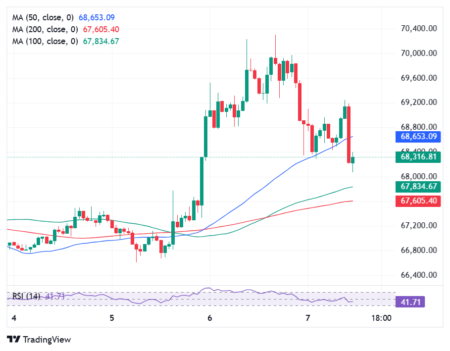





Bitcoin’s Current Phase: Understanding Stage 4 of the Bear Market
Bitcoin, the leading cryptocurrency, is undergoing a pronounced decline as it enters what analyst Doctor Profit identifies as Stage 4 of a six-phase bear market. This phase emerges after Bitcoin’s meteoric rise, peaking at around $125,000, followed by a rapid descent to approximately $60,000. This article delves into the significance of Stage 4, the historical context leading up to it, and what the future might hold for Bitcoin investors.
The Phases of Bitcoin’s Bear Market
Doctor Profit delineates the bear market phases, starting with Stage 1, where euphoria and extreme greed dominated the market as Bitcoin reached its all-time high of $125,000. This stage was characterized by rampant speculation, where investors underestimated risk due to optimistic bullish predictions. The market then transitioned into Stage 2 upon breaking the critical $100,000 psychological resistance, marked by a swift downturn. This phase included the dramatic October 10 crash, which instigated the largest liquidation event in the history of cryptocurrency trading.
Transition to Stage 3
Following the tumultuous events of Stage 2, Stage 3 commenced with a descent from $97,000 in January to $60,000 by February. This brutal phase saw Bitcoin lose nearly 50% of its market capitalization within a mere month. The sharp decline highlighted the market’s volatility and the rapid liquidation of positions, leading to an alarming evaporating of investor confidence.
In this context, understanding the psychological factors at play is crucial. As fear gripped the market, many investors were forced to sell at a loss, thus exacerbating the downward spiral and driving prices down further.
Characteristics of Stage 4: The Exhaustion Phase
Now in Stage 4, Bitcoin experiences prolonged sideways movement within a defined range, significantly different from the previous abrupt declines. According to Doctor Profit, this phase is about exhaustion rather than shock. It represents a selling zone for weaker hands, where short-term holders capitulate, leading to an overall stagnation in price. This phase can be particularly taxing for investors, as the lack of movement often creates uncertainty and anxiety, driving some to exit their positions.
Doctor Profit anticipates a breakdown below this range in the coming months. While he has placed buy orders between $57,000 and $60,000 in anticipation of a potential short-term bounce, he maintains a cautious outlook, expecting more extensive downside action in the longer term.
Final Capitulation Projections: $35,000 to $45,000
As the market continues to languish, Doctor Profit has adjusted his bottom projections. Initially forecasting a range of $50,000 to $60,000, he has revised this to the $40,000 to $50,000 range amid increasing macroeconomic uncertainties and stress in liquidity markets. Now, based on ongoing market developments, he identifies $35,000 to $45,000 as the ultimate capitulation zone, a period where fear peaks and investor confidence hits rock bottom.
This phase can see Bitcoin drop by 50% to 70% from its all-time high before a recovery begins. The ensuing Stage 6, marked by volatility and structural stabilization, may provide a buying opportunity for alert investors while seasoned traders accumulate assets at lower prices.
Liquidation Risks and Market Movements
Analysts have offered insights into the liquidation risks presented by current market conditions. Historical trends reveal significant drops of 84%, 77%, and 70% for Bitcoin, emphasizing the importance of structural dynamics beyond just percentages. Institutions continue to increase their exposure to Bitcoin, suggesting a long-term commitment despite short-term volatility. Additionally, the regulatory landscape is gradually improving, which could stabilize the market over time.
Assets like Bitcoin are not only subject to individual trading actions but also to broader economic conditions. As liquidity remains tight, the pressure on prices could lead to sharp dips, amplifying the risks associated with leveraged positions.
Key Levels and Market Sentiment
As Bitcoin grapples with these challenges, observers have noted the crucial role of market indicators, such as the weekly EMA200 level defending the $68,000 mark. Some analysts express optimism for a bounce towards $80,000 should Bitcoin reclaim this level. However, liquidation data provided by other analysts underscored the precariousness of market positioning. For instance, a 20% rise in Bitcoin’s value could lead to $9.37 billion worth of shorts liquidating, while a drop of the same magnitude could result in $2.24 billion worth of longs being liquidated.
Understanding these dynamics is essential for investors to navigate the turbulent waters of the cryptocurrency market.
Future Implications for Bitcoin Investors
As Bitcoin traverses through Stage 4 of the bear market, the immediate future appears uncertain. Investors must remain vigilant and manage risks carefully, keeping in mind that phases of exhaustion can often precede feedback loops that further depress prices. It is vital for investors to stay informed about market trends while evaluating their positions based on data-driven insights rather than sheer speculation.
Continued analysis of market behavior in the coming months will be crucial in identifying the potential bottom and rebound phases. As Bitcoin’s narrative continues to evolve, maintaining a long-term perspective can assist investors in making informed decisions moving forward.
In conclusion, while Bitcoin’s current phase may be challenging, understanding the structural dynamics and historic patterns can provide investors with the knowledge needed to navigate potentially tumultuous times ahead. Being aware of imminent capitulation points and leveraging market information effectively could set the stage for significant opportunities in the future.