



Bhutan Government Cuts Bitcoin Holdings Amid Market Weakness
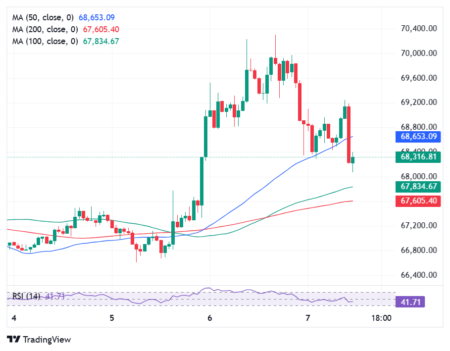
The Royal Government of Bhutan has decided to significantly reduce its Bitcoin holdings due to ongoing price weaknesses in the cryptocurrency market. As of today, Bhutan holds 5,600 BTC, valued at approximately $385 million. This drastic reduction follows a broader trend of declining market sentiment, as indicated by CoinMarketCap’s Fear & Greed Index, which has plummeted to a mere 8. While there has been a slight recovery in Bitcoin prices, the overall market remains under pressure, prompting Bhutan to take decisive action in its cryptocurrency investments.
Recent Transactions and Market Speculation
Recent data from Arkham Intelligence reveals that Bhutan transferred 100 BTC, equivalent to roughly $6.77 million, to a trading firm known as QCP. This transaction is part of a broader pattern of increased on-chain activity associated with Bhutanian wallets, suggesting that the government may be strategically offloading its Bitcoin assets. From a peak of 13,295 BTC in October 2022, Bhutan has reduced its holdings by nearly 60% in just four months. These transactions have generated speculation around the nature of the sales, especially since blockchain records show transfers to unknown wallets instead of confirmed exchange addresses.
Despite the lack of explicit confirmations regarding direct selling, ongoing scrutiny of Bhutan’s Bitcoin activities has intensified. Market watchers are keenly interested in how these actions will influence broader Bitcoin prices and market behavior, particularly as BTC continues to face significant challenges.
Standard Chartered Predicts Further Price Declines
In light of the recent market developments, Standard Chartered has revised its Bitcoin price forecast for the second time in less than three months. The bank now warns that Bitcoin could tumble toward $50,000 before any potential recovery occurs. Geoffrey Kendrick, the global head of digital assets research at Standard Chartered, anticipates additional capitulation in the coming months. Glassnode has also identified structural weaknesses in Bitcoin, suggesting that the price could fall to the realized price of $55,000, with some analysts predicting it could drop as low as $40,000.
This backdrop of negative forecasts highlights the urgent concerns surrounding Bitcoin’s valuation. Investors are increasingly apprehensive, and the outlook appears grim in the short term. Interestingly, despite these turbulent forecasts, Standard Chartered maintains a long-term optimism, projecting that Bitcoin could end 2026 at $100,000, albeit revised down from a previous estimate of $150,000.
Shifts in Bitcoin ETF and Market Sentiment
Standard Chartered’s recent downgrade can be linked to ETF outflows and a weakening macroeconomic environment. The bank reported that Bitcoin ETF holdings have declined by nearly 100,000 tokens since reaching a peak on October 10. This withdrawal trend aligns with broader market sentiment, as investors appear to be increasingly risk-averse. With the average ETF buyer now facing losses around an entry price of $90,000, many market participants are reconsidering their exposure to Bitcoin.
Additionally, Bloomberg data indicates that nearly $8 billion has been pulled from U.S.-listed spot Bitcoin ETFs since the October selloff began, further stressing the current market landscape. This series of ETF withdrawals raises questions on future asset stability and investor confidence within the cryptocurrency ecosystem.
Implications for Bitcoin and Broader Crypto Market
The actions taken by the Bhutanese government, alongside the updated forecasts from major financial institutions like Standard Chartered, underline the precarious state of the Bitcoin market. With declining holdings and increasing market pressure, the implications for Bitcoin’s stability are significant. The fear and uncertainty impacting investor sentiment could create additional volatility in the short term, complicating recovery efforts for Bitcoin and potentially influencing a protective stance among other crypto market participants.
Much like Bhutan’s strategic asset management actions, many investors will be keeping a vigilant watch on market indicators, looking for signs of reversal or stability in Bitcoin prices. The situation remains fluid, requiring investors to stay informed about evolving market dynamics and respond accordingly to protect their investments.
The Long-term Outlook for Bitcoin
Despite the current bearish sentiment and short-term forecasts, seasoned investors often view cryptocurrency markets through a long-term lens. Standard Chartered’s optimistic projection of Bitcoin reaching $100,000 by 2026—although reduced—suggests room for potential recovery. This long-term perspective can serve as a beacon of hope for investors, reinforcing the belief that while Bitcoin may be experiencing a rough patch, its foundational characteristics could foster future growth.
As the cryptocurrency space continues to evolve, market observers and investors alike will be closely monitoring developments, ranging from regulatory actions to institutional investment shifts. The future state of Bitcoin will significantly depend on its ability to withstand current pressures and rebound, making these upcoming months critical for both the cryptocurrency and its stakeholders.
In summary, the Bhutan Government’s strategic reduction in Bitcoin holdings amid declining prices and market sentiment has spotlighted the broader challenges facing the cryptocurrency market. As investors navigate through volatility and institutional forecasts adjust, the landscape remains uncertain but ripe for future opportunities. Staying informed and adaptable will be key as the cryptocurrency market continues to evolve in the years ahead.