


Bitwise Solana Staking ETF Experiences First Outflow Amid Crypto Market Fear
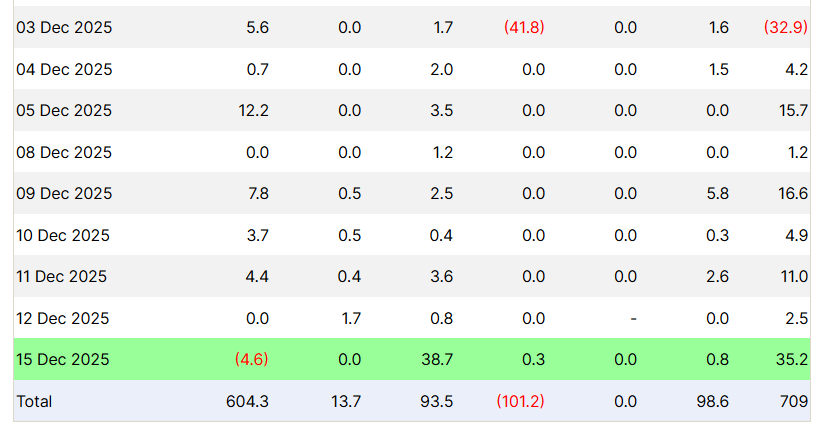
The Bitwise Solana Staking ETF (BSOL) has recently recorded its first-ever outflow since its launch, reflecting a shift in sentiment within the broader cryptocurrency market. According to Farside Investors data, BSOL experienced outflows of $4.6 million on December 16, leading to the sale of nearly 36.86k SOL tokens. This outflow represents a significant milestone for the ETF, which provides investors with 100% direct exposure to Solana (SOL) while offering built-in staking rewards. The timing of this event aligns with increased fear among institutional investors, particularly concerning potential economic impacts from a looming rate hike by the Bank of Japan (BOJ).
Institutional Sentiment and Trading Volume Decline
The current trading environment around BSOL indicates a palpable shift in investor sentiment, which has been exacerbated by the broader market’s fear. This uptick in caution is concerning, especially as BSOL recorded its lowest daily trading volume since its inception. As institutions respond to the potential for a market crash and heightened volatility, there appears to be a downturn in confidence. The holiday season is also anticipated to contribute to declining trading volumes, as many market participants step back from trading activities during this period.
Contrasting Inflows for Other Solana ETFs
Despite BSOL’s outflows, it’s noteworthy that other Solana ETFs have not succumbed to the same fate. For example, net inflows into spot Solana ETFs totaled $35.20 million, with Fidelity’s Solana ETF (FSOL) leading the way with $38.7 million in inflows on Monday. This surge represents the largest inflow recorded for FSOL and indicates that, while some sectors face challenges, interest in Solana’s ecosystem remains robust among various investors.
SOL Price Volatility amid Market Conditions
In conjunction with the outflows from BSOL, the price of SOL has faced downward pressure, having decreased by more than 6% in the past 24 hours and currently trading around $126. The asset has seen a low of $124 and a high of $134.72 within this timeframe. Interestingly, the 24-hour trading volume surged by 73%, suggesting that traders are capitalizing on price dips, likely in response to news regarding the launch of CME’s spot-quoted Solana futures. This volatility can present opportunities but also risks for traders amid the current market climate.
Selling Pressure and Derivatives Market Dynamics
Amid the backdrop of BSOL’s outflows, the derivatives market has seen significant selling pressure. Data from CoinGlass shows that the total open interest for SOL futures has dipped almost 2% to $7.09 billion over the past four hours. Crypto analyst Ali Martinez has highlighted that SOL is caught within a price range between $145 and $124, cautioning that further declines could lead to massive liquidations. The trading community has also observed a 4% decrease in 24-hour futures open interest, indicating a bearish sentiment prevailing among derivatives traders as the overall cryptocurrency market corrects.
Future Outlook for Solana and Investor Strategies
As the crypto market navigates this turbulent phase, investor strategies will likely pivot in response to new information and market conditions. The introduction of tokenized stocks, bonds, and ETFs to the Solana network, as announced by Ondo Finance for an early 2026 launch, could attract renewed interest and utility for SOL. Market observers will closely monitor how institutional sentiment evolves, especially in light of potential rate changes and continued developments in Solana’s ecosystem. As investors adapt their strategies amid the current volatility, understanding market dynamics will be essential for navigating the challenges ahead.
In summary, while the recent outflows from Bitwise Solana Staking ETF underscore a cautious approach among institutional investors, contrasting inflows into other Solana ETFs indicate that interest in Solana remains resilient. With SOL facing price volatility and trading dynamics shifting, market participants must remain vigilant and adaptable to seize opportunities as they arise in this constantly evolving landscape.